modem posts
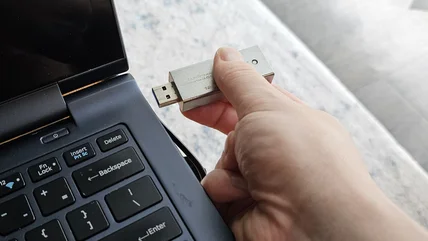
When you're rolling out a new 7.2Mbps upgrade to your network, it naturally helps if you've got some compliant hardware in the stable -- so to that end, AT&T has announced its USBConnect Lightning from Sierra Wireless today. Apart from 7.2Mbps downlink capability, the new model's little more than a run-of-the-mill USB stick so there's not a lot to say about it, though it features a trick swiveling USB connector that should make the thing more likely to work with unusual (and unusually tight) port configurations. It'll be available on November 22 for free after rebate on contract, just in time for service launches in Charlotte, Chicago, Dallas, Houston, Los Angeles and Miami expected by the end of the year.
Samsung LTE USB modem winds up in FCC database
Samsung's made some lofty boasts regarding its LTE support before, and here we go with some official documentation of US-bound products care of the FCC. The agency's database lists device A3LSLCU100 (catchy name, eh?) as a pre-production LTE USB modem from the company -- and that's about it. As for the usual fun of looking at over-saturated internal / external photos, good ol' Sammy's got a window of 180 days of confidentiality that started September 24th, so by our count, we've got potentially quite a while before we see something. The best we get now is this label outline above -- one more, equally nondescript shot after the break, if you're curious.
Samsung and TeliaSonera bringing LTE to vikings in 2010
Scandinavian folks tend to be a pretty cheerful bunch during the summer, and now Swedes and Norwegians will have reason to smile through the cold dark winters as well, with Samsung announcing an agreement to provide TeliaSonera with "mobile broadband devices for commercial service next year." This agreement relates to Sammy's Kalmia 4G USB modem and adds to the Swedish operator's LTE push, which already counts Ericsson and Huawei among the contracted hardware providers. So that's 100Mbps mobile broadband, coming to a snow-covered nation near you within the next dozen months or so. All we would ask of our viking friends now is that they remember their world-conquering ways of the past and start spreading that goodness globally. Come on, it's our right! Full press release after the break.
Clearwire branding true 4G WiMAX rollouts 'CLEAR,' upgrading pre-WiMAX areas nationwide

[Thanks, Rick]
Update: Clearwire pinged us with a few clarifications here. Ready? Good. Clearwire, as a company, is not changing its name. So far as the SEC knows, the corporate entity will remain "Clearwire." The new "CLEAR" branding is a push to market its true 4G WiMAX services (as opposed to "pre-WiMAX service"), which are rolling out to over 40 existing Clearwire markets around the country. Seems that explains the speed boost Mr. Rick experienced, huh?
Nokia's RD-3 modem boldly boasts LTE, and no, you can't have one
Nokia makes out its just-announced RD-3 data modem to be the dream of every road warrior: global GSM / EDGE, global HSPA, global LTE -- a twenty-plus year heritage of technologies in the GSM family tree compressed into a single device, powerful enough to get you service from a dusty GPRS cell site in some of the world's harshest landscapes or Verizon's LTE trials in Boston and Seattle just the same. The only problem is that you can't have it. The RD-3 is instead being reserved for carriers and infrastructure firms building out LTE networks around the globe as they march toward commercial availability in 2010, at which point Nokia (and others) will presumably have newer, better modems available for us lay folk to enjoy. In the meanwhile, though, it's alright: go ahead and drool.Verizon beefs up global modem line with UMW190
Verizon's really starting to buy into this global 3G data thing, offering modems that do EV-DO domestically and HSPA abroad; problem is, ZTE's AD3700 that's on the market currently is... shall we say, a little too "in-your-face" for some folks. For those individuals, we might recommend the more buttoned-up UMW190 from PCD, which offers triband HSPA to go along with the EV-DO Rev. A that you'll enjoy domestically. Those with pockets deep enough to withstand the heavy-hitting roaming bills can grab the UMW190 now online (later this month in stores) for $49.99 after a $50 mail-in rebate.
Samsung boasts of first commercial LTE modem for cellphones
We can't say that we're absolutely certain that Samsung's not fibbing a little with its latest claim, particularly since NXP rolled out a multi-mode LTE / HSPA / etc. cellular modem way back in June of last year. Whatever the case, we're just stoked to see yet another big player drinking the LTE Kool-Aid, with Sammy developing what it calls the "first LTE modem that complies with the latest standards of the 3rd Generation Partnership Project (3GPP)." The modem, which is being labeled the Kalmia for now, supports download rates of up to 100Mbps and upload speeds around 50Mbps within the 20MHz frequency band. In other words, if your future handset is equipped with this chipset, you could theoretically stream four HD movies with no buffering. Now, if only Samsung would announce a new mobile to go along with this, we'd really have reason to carouse.Verizon announces AD3700 global modem from ZTE
So here's some interesting insight into the wild, rough-and-tumble world of wireless product launches: Verizon announced ZTE's AD3700 USB modem today, a product that gained FCC approval over five months ago, which means it's probably been getting a trial by fire on Verizon's test labs since then. You've gotta figure that ZTE was working on the prototype for many months before FCC approval, so all told, this launch is probably a culmination of a solid year of work, cash, blood, sweat, and tears. Don't you feel obligated to buy it now? Anyhow, the modem runs $79.99 after a $50 rebate when it launches on the 14th, which is actually a really solid deal considering that it'll do EV-DO in the States and HSPA around the world for 3G service no matter where your job or your whimsical vacation travel habits might take you.
Huawei's E583X wireless modem turns 3G to WiFi, beautiful lights
The smallest USB 3G modems look like grossly over-sized thumb drives, while the biggest ones sport hinges or fold-out antennas that serve as tripwires for absent-minded businessmen with venti frappuccinos walking by your tiny little coffee shop table. Huawei's E583X detaches all that bother, acquiring a 3G wireless signal and then beaming it out again as WiFi, meaning you can leave it in your pocket and get a double-dose of microwaves. It sports a 1,500mAh battery, giving it five hours of independent living, and in emergencies it can act as a tethered modem as well. Sadly this first version will only accept a single WiFi connection, but future ones will allow four others to mooch your data plan. That it also blinks randomly like a prop out of Star Trek's utopian future is just an added bonus. It's set to light up Europe next month -- likely with some hideous contracts attached.
Verizon rolls out global laptop data with USB1000 stick
The promise of global data is finally becoming a reality for modem users on Verizon today with the release of its Novatel-sourced USB1000, a USB stick (hence the "USB" in the name, we're willing to bet) that features EV-DO Rev. A for domestic use plus triband HSPA when you're roaming around the globe. The stick itself runs $149.99 on contract after a $50 rebate, while monthly global data plans run from $129.99 for 100MB of data in 31 countries to $219.99 for 200MB; both plans include 5GB for use in the US and Canada. It'll be available online starting tomorrow.
[Via Phone Scoop]
[Via Phone Scoop]
Motorola debuts world's first retail DOCSIS 3.0 cable modems
You'll still need the love and support of your dear cable provider, but if you're within range of DOCSIS 3.0 service, you can bypass at least one aspect of dealing with your local Video: 45 year old modem used to dial into web, view Wikipedia, correct the entry on Klaus Nomi

We've just been hepped to a video by someone named Phreakmonkey, wherein he gets his hands on a Model A Acoustic Coupler Modem and puts it through its ever lovin' paces. Manufactured by Livermore Data Systems ca. 1964, the 300 baud device uses an analog signal powered by the computer's serial port. Of course, getting this thing up and running required scrounging up cables, adapters, and a twenty year old telephone -- but the result? Pure geek goodness. What're you waiting for? Squeeze past the break to watch this dude dial into a server, fire up Lynx, and visit Wikipedia, old school.
[Via Hack-A-Day]
[Via Hack-A-Day]
T-Mobile webConnect available today, carrier's first 3G modem
"T-Mobile USA" and "3G modem" aren't two things you frequently heard uttered in the same sentence -- but now that the number four carrier's got a budding HSPA network that's all dressed up with no place to go, it's time to start rolling out some serious hardware (G1 aside) to take advantage. On that note, T-Mobile's finally getting serious about laptop data, launching its rumored webConnect USB stick today with an integrated microSDHC slot, HSDPA 1900 / 2100 / AWS for compatibility in the US and abroad, and triband EDGE for those times -- and there will be many at first -- when you're out of 3G coverage. The webConnect launches today for $49.99 on a two-year contract after rebate or $249.99 contract-free.
Telstra's Turbo 21 HSPA modem reviewed: not 21Mbps but still the world's fastest
Telstra loves to brag about being the "world's fastest national mobile broadband network." And they should after a recent 21Mbps (theoretical) upgrade to its Next G network in Australia's major cities. Of course real-world performance won't come close to that but the PC-only, Telstra Turbo 21 USB modem likely smokes any over the air setup you've been using. ZDNET tested the Turbo 21 in Sydney and found performance landing on "the right side of excellent." Performance peaked at about 6Mbps but this was variable at best. Still it was the fastest modem that ZDNET's seen in their testing. Yours, or more likely your company's, for AU$499 or AU$299 when bundled with a data pack.
Read -- Turbo 21 press release
Read -- Turbo 21 review
Read -- Turbo 21 press release
Read -- Turbo 21 review
Verizon's global 3G modem from ZTE spotted in FCC
We've known for some time that Verizon is fixated on dominating the global roaming market in the US -- or, at the very least, catching up to AT&T -- and to do that, they're going to need hardware capable of taking advantage of the very best speeds that those wild and majestic foreign lands have to offer. In other words, no EV-DO-only modem is going to cut it, and an EV-DO modem with a sprinkling of EDGE on the side is a consolation prize that's going to get frequent world travelers irked after a little while. To that end, we just witnessed this brick of a USB modem pass through the FCC bearing Verizon branding, the A3700 from ZTE. Name a frequency or wireless technology, the A3700 probably has it; in addition to EV-DO, it's got GSM / EDGE and HSPA, so your bases are pretty well covered wherever you happen to be (hell, it even has North America-friendly HSPA 850 / 1900 in there, though Verizon wouldn't dream of letting you stray from its own airwaves when you're stateside). Enticing, yes -- but considering that this is one of the ugliest modems we've seen in recent memory, you'd better really need that roaming capability when it gets around to launching.