Skip to Content

Are you prepared for Wrath of the Lich King? WoW Insider has you covered!
AOL Tech

Posts with tag set-top box

Double toil and trouble, VUDU rumor pot bubbles over

VUDU cauldron
With apologies to Shakespeare, something is brewing at VUDU. With CEDIA just around the corner, the company has laid off some of its staff, most notably some of its marketing higher-ups. Additionally, rumors are swirling regarding just about every aspect of the upstart company's future. CEPro got some talk-time with the VUDU's national dealer channel manager, and a theme of decreased emphasis on the retail channel seems to run throughout the conversation, punctuated by a end-of-life status on the VUDU X100. Meanwhile, the company is making some CEDIA promises for its custom-install-targeted VUDU XL: more HD content (1,000 titles), more connectivity (HD over component) and lifetime warranties on purchased titles. It's all rumor, but we wouldn't be surprised to see VUDU move exclusively into the custom-install market where it seems to have a toe-hold. So what say ye -- is something rotten in VUDU, or should we hang up the codpiece and get back to work?

[Image courtesy Blog of Wishes]

Read - CEPro's VUDU interview
Read - VUDU CEDIA plans

Vudu set-top box review round-up

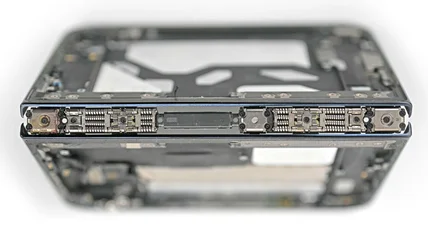
We got to spend a bit of time with Vudu's eponymously named set-top box earlier this month at CEDIA, but those still trying to justify that $399 price tag now have a bit more info to help inform their decision, with a number of reviews of the device now cropping up online. Among the first to churn out a full review were the folks at Laptop Magazine, who seem to have found quite a bit to like in the device, despite some fairly serious limitations. They were especially impressed by the Vudu's "surprisingly good" video quality, which they say "makes you forget you're watching a movie downloaded over the Web." Leading those aforementioned limitations is the fact that those all those movies are "trapped on the Vudu box," meaning you can't offload them onto a portable media or stream them over a network connection. That also proved to be one CNET's big gripes with the device, who also lamented the lack of built-in WiFi, and the somewhat limited 24-hour viewing period for downloaded movies. Those also looking for an unboxing of the device can find that and more in Paul Stamatiou's review, which even goes so far as to rip the device apart for a peek inside. As for how the Vudu works, he too seems to have been fairly impressed by the general user experience, although the movie pricing structure proved to be a major stumbling block for him, as was the device's inability to export movies to a PC.

Read - Laptop Magazine (3.5 out of 5)
Read - CNET (7.7 out of 10)
Read - PaulStamatiou.com (7 out of 10)

[Photo courtesy of PaulStamatiou.com]

Polaroid's Digital Entertainment Center revealed in FCC documents


It looks as though Polaroid is about to get into the set-top box game with a new product the company has sent to the FCC for review. Apparently holding steady on its path away from cameras, Polaroid has cooked up an all-in-one, do-everything "Digital Entertainment Center" (or DEC, as they're calling it). The main purpose of the device will apparently be to store and stream your media to a TV, stereo, or any other old-world box you have lying around. The DEC will have a hard drive of indeterminate capacity, and will feature 802.11b/g, HDMI and component outs, two USB ports, as well as composite and S-Video ins and outs for video, with RCA ins and outs, plus coaxial and optical outs for audio. On the front you'll have access to a slew of slots (MMC, SD, MD, CF, Memory Stick), as well as additional USB, video, and audio jacks. So now the questions are when, where, how much, what kind of OS, and what is it compatible with? We'll be poring over the many, many pages of FCC papers while we wait on those answers.

Netflix prepping cheap set-top boxes for your living room?

We've heard talk of a Netflix set-top box before, and while those "end of the year" rumors (as in 2006) didn't exactly pan out, it looks like the company is still keen on the idea, at least according to an individual who claims to have participated in a recent focus group on the subject. Supposedly, Netflix demoed two different boxes that stream content from the company's "Watch Now" service via an Ethernet or wireless connection, each of which were apparently still in rough prototype form. The only difference between the boxes, it seems, is added Component and HDMI connections on the $100 "Enhanced" model, as opposed to just Composite and S-Video on the standard $50 model, although there isn't any actual HD content (at the moment) to stream to either of 'em. While we'll obviously have to wait and see if any of this actually pans out, it certainly seems to be in line with Netflix's recently announced "Internet TV" division, which has already made its living room intentions pretty clear.

Cisco planning "souped-up" set-top boxes

It looks like Cisco is about to make its biggest push into the consumer market to date, with BusinessWeek reporting that the company is readying a "souped-up" set-top box that'll supposedly combine a number of different products into one. Of course, as BusinessWeek points out, this shouldn't come as too much of a surprise, especially given the company's recent acquisitions of Linksys, Scientific-Atlanta, and KiSS Technology. As you may be able to surmise by that confluence of companies, the new do-it-all box will apparently be networked like nobody's business (wireless, naturally), including the ability to pull content off the Internet and distribute it to other devices around the house. It'll reportedly include its own web browser as well. While Cisco's pulling all the strings, it apparently won't be slapping its own name on the boxes, selling them instead directly to consumers under the Linksys brand and offering 'em up to various cable companies. If all goes as planned, you should be able to snag one for yourself by the end of this year or early next year.

[Thanks, Mercurial]

Akimbo to stop selling hardware, just doing internet TV delivery

No real shocker here: set-top box-maker and service provider Akimbo is apparently shutting down its hardware line as of tomorrow. In a way it's almost uneventful that yet another set-top box is going teats up; which is, of course, why we were a little skeptical about the announcement of VuDu last week. Still, even if Akimbo's MovieLink deal didn't work out, they're not vanishing completely -- you've still got the software service end of their business, able to deliver programming to your PC through their Media Center interface, for example. Those who plunked down for a box, though, can apparently expect discounts and even in some cases refunds for their investment. But for now it looks like Akimbo's biggest guns have been silenced.

FCC unties cable boxes from cable companies

According to Dow Jones, the FCC has shot down Comcast's request to be exempt from new rules intended to open up the playing field for cable boxes, leaving an appeal the company's only hope of keeping its customers tied to its own set-top boxes. Under the new rules, which are set to go into effect July 1st, cable companies will not be allowed to use integrated security features that tie their cable boxes directly to their own service. Instead, customers would be able to simply get a cable card from their cable company and pop it into their set-top box of choice -- the idea being, from the FCC's perspective, to open up a new marketplace for cable boxes, ultimately reducing the cost for consumers. Not surprisingly, Comcast sees things a little differently, calling the FCC decision "regrettable" and adding that "it amounts to an FCC tax of hundreds of millions of dollars on consumers with no countervailing benefits." The FCC has apparently given some smaller cable companies a bit of leeway with the deadline, however, saying they won't enforce action against companies that have already placed orders for new cable boxes but aren't expected to get them by July 1st.

[Via Slashdot]

1394TA and HANA to offer "1394 over coax via UWB" home networking

Although coax isn't the freshest medium on the block, there's still a good bit of potential yet to be realized in your household cable wiring. The 1394 Trade Association has teamed up with the High Definition Audio-Video Network Alliance (aka HANA) in hopes of networking the electronics in your crib by tapping into the copious amount of cable you've probably already got installed. While turning all of your home entertainment devices into one big happy family has been a long-standing fantasy, these two organizations are hoping to bring the ideas to complete fruition via ultrawideband technology (UWB). Plans are to leverage the bandwidth in your home's coaxial cable to network HDTVs, PVRs, set-top boxes, HTPCs, NAS drives, DVD players, and whatever else you can throw in the mix by using hardware and software developed by PulseLink (which we've already seen in action), Freescale Semiconductor, and Samsung Electronics. The technology will reportedly play nice with your legacy programming, meet the current FCC mandates, and even support IP. As expected, 1394 over coax via UWB will support DRM, so even though content guardians of the world can rest easy, we could potentially endure a bit of headache in the "seamless networking" that we're led to expect. This promising application will supposedly feature "real-time QoS [quality of service]" and raw data rates "exceeding 1Gbps," which combined with its long list of attributes, sounds like a match made in heaven for those looking to network their currently disconnected entertainment devices. But until we see hard pricing and implementations beyond a trade show setup (i.e. some industry support), we'll continue to keep our fingers patiently crossed, and our coax patiently un-networked.

Cablevision postpones networked DVR

Under heavy pressure in the form of a lawsuit filed by nearly all of TV land's major content providers, industry giant Cablevision has announced that it will delay the rollout of its networked DVR offering until the service's legality is confirmed in court. The lawsuit, filed by the four key networks and their parent studios, claims that Cablevision's plan to store customers' recorded swag on their own servers as opposed to local set-top boxes constitutes a retransmission of copyrighted material, and therefore violates pre-existing agreements the company has with its providers. Cablevision, on the other hand, argues that networked DVR services are only facilitating "fair-use" of their broadcasts by consumers, who have already paid for any programs they intend to record. The outcome of this suit will be closely monitored by other players in the cable industry as well, because a victory for Cablevision would allow Cox, Comcast, et al. to begin offering their own remote storage -- good news for consumers, but perhaps bad news for our old friend TiVo.

Motorola combines DVR with cellphone for place-shifting service


Motorola appears ready to take on the Slingbox and Sony's LocationFree TV with a new service that allows customers to stream television from a DVR to a cellphone. However, there are some caveats that may make the service little more than a novelty for the time being. The biggest limitation for the moment is that the service will require both a Motorola DVR and a next-gen RAZR phone. Since Moto's DVRs are built into set-top boxes provided by cable companies, and not sold directly to consumers, this means the potential user base is defined not by customer choice, but by the vagaries of the cable market. And, of course, you need a specific phone model -- one that doesn't currently exist on the market -- to make the service work as well. However, given that the service is just in demo mode at this point, a lot can change before it goes public. And Moto may well learn from Sony's experience with LocationFree that it's better to open up, rather than trying to force customers to stick with a closed system.


    AOL News

    Other Weblogs Inc. Network blogs you might be interested in: