Skip to Content

Get the latest Age of Conan news and views at Massively!
AOL Tech

Posts with tag nasa

Audi unveils enviable MMI for upcoming A8 sedan


For the acronym-challenged, Audi is getting serious about its Multi Media Interface. The automaker's present system is widely regarded as the best of the best already, but it's staying one step ahead of itself with the revamped version prepped for the A8 luxury sedan. Within the whip, you'll find a 7-inch LCD with an 800 x 480 resolution alongside a DVD drive, 40GB internal hard drive, Dolby Digital 5.1 support, optional analog / digital TV tuner, Bluetooth, twin CPUs (800MHz and 500MHz), NVIDIA graphics for "genuine 3D maps" and an optional (but necessary, really) Audi Music Interface for connecting your favorite PMP. For those uninterested in the A8 (but suddenly obsessed with this new MMI), hang tight -- it will be hitting other Audi vehicles here soon.

OSU researcher developing GPS-like system for moon-bound astronauts


GPS on the moon may seem a bit far-fetched... that is, until you remember the US military's plans to launch a WiFi router into space. The same Ohio State University researcher who developed software for the Mars rovers Spirit and Opportunity is now developing a GPS-like system that would enable astronauts to navigate terrain as if they were simply routing themselves through a plot of land on Earth. Because of the moon's location (we're simplifying things here), Ron Li is having to create a similar system (read: not bona fide GPS) that relies on "signals from a set of sensors including lunar beacons, stereo cameras, and orbital imaging devices" in order to provide navigational output. Everyone involved is hoping to have it operational by 2020 (the next planned trip to the moon), but the team will be stuck testing in the Mojave Desert. Bummer.

[Via Physorg]

Mars Phoenix lander saves itself with some quick thinking


The Phoenix lander has already proven its mettle by finding ice on Mars, and now it's gone and shown off its quick-thinking skills by shutting down its robotic arm after receiving a command that could have permanently damaged it. The lander apparently did it's best to find a workaround first, however, but ultimately determined that any further movement would have bent its wrist out of shape. That left NASA engineers scrambling yesterday to come up with some new instructions to send to the lander, and they're now simply waiting to see if they meet with the robot's approval.

[Via Slashdot]

New solar sail aims to not repeat recent history

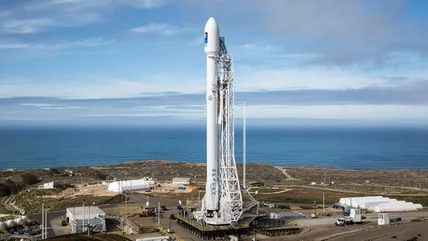
Attempts to launch a solar sail into space haven't exactly been met with success in the past, but NASA now looks set to try to notch one up in the win column, with the agency reportedly on track for a launch of its own as soon as July 29th. As the name suggests, its new NanoSail-D is smaller than previous sails, with it consisting of four 3-meter wide sails made of a plastic film coated with aluminum. Also, like similar missions, this one is primarily a proof of concept one, which NASA hopes will demonstrate the feasibility of deploying sails in orbit, including the possibility of using them to bring satellites back down to Earth when they've outlived their usefulness to keep space a bit tidier. As NewScientist points out, however, NASA already has some of the odds stacked against it, with its launch craft, the Falcon 1, having failed on its two launch attempts so far.

Research institute hopes to send "brain breathalyzer" into space


While it's not nearly exciting as their Space Cycle (but really, what is?), the National Space Biomedical Research Institute's new brain scanner here looks to fill in a niche of its own nonetheless and, if the institute has its way, it could actually find its way into space. Described as a "brain breathalyzer," the device promises to monitor astronauts for signs of brain injury, depression and mental fatigue, which could allow mission control to determine if they're capable of carrying out a mission or not. That's done with the use of an optical scanner that sends weak pulses of near-infrared light into the brain, which gets reflected back to determine the amount of oxygen in the blood. While NASA isn't fully sold on the idea just yet, it apparently is interested enough to shell out $400,000 to further the development of the scanner, which it hopes will also eventually be able to monitor other vital signs like blood pressure and heart rate.

NASA creates hyperwall-2, the world's highest resolution visualization system


Leave it to space nerds with money to come up with the world's highest resolution visualization system. NASA's Advanced Supercomputing Division at Ames has created the 128-screen hyperwall-2, a mega display capable of rendering one quarter billion pixels. Hyperwall-2 measures 23- x 10-feet of LCD goodness, and is powered by 128 GPUs and 1,024 processor cores with 74 teraflops of peak processing power. To top things off, 475 terabytes of storage keep the system rolling. All in all, hyperwall-2 has more than 100 times the processing power of its poor predecessor, hyperwall, from 2002. The elder hyperwall was unavailable for comment and is most likely on an alcoholic bender somewhere, complaining about "kids these days."

[Thanks, james]

Mars Phoenix lander discovers ice on Mars


It's only fitting that the glorious news of water ice on Mars was broke over Twitter this evening, via the Mars Phoenix lander's own first-person ramblings. Apparently Mars Phoenix was keeping an eye on some white patches it uncovered the other day, only to discover they'd disappeared today. According to the scientist folk over at NASA, that means those white patches must've been ice, which dissipated once uncovered. Now Mars Phoenix still has the considerable task of uncovering more ice and sampling it, but the mission is ahead of schedule and NASA has already identified a hard patch of ground it wants to dig into. Congrats to Mars Phoenix and all the fine folks at NASA, now be sure to watch out for the cave-dwelling little green men!

[Via Wired Science]

NASA's new suits are one giant leap for space fashion


NASA just awarded its future spacesuit contract to Oceaneering International. The US firm must now design, test, and produce two suits -- the default suit (pictured after the break) worn on-board for launch and landing and a second, more versatile, cheese-proof suit worn during space walks and upon the surface of the moon. The suits must be ready for the first scheduled launch of the Orion Space Capsule in 2015. The contract is valued at the government special price of just $745 million. Hey, we have to keep up appearances at the International Space Station, you know.

International Space Station's lavatory gets repaired, another saga ends

We can't say we're terribly saddened that this riveting caper has finally ended -- after all, the poor crew needs a reliable place to unload, right? Shortly after the space shuttle Discovery delivered a new pump for the jury-rigged commode, Oleg Kononenko -- who we hear is now widely regarded as a galactic hero -- spent around two hours installing the hardware and running a trio of tests. After everything was tightened up and functioning as advertised, the crew presumably relieved themselves just before carrying on with the installation of the recently acquired Kibo lab. Crisis averted.

Space shuttle Discovery delivers new toilet pump to International Space Station

Russian space toiletIn what is becoming a fascinating space-poop drama, the International Space Station had a fresh toilet pump delivered today by space shuttle Discovery. For the past couple weeks, astronauts were forced to perform manual flushes, but this pump promises to make things go down a bit easier. We're still under the impression that the toilet will be replaced in the Fall, so more relief is sure to come.

International Space Station's commode gets fixed

It's amazing how quickly humans can remedy problems when really placed in a bind, and rather than waiting for supplies to come up with Discovery next week, crew members aboard the International Space Station were able to solve their little dilemma already. Reportedly, cosmonauts were able to cure whatever was ailing the temporarily non-functioning john, enabling those stuck in space to urinate freely. Thankfully, the seven-year old toilet is due to be replaced with a fresh new one this Fall, and we'd say the replacement couldn't arrive soon enough.

Space station's toilet begins to fail, panic sinking in


You think it's bad when computers on the International Space Station get spazzed -- just imagine the chaos when the primary commode decides to stop functioning correctly. As of now, crew members are being forced to urinate in a "jury-rigged system" that's connected to the seven-year old (!!!) can, but thankfully, the solid waste collecting part has yet to act up. Still, we can imagine that folks on board are already fearing the worst. NASA officials have stated that they are currently mulling the idea of tossing a few parts on the Discovery just before it lifts off next week for a planned docking trip, which we can only hope pans out. Godspeed just took on a whole new meaning.

[Image courtesy of Nohoz, thanks System48]

Mars Phoenix lander has near-perfect landing, says "it's really cold out here"


Things are looking good for the Phoenix lander which touched down on Mars at 4:53pm on Sunday, May 25. The NASA nerds are reporting an almost perfect landing, with the spacebot tilted only one quarter of a degree. In fact, they're claiming that this landing was "far smoother than any simulation or test that was ever done." The lander's north-pole location is measured at -106 degrees Fahrenheit and chock-full of life-preserving ice. Phoenix will chill on Mars for 90 days, sniffing soil and looking for frozen Martians in whatever form they may take. Now that Mars Oddyssey -- one of its main communication uplinks -- has passed over the lander, we have our first pictures, one of which is above. Nice work, guys!

[Via The Phoenix Mission]

Mars Phoenix lander to touch down on the red planet tonight


Suit up, space nerds, because the Phoenix lander is mere hours away from touchdown on Mars, and NASA's blowing this thing out. Not only will you get a live video feed from their site, but apparently Mission Control ops will be liveblogging the touchdown and ensuing alien encounters / totally boring rock digging. Festivities kick off at about 6:00pm ET, prepare to set faces to stunned.

[Thanks to everyone who sent this in]

Read - Phoenix mission page
Read - NASA live video feed
Read - NASA Mission Control liveblog

Hard drive recovered from shuttle Columbia used to complete experiment


Although it's been several years since the Space Shuttle Columbia disaster, it looks like some of the data gathered during the orbiter's final mission will be put to good use. A hard drive salvaged from the wreckage contains the results of an experiment to study the way xenon gas flows in microgravity, and the results were published in the April edition of a journal called Physical Review E. The 400MB Seagate drive was originally thought to be destroyed, but workers and engineers reconstructing the orbiter from the remaining debris found it during the process and sent it off for recovery, where 99 percent of the data was extracted. It then took several years for lead researcher Robert Berg and his team to analyze the findings, but they're happy with the results -- we only wish they hadn't come at so dear a price.

[Thanks, Laura]


AOL News

Other Weblogs Inc. Network blogs you might be interested in: