Skip to Content

Massively explains Warhammer Online to the dedicated WoW player
AOL Tech

Posts with tag washington

Bus driver chooses GPS over gigantic warning sign, plows into overpass


Okay Britons, here's your shot at ripping us Americans who've had quite a few laughs at the expense of your GPS-loving neighbors. Reportedly, the driver of a charter bus carrying a high school girls' softball team decided to casually follow the soothing turn-by-turn directions that were being emitted from the nearby GPS unit rather than actually noticing the enormous clearance sign on the overpass ahead. As you can likely guess, the 11-foot, 8-inch-high vehicle plowed right into the 9-foot bridge -- which was added to the National Register of Historic Places in 1982 -- though somehow everyone on board escaped without any major injuries. Oddly enough, the driver apparently isn't alone in chipping away at the landmark, as a local even mentioned that "large trucks hit the bridge every two weeks or so," but couldn't resist noting that "this [instance was] by far the worst."

[Thanks, Raleigh]

New law makes "malicious" RFID spying illegal, corporations can do as they please


When did the practice of lawmaking require an accompanying press release issued by a professional PR firm? An embedded photo of the sponsoring state official, too? Shameless. Nevertheless, it did bring our attention to a new law in the state of Washington which prohibits "malicious" RFID spying. When the new law (said to be a first of its kind in the US) goes into effect in July, anyone caught scanning a person remotely "without his or her knowledge and consent, for the purpose of fraud, identity theft, or some other illegal purpose" will be charged with a Class C felony. Great, so that covers the obvious criminal abuse of the technology. However, the original bill also included an opt-in measure that would require your approval before retailers and others could track your activity via that handy, store-issued discount card you carry, the implant you received during that stint in the joint, new credit card, or personal ID card you're required to carry. Unfortunately, the opt-in requirement was stricken from the bill (and therefore not in the final law) after succumbing to heavy corporate lobbying. You thinking what we're thinking? Contact information posted in the read link below.

Smart Card Alliance calls RFID licenses unsafe, can't say why


We're all for some genuine privacy concerns or legitimate RFID security scenarios, but we think this Enhanced Driver License scenario might be a bit overblown. The new licenses, which are due to launch in Vermont and Washington in 2008, are designed to expedite passport-free border crossing into Canada and Mexico. The critics point out that the RFID tags emit a unique ID tag that can be picked up by standard equipment, but beyond that they haven't really locked down a specific threat that a leaked ID number could be to users. "I'm tapping in to the emotion of those people who are sensitive to their rights to privacy," said Randy Vanderhoff of the Smart Card Alliance, which is promoting a competing standard. The licenses are completely voluntary, and both Vermont and Washington are going to be offering radio-blocking sleeves to users to allay any privacy concerns.

[Thanks, SickNic]

University of Washington's Raven to try surgery in simulated spacecraft

If you thought ASTRO and NextSat were the only two autonomous robots frolicking around in testing environments, Raven would certainly beg to differ, as NASA has recently announced that the University of Washington's mobile surgical robot will soon be off to tackle surgical tasks whilst underwater. The 12th NASA Extreme Environment Mission Operations test will see the mechanical MD pick up the tools in a simulated spacecraft submerged near Key Largo, Florida, where the "mission will test current technology for sending remote-controlled surgical robotic systems into space." Thanks to a combination of wired and wireless networks, a trio of seasoned veterans back in Seattle will be dictating the movements remotely, as the bot attempts to "suture a piece of rubber and move blocks from one spindle to another." Interestingly, there was no word on whether Raven was scheduled to pick up the night shift at Seattle Grace upon its return from the depths.

[Via MedLaunches]

Electrochromic sunglasses change color on demand

We'll admit, we didn't think MyDo's Bururu vibrating spectacles would be topped anytime soon, and while the University of Washington's smart sunglasses don't snatch the crown outright, they certainly make a solid case. The admittedly gaudy prototype certainly isn't the most attractive eyewear we've ever seen, but researchers are insisting that we focus on the electrochromic material that enables on demand color / tint changing rather than the bulky frames. The film can purportedly alter its transparency depending on the electric current that flows through it, essentially giving athletes and motorists an easy way to instantly adjust the level of reflection and tint depending on the ever-changing circumstances around them. Touted as "more active and more intelligent" that existing specs, this watch-battery-powered device allows the wearer to alter the shade by simply spinning a wee dial on the arm, and while we wish we could tell you that U-Dub's swank new specs would be arriving before the bright summer rays, it'll be quite "a few years" before these hit commercialization.

[Via Primidi]

Energy-efficient Deepglider scours the ocean for scientific data


The University of Washington's Deepglider won't go down as the first manmade projectile to scour the ocean for random (albeit useful) tidbits of information, but it does sport an ultra-modern frame and energy source that certainly sets it apart. Similar to the nuke detector, Edinburgh Duck, and the bevy of other submarines used for the benefit of mankind, this concoction is used to capture underwater data to aid researchers in discovering more about global warming and seafloor conditions, but its autonomous nature and carbon fiber enclosure gives it the ability to remain underwater "for up to a year" and sink to depths of nearly 9,000 feet. The 71-inch long, 138-pound device carries sensors to measure "oceanic conditions including salinity and temperature," and when not patrolling the seas based on satellite-driven controls, it can transmit the data remotely using the same signal path in reverse. Notably, the torpedo-like device boasts an energy-efficient, battery-powered design that allows it to stay submerged for ridiculous amounts of time without needing a recharge, and while we're not too sure if its researchers are too caught up in its unmatched diving abilities to notice how swank the power system is, they've apparently got a good thing going.

Detection algorithms to enable sign language on-the-go

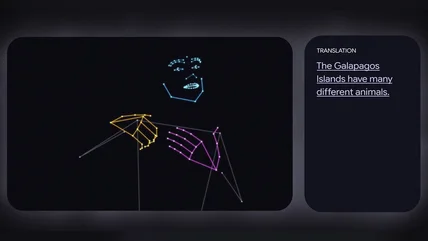
Sure, texting has taken the entire world by storm and is likely to remain the next best option to actually speaking to someone for quite some time, but for those who feel that keying in paragraphs of information takes a bit too much time, they're looking for alternatives. Designed to assist the mute and deaf (or those who just love the limelight) who rely on cellphones, the MobileASL video compression project seeks to enable sign language over video telephony, even on less-than-speedy data networks. Developed at the University of Washington, the specialized skin detection algorithms are able to key in on critical moving parts (read: hands and fingers) and utilize the limited bandwidth to broadcast the most important vectors first. The ASL encoders are compatible with the H.264 / AVC compression standard, and while it wasn't directly stated just how viable this option was for those stuck on a 1xRTT connection, you can hit the read link to get in on the user studies if you're down with signing.

[Via Slashdot]

Robotic Cable Inspection System checks for damage on electrical conduits

It's true that we've never met a robot that we didn't like (ok, those snakebots were a bit weird) -- while we're a sucker for nursebots and singerbots and bartenderbots, we're especially partial to those silicon-based lifeforms that can perform some tedious and important task that would be pretty tough for us humans to do ourselves. The latest one we've spotted that fits this bill is a bot created by researchers at the University of Washington, which can crawl along high-voltage power cables to inspect their integrity before they blow up and/or cause some sort of significant damage. The Robotic Cable Inspection System is able to detect problems with the infrastructure via its heat sensor, acoustic sensor and "water tree" detector that examines if water has gotten into the insulation. Earlier this week, the team completed the robot's first field test at the Lockheed Martin Michoud NASA Assembly Facility in New Orleans as a way to promote more safety bots in work environments. We just hope that if the little guy does find damage that it's got time to scamper away before being shorted out itself.

[Via Robot Gossip]

iPod: media player, cultural icon, and rescue beacon?

Sure, we've heard the heartwarming stories of SMS savings a boy's life and TiVo preventing a man from heading to prison, but this round of "Gadgets Saving Lives" features none other than the token iPod as the center of attention. While Griffin has long since had the idea of using the iPod to power a flashlight-type device, a mushroom hunter (yes, they do exactly as the title describes) resorted to the backlit LCD in his Apple in order to lead rescuers to his location. While enjoying a presumably thrilling evening of picking 'shrooms from the wild brush in Vancouver, Washington with his mother, Pini Nou somehow found himself off the beaten path and lost under a cover of darkness (and wild grass, too). By phoning in authorities and faintly describing his surroundings, troops were able to get close enough to view the white glow emitted from his PMP, and 20 minutes later he was safe and sound, albeit "cold, tired, and aching." So, there you have it kids, the ultimate excuse to get an iPod for the holidays -- safety.

[Thanks, Napo M.]

Neurochip acts as a second motor cortex

Haven't you ever wished that you had a second motor cortex? If you've suffered a brain injury of some kind, you just might. For the last few years, researchers at the University of Washington have designed and installed a special computer chip attached to the top of monkeys' heads to record the brain's motor cortex nerve signals. This computer chip, dubbed the Neurochip, creates a brain-computer interface that records every movement sent from the motor cortex to the rest of the monkeys' bodies. Then the Neurochip converts those signals into a stimulus that can be fed back to the brain, creating new neural pathways that theoretically could be used if the motor cortex was damaged in some way. We've still got a few questions, like exactly how this happens, how big physically this interface is, and when we should expect human trials. Of course, we've seen previous brain-computer interfaces before, but this one seems a bit more practical than strapping your head to some type of computer. The team published its results in the November 2, 2006 issue of Nature.


    AOL News

    Other Weblogs Inc. Network blogs you might be interested in: