1
Why do routers have so many antennas?
It seems like routers keep growing more antennas each year. Is this a marketing gimmick, or is there a good reason?
Read More

It seems like routers keep growing more antennas each year. Is this a marketing gimmick, or is there a good reason?
Read MoreThese issues may appear similar, but there's an easy way to tell them apart.
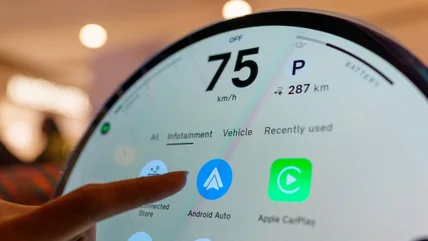
Read MoreIf you've already tried updating your phone, the car's software might be the issue.
Read MoreYou have several new options for Alexa's voice and personality. Here's how to find and change those settings.
Read MoreThe agents OpenAI was testing attacked a software service called RubyGems in May, months before the attacks on Hugging Face.
Read MoreThe company said that user privacy is a “fundamental principle” of its products.
Read MoreThe power of the sun can keep your RV running, but before you get too comfortable with solar panels, you need to calculate how much power they need to generate.
Read MoreDario Amodei said that “we owe it to humanity to try.”
Read MoreEV batteries usually fade gradually, so the real warning signs are often changes in behavior rather than age alone.
Read MoreThe various Ethernet ports on your router can serve different purposes, depending on the model. Thankfully, it's not hard to discern what they're for.
Read MoreCleaning secondhand gadgets is essential, since you never know how dirty something is. Thankfully, it's not hard to polish them up before reuse.
Read MoreAfter a few days of testing Meta's AI agent Muse. I can confirm that there is very little learning curve to get started.
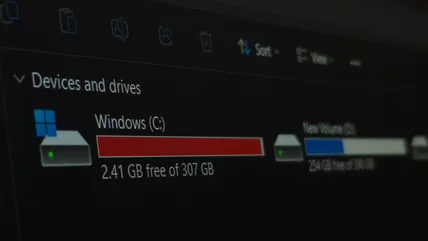
Read MoreShould you choose a smaller SSD for speed or a larger HDD for storage space? The answer depends on what you prioritize.
Read MoreWindows laptops aren't known for having excellent battery life, but a lot of that is because of unoptimized settings. Change these for big improvements.
Read MoreThe Lenovo Googlebook 15 will reportedly have a high-resolution, high-refresh rate display and an Intel Core Ultra 5 chip.
Read MoreGoogle and Apple's latest flagships feature more AI, better cameras and few reasons to switch ecosystems.
Read MoreRoblox has revealed that players will be able to play in-browser and offline in the near future.
Read MoreIf the name Packard Bell sends you back to beige desktop towers, chunky CRT monitors, floppy disks and dial-up modem screeches, Acer has a surprise for you.
Read MoreApple will release iPhone Handoff with iOS 27 this month, but it will only be available to T-Mobile subscribers in the US at launch.
Read MoreThey’re aimed at protecting minors, but the rules are not universally supported.
Read MoreAnthropic produced an extensive collection of case studies covering the ways its current AI models have been misused.
Read MoreThe company is suggesting that its work with traditional fact checkers could come to an end.
Read MoreThe platform was linked to an FBI investigation into a dark web marketplace last week.
Read MoreThere's a keyboard shortcut to open it up, just like the Mac version.
Read MoreAppleCareOne Family insurance will cover all eligible devices for up to six members.
Read MoreThe unnamed software will be built around licensed music from UMG artists who want to participate.
Read MoreSome upgrades make these more capable and easier to use for small hands.
Read More