Sharif Sakr

Engadget Editorial Policies

The unique content on Engadget is a result of skilled collaboration between writers and editors with broad journalistic, academic, and practical expertise.

In pursuit of our mission to provide accurate and ethical coverage, the Engadget editorial team consistently fact-checks and reviews site content to provide readers with an informative, entertaining, and engaging experience. Click here for more information on our editorial process.

Stories By Sharif Sakr

  • How a keyboard case can turn your 8-inch tablet into a productivity machine

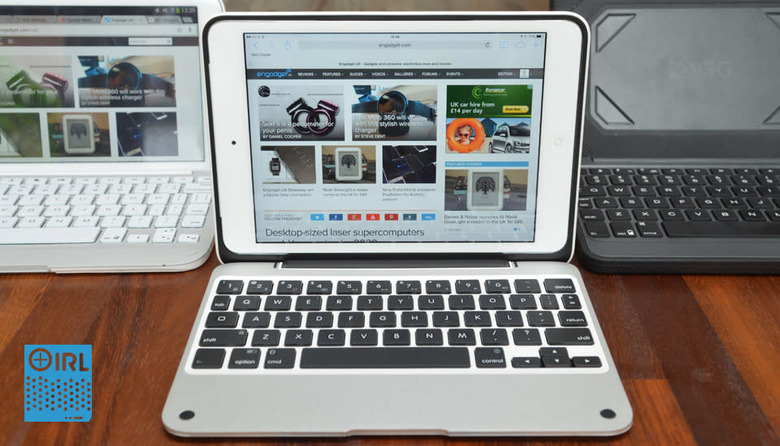
    What's up with 8-inch tablets? Microsoft reportedly canceled the Surface Mini at the last minute. Samsung's Galaxy Note 8.0 is long overdue for a refresh. Even the current class leader, the iPad mini, only came about after years of procrastination at Apple. Perhaps it's just a little harder to convince people of the merits of this category of device, compared to the greater pocketability of a phablet, the affordability of a 7-inch Android slate or the extra productivity offered by a full-sized tablet, hybrid or laptop. However, I'm happy to report that with a bit of smart accessorizing -- namely, the addition of a high-quality keyboard case that allows for proper touch-typing -- an 8-inch tablet has plenty of scope to operate as a serious productivity tool, if not an outright laptop replacement.

    By Sharif Sakr Read More
  • Google says it's struggling to cope after being asked to censor 250,000 EU webpages

    Google's top lawyer has spoken out to try to explain the mess that happened last week, when the search giant censored, and then partially reinstated, links to a number of important news articles. Senior VP and Chief Legal Officer David Drummond now admits that some of the initial censorship decisions were "incorrect," specifically in the case of some Guardian newspaper articles that were delisted for a short time. But, as you'd probably expect, he also gives Google's side of the story.

    By Sharif Sakr Read More
  • ZTE clones the LG G3's specs for a lot less money

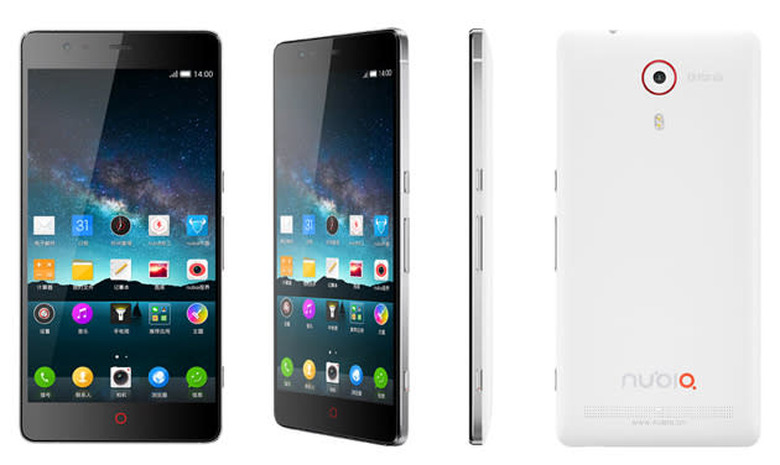
    Aside from a couple of intriguing revelations earlier in the year -- including a phone with a rumored 4GB of RAM, and another with a 13MP selfie camera -- things have recently been pretty quiet on the ZTE front. Today's freshly announced Nubia Z7 merits some noise, however, simply because it attempts to cram all the things we know and love about the LG G3 (currently one of our favorite phones) into a cheaper package.

    By Sharif Sakr Read More
  • Samsung admits 'weak demand' for its phones is damaging profits

    Samsung's marketing budget has always been vast, but in the last quarter it was far larger than even the manufacturer itself would have liked. The company admits that it's been forced to spend extra money on promotions for older and lower-end devices that have been filling up its warehouses due to "weak demand." This dip in trade, combined with the extra spend on publicity, is causing the company's recent, gradual profit decline to quicken: it now expects to earn around 24 percent less this quarter than it did a year ago, with underlying sales down by an estimated 8-11 percent.

    By Sharif Sakr Read More
  • Retired NASA probe brought back to life after 27 years drifting in space

    The last time ISEE-3 fired its engines, Madonna was moving up the charts, the stock market was booming and President Reagan was busily denying that he'd secretly sold weapons to Iran. After that final gasp from its thrusters, in February 1987, the International Sun-Earth Explorer probe would have drifted into permanent retirement -- if a $150,000 crowdfunded project hadn't come along to save it at the last minute. That project has just scored it first big success, by remotely reawakening the 36-year-old craft's engines and altering its course in order to make it easier to communicate with. Keith Cowing, who's co-leading the private group in charge of the resurrection, blogged that it was "all in all, a very good day." If the next steps go equally well, the idea is to reconfigure ISEE-3's onboard computers and sensors so that they can be used for a bit of citizen science during remaining two-month, four million-mile journey back to earth.

    By Sharif Sakr Read More
  • Google forced to 'forget' history of Merrill Lynch CEO's incompetence (update)

    Welcome to the happy Google search page. Where links to historical articles can be deleted at the request of cowards people with fragile reputations. Where the former boss of Merrill Lynch, Stan O'Neal, is a fresh, dynamic and highly employable banker, rather than a disgraced executive who contributed to the sub-prime lending crisis of 2007. Where truth-telling journalists like Robert Peston wake up to find that their articles have been cast into oblivion within the EU, thanks to a blanket ruling by a bunch of clueless lawyers the European Court of Justice. Where facts and opinions no longer count for anything if someone, somewhere doesn't like them. (A list of other Google search terms that have so far been affected by the new "right to be forgotten" can be found here -- although in none of the cases do we have any information about who objected to them, or why.) Update: Reuters and The Guardian are reporting that some links have been restored (not the one to the story about Stan O'Neal), although, as Danny Sullivan points out on Twitter, they may not have been pulled at all. The European Commission has also distanced itself from Google's takedown action, saying that the EU's ruling shouldn't allow people to "photoshop their lives."

    By Sharif Sakr Read More
  • Third-person Oculus Rift hack delivers a true out-of-body experience

    Who says VR needs to be experienced in the first-person? Using a stereo pair of GoPro cameras, mounted to a tall antenna carried in a backpack, some obscenely intelligent makers in Poland have discovered that it's possible to enjoy an Oculus Rift experience from a third-person POV instead. The cameras don't respond automatically to head movements just yet, so they have to be controlled by means of a small thumb stick, but they nevertheless augment the wearer's 3D vision: By giving him a view of the real world as seen from a couple of feet above his head, he could scan a wider part of the horizon, or safely peer out from a sniper-infested trench (do we still have those?) or simply to enjoy the uncanny feeling of staring down at his own head and neck. Not bad for an amateur Intel competition entry that was apparently constructed in just a couple of days.

    By Sharif Sakr Read More
  • Listen as a Google-backed piano turns live radio streams into 'world music'

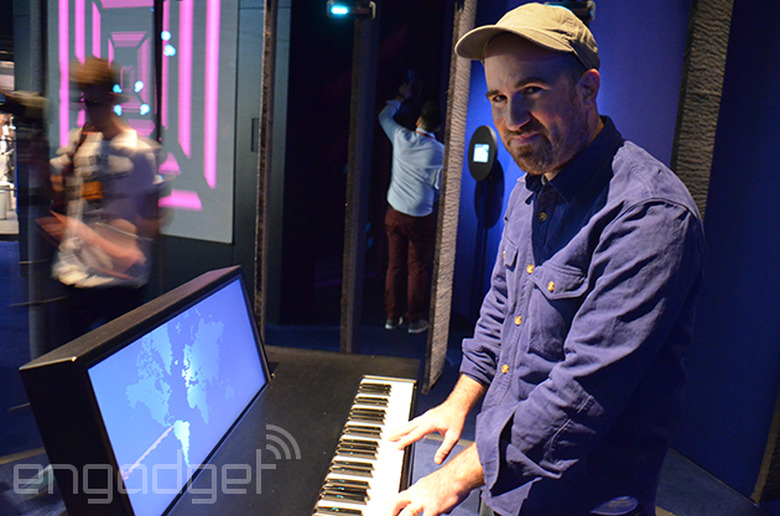
    If Google promised to fund your bohemian lifestyle for six months, in return for some kind of interactive art installation, what would you create? For the New York-based artist, Zach Lieberman, the answer was something totally out of the ordinary: He built the world's most connected digital piano, which plays notes extracted from our planet's cacophony of live radio streams.

    By Sharif Sakr Read More
  • Tinder co-founder hits company with sexual harassment lawsuit

    The corporate culture at Tinder HQ is about to get a public airing, now that its female co-founder and former VP of marketing has raised a lawsuit over allegations of sexual harassment and discrimination. Whitney Wolfe (top right) claims that she was sent inappropriate messages by one of Tinder's male co-founders, Justin Mateen (top left). These messages have been submitted as evidence, as you can probably tell from the spooked tone of the company's official response: "...it has become clear that Mr. Mateen sent private messages to Ms. Wolfe containing inappropriate content. We unequivocally condemn these messages, but believe that Ms. Wolfe's allegations with respect to Tinder and its management are unfounded."

    By Sharif Sakr Read More
  • Samsung's new consumer SSDs shoot to the top of the benchmark league

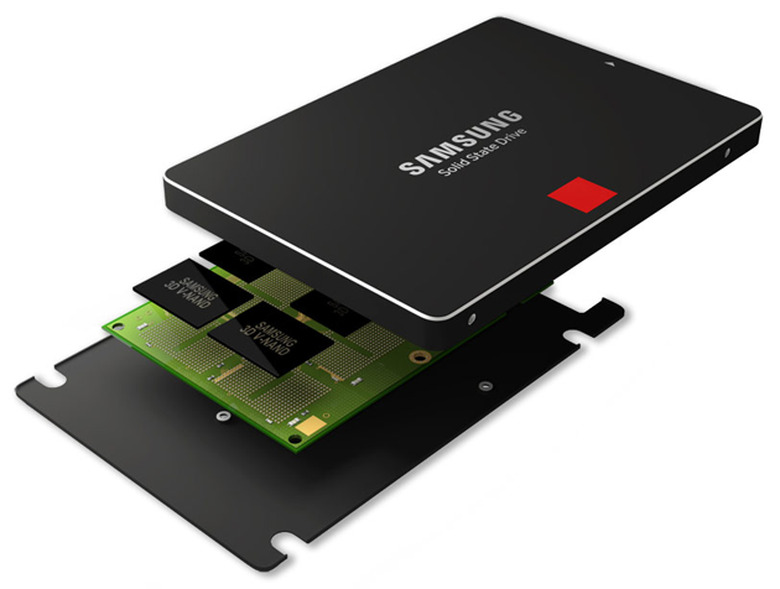
    For the last year or so, Samsung has been touting a "paradigm shift" in the way it constructs flash memory: from a horizontal to a vertical arrangement of cells, or what it calls 3D V-NAND. Now, judging from reviews of the first V-NAND consumer SSDs, the 850 Pro range, it looks like this shift has resulted in a geniune and unequivocal boost to performance. Compared to synthetic and real-world scores from rival drives, made by the likes of Intel and Crucial, Sammy's 850 Pro "led the pack almost across the board," according to HotHardware.

    By Sharif Sakr Read More
  • Boston turns park benches into solar-powered charging points

    Let it not be said that public parks are anti-technology. Over in Boston, city officials are more than happy to try new things in green spaces, including the use of solar-powered smart benches, aka "soofas." These look a lot like regular benches, except they're equipped with big, steel-encased blocks that contain vulnerable-looking photovoltaic panels and charging points for weary-legged phone users. There's also a mishmash of Verizon-connected sensors inside, which record and transmit data about air quality and noise levels. The installation of the benches is being funded by Cisco, which is presumably looking for tangible and endearing ways to promote the internet of things. However, it's being left up to local Bostonians to pitch which parks deserve to get soofa'd up -- and these pitches need to be submitted by July 11th.

    By Sharif Sakr Read More
  • Privacy-focused Blackphone starts shipping for $630

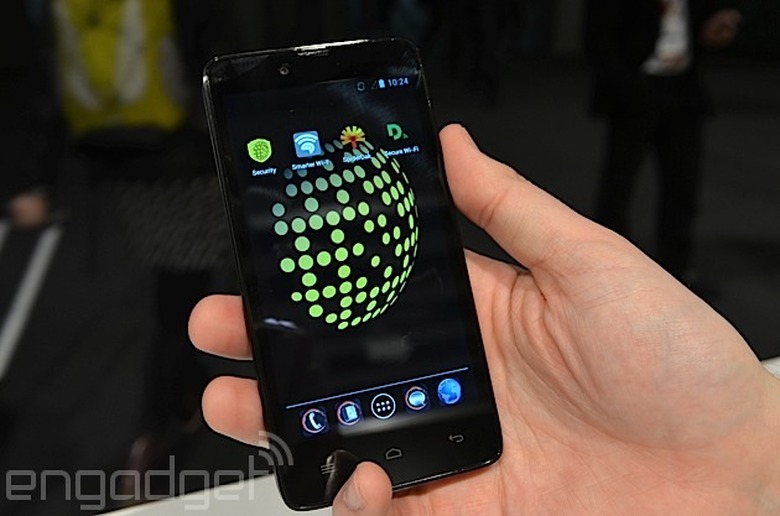
    If you missed our coverage during Mobile World Congress, then here's what you need to know about Blackphone: it's a mid-spec Android smartphone that comes pre-subscribed to (and pre-installed with) a bunch of privacy and anti-surveillance services, for a price of $629 off-contract. It's the offspring of a joint venture between Silent Circle and Geeksphone, who together have just announced that the first batch of devices is now shipping to customers who pre-ordered during the initial publicity rush. Everyone else will have the opportunity to place an order once general sales start on July 14th. Check out our hands-on video from MWC below, but bear in mind that the device was only at prototype stage back then, and it wasn't entirely stable.

    By Sharif Sakr Read More
  • Robot builders work together to create structures much bigger than themselves

    If you've ever read a novel from Iain M. Banks's Culture series, then you'll know that builder-bots play a huge role in his vision of the future: A future in which houses, cities and even entire planets can be built on the cheap by armies of drones. In a very modest way, something like this is already possible, thanks to a team of researchers from Catalonia's Insitute of Advanced Architecture. They've created a prototype design for an "ecology" of mini robots, which work together to squirt out various materials that harden to create the frame and skin of a building. Wheeled Foundation Bots come first, building up the base layers, and then Grip Bots clamber up these structures to create further levels. The video after the break makes it all so sound very simple and inevitable, but it slightly glosses over an important fact: these bots can only build according to an architect's exact instructions. And, as any builder will repeatedly tell you, architects know almost nothing about how to actually build stuff. (At least, not until robots take their jobs too.)

    By Sharif Sakr Read More
  • Germany's green energy boom is leaving a 'trail of blood' on coal companies

    Since the beginning, the commercial growth of renewable energy has been a laborious, often painful matter of government pushes, tax incentives and campaigning for greater awareness. In Germany, however, the energy market is on the cusp of evolving to the next step: An era in which the sun and the wind replace fossil fuels through the sheer, unstoppable force of the market.

    By Sharif Sakr Read More
  • Google will pay for coding lessons for thousands of female tech workers

    We know the stats by now, and they're grim: women hold just a quarter of IT jobs, and they make up a mere 18 percent of recent computer science graduates. At this year's I/O, Google has announced a new program that, it hopes, will do something to correct this imbalance. It's going to pay for "thousands" of female tech workers to discover basic coding through self-learning courses, presumably in the hope that this will advance their careers and turn them into better mentors and role models for youngsters.

    By Sharif Sakr Read More
  • Google Play for Education comes to student Chromebooks

    If Google really is on a quest for global domination, as some folks loudly proclaim, then it's wisely starting its efforts in the classroom. In addition to attracting schools to its Chrome OS platform, via low-cost Chromebooks, it's now also offering them access to the "Google Play for Education" hub through those devices. This hub contains apps, books and videos that are especially tailored to kids plowing through their primary and secondary education in the US, and it was previously only available to those who had a school-provided Android tablet.

    By Sharif Sakr Read More
  • Roku's remote control app comes to Windows Phones and tablets

    This is not a great day for developers of the various third-party Roku apps available at the Windows Store. It's an excellent day, however, for those who've been waiting on a free remote control app direct from the company itself. The app is compatible with Windows Phones as well touchscreen Windows 8 and RT tablets, but it's not designed for mouse n' keyboard setups. Just like the iOS and Android versions, it'll scan your network and (hopefully) find all your players and channels, at which point it'll act just like a regular remote, although it does appear to be missing the new enhanced search function found elsewhere. One other thing you might find lacking is the ability to stream your own choice of web files (.mov, .mp3 etc.) to your Roku box -- you'll still need an unofficial app for wild stuff like that.

    By Sharif Sakr Read More
  • Ford and Intel want to make cars that respond to your face and gestures

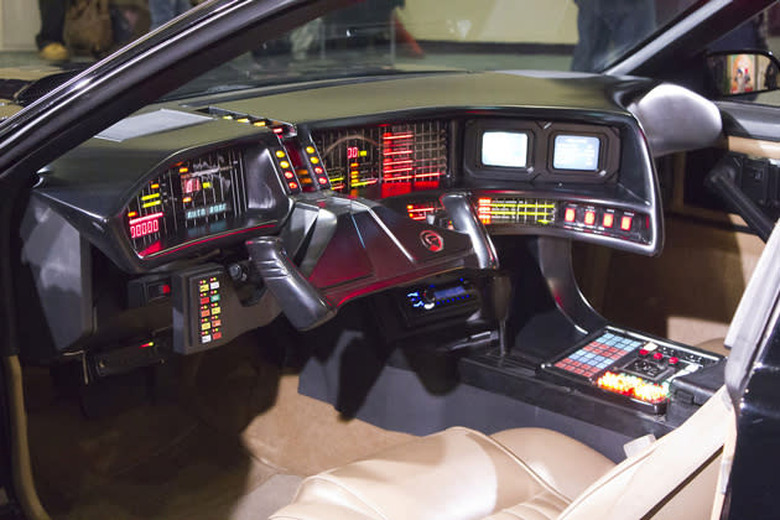
    Where do anthropology students go when they leave college? Apparently, instead of travelling the Andaman Islands investigating the social impact of cousin marriage like they're supposed to, they've been earning big bucks working for Ford and Intel on something called "Project Mobii." The name stands for Mobile Interior Imaging, and we're told that it involves a collaboration between "ethnographers, anthropologists and engineers" who are looking for ways to deliver a "more personalized and seamless interaction between driver and vehicle."

    By Sharif Sakr Read More
  • Toyota's first hydrogen car is priced to go head-to-head with Tesla

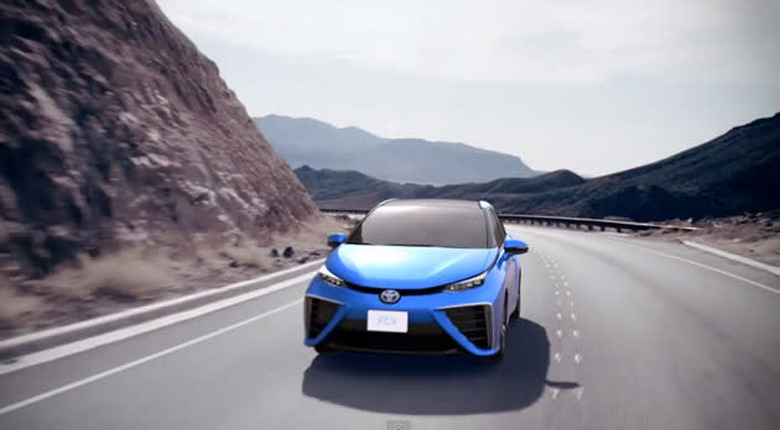
    Sure, Elon Musk is giving away Tesla patents, but don't be surprised if more established manufacturers politely decline his offer. Instead of batteries and electric charging stations, players like General Motors, Mercedes, Honda and Toyota are focusing their efforts on a very different sort of fuel system: hydrogen. Toyota has just revealed that its first commercial hydrogen fuel cell car, a sedan modelled on the earlier FCV concept, will be ready for launch in the US and Europe in the summer of next year, priced at seven million yen (around $69,000, although exact international pricing has yet to be determined). By that time, the hydrogen car and its refueling network may lag significantly behind Tesla's all-electric offerings, which currently start at less than $60,000 for the base model Tesla S with lifetime fuel costs included, but Toyota and other hydrogen pioneers believe that they'll eventually gain the upper hand, thanks to their technology's promise of greater range and quicker refueling.

    By Sharif Sakr Read More
  • Safety zealot hid a phone jammer in his SUV to stop other drivers taking calls

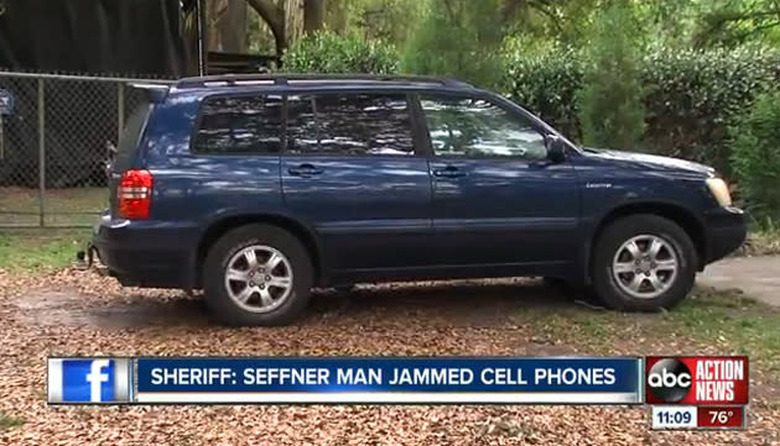
    If you happen to notice a second-hand Toyota Highlander being offered for a quick sale in Seffner, Florida, you'll know exactly who it belongs to. A local man, Jason Humphreys, has been given 30 days to pay a $48,000 fine after being caught radio-handed with a high-powered phone jammer hidden under his SUV's front passenger seat. When he was pulled over by a squad of FCC agents and police officers, who had spent days tracking the source of the wideband interference emanating from his vehicle, he reportedly told them that he was "fed up with watching cell phone usage while people were driving." Unfortunately for Humphreys, the state of Florida deems it legal for motorists to engage in phone conversations while they're on the move, whereas it severely frowns on the use of unlicensed jamming equipment that can disrupt vital communications between emergency services. The only glimmer of hope for this grumpy vigilante is if he can write to the FCC and somehow stall the fine, but even then he'll likely still face a separate case raised by an even grumpier Sheriff's office. [Image credit: ABC Action News]

    By Sharif Sakr Read More
  • Russian government dumps Intel and AMD in favor of homemade processors

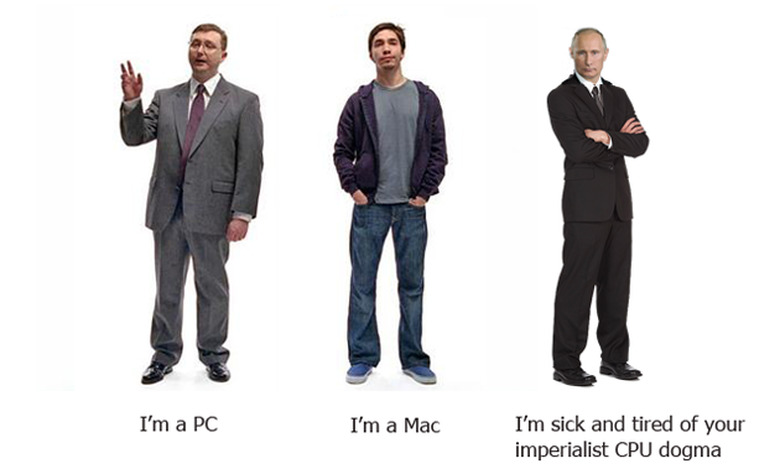
    Russia's policy on Western technology is clear: The country can live without it, especially if key issues like economic sanctions, NSA spying and GPS cooperation aren't resolved to its leader's satisfaction. It looks like this tough stance extends to US-designed computer chips too, as a Russian business newspaper is reporting that state departments and state-run companies will no longer purchase PCs built around Intel or AMD processors. Instead, starting in 2015, the government will order up to one million devices annually based on the "Baikal" processor, which is manufactured by a domestic company called T-Platforms. An interesting twist, however, is that the Baikal processor is actually based on an ARM (Cortex-A57) design, which means the East / West divorce isn't quite as complete as it might sound. It could also mean that many Russian bureaucrats won't get the chance to be a Mac or a PC: they'll have to use some sort of ARM-compatible, presumably Linux-based operating system instead.

    By Sharif Sakr Read More
  • Wink wants to simplify the smart home with a universal app and $80 hub

    You've probably never heard of Wink, but you may soon encounter its logo ("Wink app ready") or its smart home router (the "Wink Hub") the next time you go shopping at Home Depot. The logo will appear on a range of WiFi-connected devices from different manufacturers, including air conditioners from GE and thermostats from Honeywell, signifying that they can all be controlled via the Wink app for Android and iOS. The hub unit, which will go on sale July 7th priced at $80, will act as a secondary router for Wink-compatible devices that communicate over Bluetooth, Z-Wave or Zigbee wireless protocols instead of regular WiFi -- it's something Wink describes as a reluctant but necessary addition in order for these other sorts of devices to be easily controlled via its platform

    By Sharif Sakr Read More
  • Tax haven Jersey now wants to become 'Bitcoin Island'

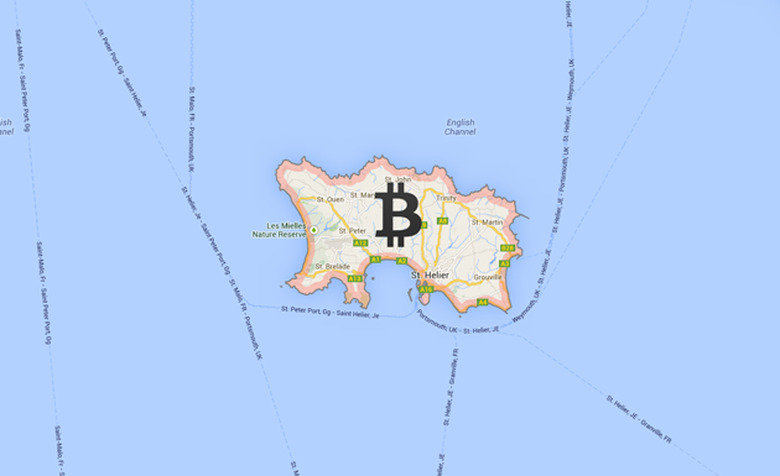
    There are advantages to being a tiny, self-governing speck in the English Channel, and the ability to create a "welcoming" financial habitat is certainly one of them. But Jersey has ambitions beyond just being a haven for regular cash. Its Treasury Minister, Senator Philip Ozouf, says he wants the island become a pioneer in the use of crypto-currencies too, and he's backed up by a campaign group that's dedicated to creating the world's first "Bitcoin Isle." The initial goal would be to use Bitcoin as local cash substitute, to pay for things like bus tickets and newspapers. But it's clear that Ozouf has his eyes set on a bigger prize: a Bitcoin banking sector that could make use of Jersey's "infrastructure of world-class financial services" and that would eventually become "central to Jersey's future prosperity." (Read: "STASH YER BITCOINS HERE, LADS!")

    By Sharif Sakr Read More
  • Quantum computing firm calls 'bullshit' as scientists undermine its technology

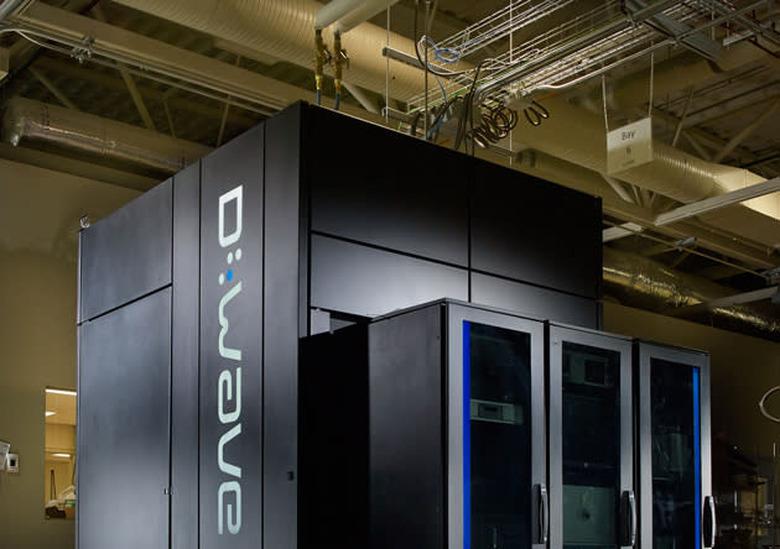
    How do you evaluate a quantum computer you just bought from D-Wave for $15 million? It's not easy, especially since no one can really understand how the machine -- with its ones, zeros and superpositioned "one-and-zeros" -- actually functions. Instead, all you can do is throw increasingly complex questions at it, and hope that it answers them quicker than a top-end classical computer. This quest for evidence of so-called "quantum speeedup" has been going on for a while, with little in the way of positive results. Now, a freshly-published collaborative study involving Google (owner of a D-Wave box), Microsoft (owner of some very advanced traditional tech), and a team of university scientists, has achieved new results that are equally disappointing. Science magazine describes the study as "the fairest comparison yet." D:Wave's founder, meanwhile, has described it as "total bullshit."

    By Sharif Sakr Read More
  • Adobe overhauls Creative Cloud with new touch features and cheaper pricing

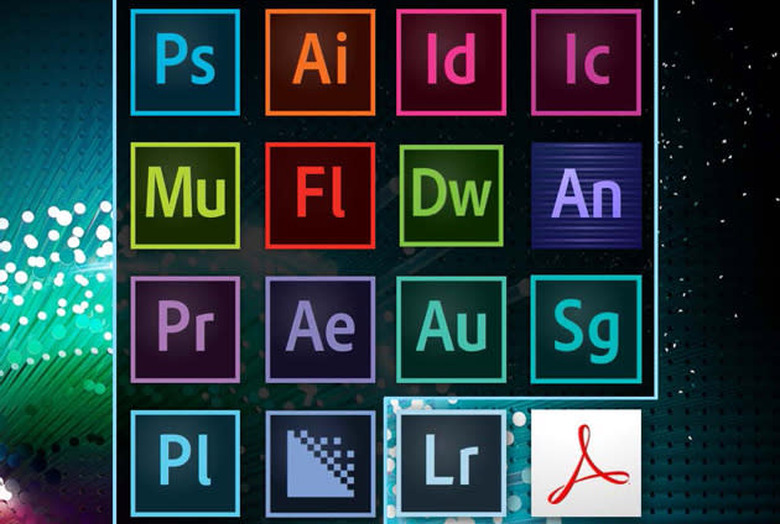
    Adobe updates don't get the same amount of attention that they used to. No doubt, this is largely due to the company's Creative Cloud platform, which pushes gradual improvements to more than 1 million subscribers automatically. But the company reckons there's still room for major overhauls every once in a while, and it claims today's is the "biggest software release since CS6." The update brings new features to pretty much all of Adobe's desktop applications, as well as four new mobile apps (which we'll get to in a minute), plus a permanent $10-per-month subscription deal for access to Photoshop CC and Lightroom CC (which has already been widely available through time-limited offers.)

    By Sharif Sakr Read More
  • Galaxy S5 LTE-A is Samsung's first phone with a QHD display and Snapdragon 805 chip

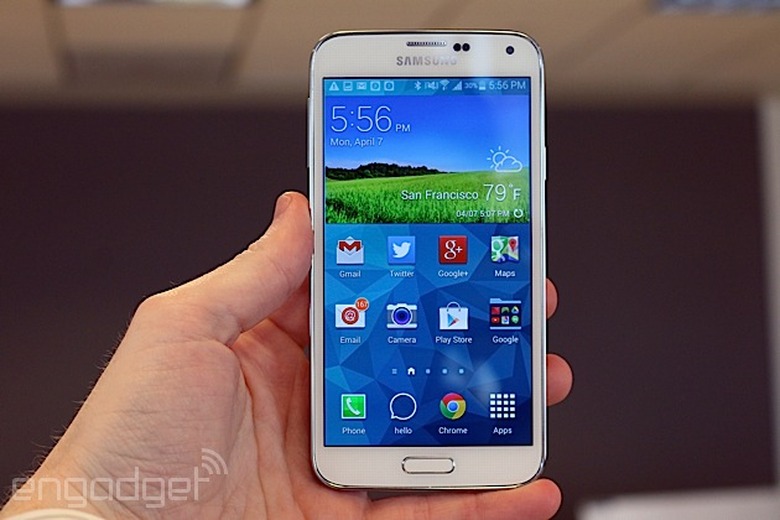
    Samsung has just announced a special variant of the Galaxy S5 for its home market. The phone -- simply dubbed Galaxy S5 LTE-A -- plays host to the manufacturer's first 2,560 x 1,440 display, which produces an even higher pixel density than the LG G3 (577 vs. 538 ppi) due to the use of a slightly smaller 5.1-inch panel. We're also seeing the first appearance of Qualcomm's Snapdragon 805 chipset (rather than an in-house Exynos processor), which is accompanied by 3GB of RAM and is built to handle 4K video playback and faster graphics in general. This chip supports LTE-Advanced too, which will apparently deliver data speeds of up to 225Mb/s to stunned, jaw-dropped customers on South Korean networks. Meanwhile, there's no word on whether this variant is headed to the West, or whether it's the fabled Galaxy S5 Prime that has been rumored for so long. But even if this is a Korea-only product, it can still be seen as a test-run for the global release of the impending Galaxy Note 4, which will almost certainly pack many of the same specs and components.

    By Sharif Sakr Read More
  • Spire breathing monitor can tell if you're stressed, relaxed or focused

    Samsung's Galaxy S5 is supposed to be able to measure stress, but there's something about its "heart-rate variability" test that just isn't very convincing. (Namely, if you enjoy a brisk walk and raise your heart-rate slightly, the phone will sometimes report an increase in "stress.") By contrast, a new hip-worn sensor called "Spire" ignores your pulse in favor of monitoring breathing patterns instead. Its creators claim that these patterns can reveal periods of "tension, relaxation and focus," as well as allowing standard fitness tracking.

    By Sharif Sakr Read More