Archive for April 2004

Back to Archive Index

Accessories (38)

  • GPS attachment for Sony digital camcorders

    Opening up whole world of possible new ways to memorialize the minutiae of your next vacation, Red Hen Systems has a new a GPS attachment for digital camcorders (though it only works with Sony cams, right now) called the VMS-X that stamps your video footage with the precise location of where it was shot.

    By Peter Rojas Read More
  • Down on digital entertainment adapters

    PC Magazine's Bill Howard goes ballistic (well, as much as he can, as it's hard to imagine him really hot under the collar about anything) on digital media adapters, those little boxes (like the DSM-320 from D-Link, pictured at right) that can stream music, videos, and photos over your home network from your PC to your home entertainment setup: The digital living room has no iPod: no killer convergence product with near-flawless design and execution that legitimizes and expands the category. Instead, welcome to the world of not-ready-for-prime-time media hubs... After testing nearly 20 of them in the past year, I've reached these conclusions: Cool and affordable as they are compared with good CD or CD/DVD changers of several years ago, they're unfinished products, missing features and short on ease of use. There's not an iPod-class hub among them.The market remains gawky and adolescent (only the Turtle Beach AudioTron is as much as 18 months old), as the portable MP3 player market was two years ago. Most digital media hubs still handle only music, not photos or videos. Interfaces are clunky. And for the most part, he's right. Most people have no idea what in the hell these things are for, and even if they did, probably wouldn't have much use for them in the first place. Obviously that's going to change sooner or later (almost certainly later), but the biggest obstacle right now is probably the lack of any real unified standards for connecting together any of this stuff (at least, not yet), not to mention the tons of competing audio and video formats to deal with. It'll get better, if for no other reason that that it has to if all these companies want to start making some real money.

    By Peter Rojas Read More
  • The naviPlay: Bluetooth iPod adapter

    TEN Technology is working on a Bluetooth adapter for the iPod called the naviPlay that'll work with Bluetooth stereo headphones (assuming that any of those ever see the light of day), Bluetooth cellphone headsets (so you can listen to your iPod and take phone calls), or with any regular headphones using an included Remote Headphone Adapter. This was actually supposed to have already come out earlier this year, and the fact that the only picture we could find of it was this simple illustration doesn't necessarily inspire much confidence that the naviPlay will be out soon. [Thanks, Chiefy] 

    By Peter Rojas Read More
  • Seven new SD expansion cards from Pretec

    A ton of new (well, seven, to be exact) SDIO expansion cards for handhelds and smartphones from Pretec: an SD 802.11b WiFi card, an SD Bluetooth card, an SD GPS module, an SD 56k modem, two SD digital camera attachments (one that's VGA quality, the other with a resolution of 1.3 megapixels), and an SD barcode scanner.

    By Peter Rojas Read More
  • Maxtor is crippling their new external hard drives for DVRs

    We found a few more details on the QuickView Expander, that new line of external hard drives for digital video recorders from Maxtor that we mentioned yesterday. Their press release was rather cryptic about what exactly the deal is with the drives, but turns out they won't actually be sold directly to consumers, you'll only be able to get them from your cable company (which presumably rents you the set top box with the DVR in it in the first place), and will definitely not be able to hook up to a PC to copy all the TV shows you've recorded onto it.

    By Peter Rojas Read More
  • Furniture for flat-screens

    Along with buying new flat-screen TVs a lot of people are buying new furniture for displaying their extravagant new purchases. And not surprisingly, the furniture industry is very eager to accomodate them, and are churning out plasma TV stands and longer and narrower home entertainment centers, and a few are also pushing "motion casegoods", which is an especially impressive way to describe a fancy television stand that moves up and down within a case. [Via I4U]

    By Peter Rojas Read More
  • Two new Bluetooth printer adapters from Iogear

    We're all about cutting cords these days, and making it that much easier to print wirelessly (and thus eliminate one more cable) are a pair of new Bluetooth printer adapters from Iogear, one for printers with USB ports, the other for models with parallel ports. [Via The Unofficial Bluetooth Weblog]

    By Peter Rojas Read More
  • Maxtor's external hard drives for digital video recorders

    Maxtor has a new line of external hard drives specifically for adding extra storage capacity (up to 160 hours) to digital video recorders, though we're not exactly sure what makes Maxtor's QuickView Expander drives so especially well-suited for use with DVRs2 or what recorders they're compatible with.

    By Peter Rojas Read More
  • Iomega's floppy drive + memory card reader

    Almost as if they're stuck in some sort of weird gadget time warp, Iomega has just come out with the Floppy Plus 7-in-1 Card Reader, a combination floppy disk drive/Flash memory card reader for transferring digital photos to those ancient 1.44MB floppy disks that we've worked so hard to purge from our lives.

    By Peter Rojas Read More
  • A couple of new FM transmitter attachments for the iPod

    A couple of new FM transmitter attachments for the iPod, which plug into the audio jack of your iPod and broadcast the sound on an open FM frequency  (assuming you can find an open one) to a nearby radio: Monster's iCarPlay (pictured on the left), which is meant only for use in a car (as you can guess from the name); and the PodFreq from Sonnet Technologies (pictured on the right), which actually encases the iPod in a translucent shell. Read - iCarPlay Read - PodFreq

    By Peter Rojas Read More
  • USB Flash drives as e-tickets

    IO Data is pushing a new electronic ticketing system in Japan that uses those little keychain USB Flash drives instead of paper tickets for concerts and sporting events. The way it works is that when you buy a ticket online it automatically puts your ticketing information onto the drive, which you bring to the venue with you to gain admission. Sure, this would work, but there's no reason why you couldn't do just about the same thing with cellphones (and in fact, they already are).

    By Peter Rojas Read More
  • BlueTake's combination USB Flash drive/Bluetooth adapter

    We're sorta over those USB Flash drives that come with built-in WiFi adapters (mainly because it seems like nearly every laptop these days comes with built-in 802.11b or g), but since built-in Bluetooth is still relatively scarce we actually could probably be persuaded to pick up the BT009M, a new USB 2.0 Flash memory drive from BlueTake that replaces the 802.11b adapter with a Bluetooth adapter. ModTown (no relation to Paul Weller) has the review.  [Via Designtechnica]

    By Peter Rojas Read More
  • USB drives for rock stars

    Because in the body of every geek is the soul of a rock star yearning for release: Taiwanese firm Wepro has put a 128MB USB drive into a huge eagle-shaped totem-pole-looking tchotchke that you hang around your neck. The mini-to-normal USB adaptor stows conveniently behind the eagle when not in use. They also have several moderately less extravagant silver pendants in the same range (photos at the Akiba PC Watch site below). These are selling in Akihabara for about Y5,000-Y6,000 at the moment, but no idea whether they're being exported elsewhere.

    By Gareth Edwards Read More
  • The Wi-Pics WiFi attachment for digital cameras

    Missed this first time around, but Rob Galbraith checks out Wi-Pics, a prototype of a WiFi attachment that fits into the CompactFlash slot of a digital camera so you can beam photos to a PC over a wireless network (support for doing it over the Internet is coming). The only problem is that most digital cameras weren't designed to operate with a cable running out of their memory card slot, and a few won't even power-on unless the lid to the slot is closed. There's also talk of a version that has a 40GB hard drive built-in (so you'll almost never run out of storage space) and a high-end model with a bar code scanner so you could conceivably associate specific photos with specific subjects just by swiping a card. We're still a bit off from seeing these in stores, but the basic unit will supposedly go for about $1,600 when it comes out. If you can't wait, there's already a camera with a WiFi attachment on the market, Nikon's D2 digital SLR. [Via DailyWireless]

    By Peter Rojas Read More
  • Griffin's iTalk voice recorder attachment for the iPod

    Another new iPod peripheral today: iPodLounge checks out the iTalk, a new voice recorder attachment for the iPod (third-generation models only — no mini, either) from Griffin which comes with a built-in speaker and a jack for connecting an external microphone. There a couple of other of similar products on the market from Belkin, but don't waste your time trying to bootleg that next Franz Ferdinand concert with any of these — Apple deliberately cripples the iPod so it can only record at 8KHz, which is fine for voice memos, but is otherwise so crappy that you won't  want to listen to anything else you've recorded with it.

    By Peter Rojas Read More
  • ThinkOutside's Stowaway Wireless Keyboard for PDAs

    Pocket PC Thoughts review of ThinkOutside's Stowaway Wireless Keyboard for PDAs that works with most Palms and Pocket PCs. The Stowaway actually uses infrared rather than Bluetooth (frustratingly there really aren't any Bluetooth wireless keyboards available for PDAs yet), so for it to work you actually have to make sure that the IR ports on both your handheld and the keyboard are lined up properly.

    By Peter Rojas Read More
  • Belkin's Digital Camera Link for the iPod

    Belkin already came out with a Flash memory card adapter for the iPod last year, but if you don't want to bother with memory cards (or maybe have one of those increasingly rare digital cameras that only has internal storage), they've got a new digital camera link coming out that'll let you transfer photos directly from your camera to your iPod using a USB cable. We could be wrong, but couldn't you connect all sorts of USB storage devices to this? [Via MacMinute]

    By Peter Rojas Read More
  • CSI's hardcore Bluetooth GPS module

    From CSI Wireless, a new super-charged professional Bluetooth GPS module for handhelds and laptops that uses Differential GPS to achieve a level of accuracy within one meter (regular GPS is usually accurate to within ten or fifteen meters). Most people don't need anything this hardcore, and the PowerMAX is mainly aimed at those in the surveying and mapping business.

    By Peter Rojas Read More
  • Accessorizing your iPod

    We already had a pretty good idea that people liked their iPods, but Apple's not the only ones cashing in: Reuters has a story on the over 200 accessories and add-ons you can get for the portable player, ranging from dozens and dozens of protective cases, a purse with built-in speakers (pictured at right), and snowboard jackets, to all the different FM transmitters, memory card adapters, and microphone attachments.

    By Peter Rojas Read More
  • Ambicom's new SD WiFi card also doesn't work with Palms

    The only frustrating thing about hearing news of yet another 802.11b WiFi SD expansion card is learning that like all the rest of them, the WL11-SD from Ambicom also won't work with Palm handhelds, just Pocket PCs. Sandisk has been talking for ages about putting out Palm OS drivers for their WiFi SD cards, but so far nothing. Where's the love?

    By Peter Rojas Read More
  • 256MB MP3 player with built-in mini-speaker

    Yes, we know it's hard to get excited about a 256MB MP3 player these days, but the new Kana X3 from GreenHouse does have something you won't find on too many other players — a tiny speaker so you don't have to listen to music with headphones. And we're sure that music sounds absolutely perfect on it. [Via TRFJ]

    By Peter Rojas Read More
  • Lexar's $4,500 8GB CompactFlash memory card

    It'll set you back a cool $4,500, but Lexar has a new 8GB CompactFlash memory card coming out next month. Obviously your average person with a Nikon CoolPix isn't going to be buying one of these cards (the cards are CF Type II and so probably wouldn't work anyway), but with the cost of digital SLRs now within reach of more casual photographers, dropping a few grand on a memory card is one of the few ways left for professional digital photographers to set themselves apart from the rest of us. [Via Digital Media Thoughts]

    By Peter Rojas Read More
  • Know your TV tuner cards

    Home Theater PC News has a guide with way more information than you could possibly need about buying a TV tuner card for a PC and whether or not it'll be compatible with your choice of digital video recording software. Especially helpful is the illustrated guide to identifying the different cards, which is sure to come in handy should you spot one in the wild. (Big points to whoever can identify the pictured at right.) [Via LockerGnome]

    By Peter Rojas Read More
  • Hi-Touch's new dye sublimation photo printer

    Imaging Resource review of the HiTi 730PS, a new high-quality digital photo printer from Hi-Touch Imaging Technologies which uses dye sublimation, rather than inkjets, for printing. The big advantage of dye sublimation, which is what many (if not most) professional digital photo printers use is that it heats the dye to 350 degrees, vaporizing it so that it sort of saturates the photo paper and you don't get any space between pixels like you do with an inkjet printer. And Imaging Resource gushes that, "You won't find an inkjet printer built as solidly, a company as dedicated to perfecting its products — or a cheaper way to get the best print from your images." [Via Photography Blog]

    By Peter Rojas Read More
  • A First Step Towards Bluetooth Stereo Headphones

    Wires are the enemy — well, they're MY enemy. If Bluetooth can replace a cable between a phone and a headset, then why can't it replace the cable between an MP3 player and headphones? Well, the big problem, sadly, is that the big Bluetooth gods in the sky, who are mostly phone guys, didn't think anyone would want stereo output over Bluetooth. A company called Open Interface is working to change that, and they're working on a reliable system for sending stereo audio over the air using Bluetooth (there's another company called OpenBrain already offering Bluetooth headphones using something different). Their system is capable of broadcasting from a stereo receiver, or even a portable device, to headphones or speakers. In fact, Samsung is already using a similar system in one of their new home-theater-in-a-box packages. Open Interface still has more to do before we actually see an iPod with Bluetooth. From the pictures, it looks like their hardware is still too big to fit in portable electronics (pictured at right, one of their Bluetooth modules), but that might just be for test purposes. And even if the hardware shrinks down, there's a good chance that portable audio players with Bluetooth in them might actually get bigger, if only to find space for a larger battery. If you think your digital jukebox has crappy battery life now, just imagine how bad it will be when it has to drive an MP3 player AND a Bluetooth radio. Oh, and then compounding all this will the fact that you'll have to recharge your headphones, too.

    By Eric Lin Read More
  • The 5D1 surround sound headphones

    You can't get true surround sound out of just two speakers (well, at least not very easily). There's only one option — adding more speakers — which isn't such a big deal for home theater systems, but with headphones it's a little more complicated. The 5D1 gets the full surround sound effect by adding some extra speakers that pop up like a pair of wings. Oddly enough these aren't the first pair of surround sound headphones with extra speakers we've ever seen, but it's the first pair to come complete with its own 5.1 channel USB soundcard so you can just plug it into your PC and use it without having to shell out for a new card. [Via The Red Ferret Journal]

    By Peter Rojas Read More
  • Portable hard drive with built-in fingerprint scanner

    For the marginally paranoid amongst us, a new portable hard drive from Memory Experts International called the Outbacker that comes with a biometric fingerprint scanner for added security (we think it's named the "Outbacker" because it's also been ruggedized to withstand a thirty foot drop). That extra protection will cost you, though. The 20GB Outbacker goes for $450 and the 40GB version costs $650.

    By Peter Rojas Read More
  • DIY iPod mini car mount

    Jesse Melchior wanted to listen to his new iPod mini in his Ford Explorer, so he spent four days building a custom-mount for it: I used the center console of my car to sculpt an add-on piece that would house the iPod mini and connect it to my existing car stereo. I took a mold of the final sculpture using L-200 latex and backed it with an Ultracal 30 plaster shell to hold its shape. I then cast the piece using dental acrylic. Using the Belkin car charger, I connected it to the iPod mini and placed the iPod into the acrylic piece at the angle I wanted, then flipped the whole piece over and poured another layer of dental acrylic over the protruding edge of the iPod mini and the car charger, creating a perfectly snug fit for the iPod to rest into and connect to the charger. I drilled holes on an angle in front of where the iPod mini would sit, and inserted fiber optics that ran to two blue LED's under the console. This would light up the front of the iPod at night for easier operation. I sanded the entire piece and painted it with a coat of automotive primer, then placed it into the original console. Using automotive bondo, I blended the edges into the console for a smoother look. When that was dry, I sanded it and then painted the entire console using automotive paint to match my existing interior. I also added a silvery-white Apple logo in the center of the piece. I connected the iPod mini to my Pioneer car stereo using the CD-RB10 adapter, which connects to the L+R audio output RCAs from the iPod mini using the line-out from the Belkin car charger. I added two extra cigarette lighter adapters to plug in the car charger and the LEDs. Everything was nicely hidden below the center console. This sounds like a lot more trouble than we would ever go to. Sure, it looks nice, but c'mon, four days of work?!

    By Peter Rojas Read More
  • Iomega's Super DVD QuickTouch 8X Video Burner

    PC Magazine seems to really like the Super DVD QuickTouch 8X Video Burner from Iomega (a DVD recorder for coverting your old analog home videos into DVDs), even going so far as to say it's worth the extra $110 you'd spend by buying this rather than a similar DVD recorder from HP.

    By Peter Rojas Read More
  • The real smallest 512MB USB Flash drive

    So maybe that 512MB USB Flash drive from Solid Alliance and Pretec we mentioned yesterday isn't actually the smallest of its kind. PQI has a new 512MB version of their iStick USB Flash drive out that is one-third as thick and almost exactly the same width and length. [Thanks, Jonathan]

    By Peter Rojas Read More
  • EverGlide's LED mouse pad

    We're not sure we can deal with yet another thing on our desk that has to be plugged in, but EverGlide has a new USB-powered mouse pad called the GigantaRay that comes with a blue LED built-into it. You'd think that a backlit mouse pad would make it difficult to use an optical mouse, but strangely enough it doesn't.

    By Peter Rojas Read More
  • World's smallest 512MB USB Flash drive,

    From Solid Alliance and Pretec, the world's smallest 512MB USB Flash drive. Unfortunately that photo of a 500 yen coin does little to convey how small it is to anyone who isn't Japanese (or anyone else who isn't overly familiar with Japanese currency). Anyway, the drive is just 18x40x9mm in size, so bust out your tape measure if you wanna see how small that really is.

    By Peter Rojas Read More
  • Memorex's 8X external DVD burner

    A brand-new external dual-format DVD burner that can record to both DVD-R and DVD+R discs at 8X speed Most of the other 8X external DVD burners we've seen could only record one format at 8X and the other at 4X (and yes, we know how annoying this two competing formats thing is). The Memorex True 8X External Dual Format DVD Recorder also uses both USB 2.0 and Firewire to connect to a PC (it's all about compatibility).

    By Peter Rojas Read More
  • D-Link's new DSM-910BT Bluetooth Stereo Adapter Kit

    You can cut one more set of cords: D-Link has a new Bluetooth Stereo Kit for making any set of (powered) speakers wireless. The DSM-910BT comes with a Bluetooth adapter for your stereo, MP3 player, CD player, or boombox and a Bluetooth receiver for streaming the audio to your speakers.

    By Peter Rojas Read More
  • Shure's new e3c headphones

    Shure have been making recording studio equipment for years, and if you have eagle eyes, you'll spot the twisted cord of their monitor earphones sneaking behind the ears of many of your favorite singers. A little over a year ago, Shure introduced two consumer versions of their in-ear monitor, the $130 e2c and the $500 e5c, and now they've lowered the price of the e2c and introduced a new set of midrange headphones. The e3c has better sound and a new design with a little white on the ear beds to complement your iPod (something which will also supposedly get you mugged in the UK). While the e3cs lack the twin-speaker design of the e5cs, they offer nearly the same quality at one-third the price. Time to trade up.

    By Peter Rojas Read More
  • The EagleEyes eye mouse

    This seems to be the week for optical tech. In the same vein as Wednesday's iCare system, Mass High Tech reports on Boston College's EagleEyes device which lets users with disabilities control a computer using sheer eye movement (there are some other similar setups out there). To work, the EagleEyes requires you to strap on five surface electrodes (yeah, like the scary ones used on your doc's EKG machine) which are placed above the user's face, surrounding his or her eyes. The sensors detect the user's eye movement, sending the signal to an amplifier, which in turn moves the mouse pointer on the computer screen. There's also a mini version where everything except the electrodes fit in a small box, and that runs off of a 9-volt battery and connects to a USB port. Apparently getting the hang of it takes hours of practice, but for some people it's the only way they can use a computer and get online.

    By Peter Rojas Read More
  • Solar powered iPod charger

    It's getting sorta cliché to complain about the iPod's battery life, but we like Bird Electron's solution: a solar powered iPod charger. It's not due to go on sale until May, but before you get your hopes up, it takes two days to fully recharge an iPod. And also they're in Japan and won't ship these overseas.

    By Peter Rojas Read More
  • Compro's digital TV tuner card

    Compro has a couple of new TV tuner cards for PCs coming out that can capture digital (as well as analog) television broadcasts. The VideoMate DVB-T comes in two versions, an internal PCI card for desktop and an external card that connects using USB 2.0. We were going to write something about how the VideoMate won't be compatible with all that new broadcast flag stuff that will eventually be required for receiving digital television broadcasts. But then we looked into it and realized that it can only receive DVB-T broadcasts, which is a standard for digital television that hasn't been adopted here in the US (though it is used in most of Europe, India, China, and a few other places).

    By Peter Rojas Read More

Apple (13)

  • Steve Jobs says it again: no video iPod

    We really don't want to believe him, but in yesterday's press conference for the first anniversary of the iTunes Music Store Steve Jobs insisted that there isn't a video iPod in the works: Mr. Jobs addressed the issue of video on iPods when asked by Mike Wendland of the Detroit Free Press whether or not Apple was looking to add features to the iPod. "We want it to make toast," replied Mr. Jobs. "We're toying with refrigeration, too." While intended to get a laugh, which it did, Mr. Jobs also offered a more substantive answer as to why Apple had heretofore not added too many features to the iPod. "One of the things we say around Apple, and I paraphrase Bill Clinton from the 1992 presidential race, is 'It's about the music, stupid.'" Mr. Jobs says that there is a big difference between the way people listen to music and other activities like watching videos. Specifically, he said, you can listen to music in the background, while movies require that you actually watch them. "You can't watch a video and drive a car," he said. "We're focused on music." Fair enough, but it means that they're basically ceding the market for personal video players to Sony, which will be making a big push in this department soon.

    By Peter Rojas Read More
  • What's next for Apple

    The New York Times has this week's laudatory article about the genius of Steve Jobs and how he's managed to craft a billion-dollar business out of the iPod, but things get really interesting towards the end of the piece, where they cover the speculating about what might come next for Apple, like a media center Mac, or even more crazy, a line of WiFi phones. [Via GigaOm]

    By Peter Rojas Read More
  • Apple veep says no Powerbook G5 soon

    Greg Joswiak, Apple's VP for hardware product marketing says that "it will be some time before that processor [the G5] will be in a notebook." Yeah, it's disappointing, but you gotta take statements like these with a grain of salt. Of course he's gonna say this. He's in charge of selling PowerBooks, and they just came out with a bunch of new ones yesterday that he has to unload. If people thought that the G5 was coming out in three or four months there's a good chance that a lot of them would wait, knowing that they could probably get a better machine for about the same price. It's just like Toshiba and that Pocket PC that they're supposedly not coming out with. [Via MacMinute]

    By Peter Rojas Read More
  • A pivoting display from Apple?

    You never want to read too much into these sorts of things, but Apple has reportedly received a patent for a new type of rotating display with both horizontal and vertical alignments. Could be that Apple has a pivoting display in the works, or it could just be a patent related to the Newton (pictured at right), which could switch from portrait to landscape modes, that's finally gotten processed. You can probably guess which one we're hoping it'll be.

    By Peter Rojas Read More
  • Apple vs. Europe

    European collection agencies are no less determined to protect their musicians than the American counterparts. But in Europe, those agencies compete, in a sense, with national governments quick to impose taxes on music playback devices. Should the European music consumer pay twice for music — once when buying a device (like an iPod), and again when buying the music (like from iTunes Music Store)? Er, no. So, while competing forces battle it out, Apple has delayed introduction of the iTunes Music Store in Europe. Oh, and Apple is refusing to dish out the 24-dollar levy per iPod it has sold in France, too.

    By Brad Hill Read More
  • Apple updates PowerBooks and iBooks

    As expected, Apple came out with those newly updated PowerBooks and iBooks today. Nothing major, mainly just a bump up in processor speed, though now all of the Powerbooks come with Airport Extreme (aka 802.11g) pre-installed. This is also supposed to be the last refresh until the G5 PowerBooks hit later this year.

    By Peter Rojas Read More
  • Apple to update PowerBooks and iBooks next week

    Not to go completely overboard with the Apple news these past few days, but AppleInsider says that next week Apple is supposed to update all of their iBooks and PowerBooks with faster processors and better graphics cards. So you better postpone that trip to the Apple store for a few days.

    By Peter Rojas Read More
  • Apple says: iPod mini problems are few and far between

    Following up on our post about this the other day, Apple says that reports of the iPod mini having problems with static and distorted audio are greatly exaggerated and that there are have been only a few "isolated" cases of users complaining about any trouble with their player.

    By Peter Rojas Read More
  • Apple's new eMacs

    Almost forgot about this one: Apple just bumped up the specs on the eMac, which is supposedly for the educational market, but they'll see it to anyone that wants one (especially gullible parents). The new eMacs have up to 1.25GHz processors, double the RAM (from 128MB to 256MB), an 8x DVD burner on the high-end model, and either a 40GB or an 80GB hard drive.

    By Peter Rojas Read More
  • Apple offering free upgrades to 15GB iPod because of iPod mini delays

    There's a massive backlog of orders for the iPod mini (whether because of quality-control issues or massive demand or both), and rather than ask customers who ordered an iPod mini several weeks ago to wait another three weeks for theirs to ship, MacSlash says that Apple is instead offering free upgrades to the 15GB iPod.

    By Peter Rojas Read More
  • Rejected iPod engravings

    Apparently you can't just get whatever you want engraved on your iPod (unless you do it yourself). These are supposedly some of the messages Apple rejected: 10,000 Stolen Tunes Inside Rip, Mix, Burn Down RIAA Headquarters Powder and razor blade not included Lick My Shiny Metal Ass Something Small and White Enrique Eglasias Isn't In I play with myself Steal this? Will self destruct when used [Via Cult of Mac]

    By Peter Rojas Read More
  • Using the iPod mini for self-defense

    In addition to letting you carry around 1,000 songs in your pocket, apparently the new iPod mini makes an excellent means of self-defense, at least according to Phil Leif, who says he used his to fend off a mugger on Saturday: So this guy lunged out and grabbed my shoulder as I was changing songs and, with my bag stolen just last week, I was in no mood to make any concessions of my property to appease him. I immediately took a panicked swipe and made solid contact between the base of my mini and his forehead. He stumbled back, dazed from the blow, and I took this chance to kick him solidly in the stomach and scurry away. There's no word on whether or not the mini took a licking and kept on ticking, but we do know that if it did break we would not want to be the person at the Apple store who has to tell Phil that this sort of damage isn't covered under warranty. [Thanks, Alberto]

    By Peter Rojas Read More
  • Thinner than the iPod

    A new 20GB MP3 player from Cowon called the iAudio M3 which is supposedly thinner than the iPod (though it looks like it's wider and longer). It's also the second hard drive-based MP3 player (the iRiver being the first) to sport a remote control with an LCD screen (though there's no display on the player itself).

    By Peter Rojas Read More

Apps (5)

  • The Phone Dial Web Browser

    We appreciate the sentiment behind the Phone Dial Web Browser, an old rotary phone dial pad that's been hooked up to a PC that you use to "dial up" websites via their IP addresses rather than their domain names, but we have enough trouble remembering the IP address for Engadget, let alone those of any of the hundreds of other sites we visit every day. [Via TRFJ]

    By Peter Rojas Read More
  • Testing Skype at Bryant Park

    Bill Koslosky decided to check out the hype behind Skype (we almost feel dirty writing that), and try and see how their new Voice over IP software for wireless Pocket PCs worked with the free WiFi they have at Bryant Park here in Manhattan. Works pretty well, though he says that the quality of the free calls he made to other Skype users in Germany and Italy would have been better if he'd been able to use a headset rather than struggle with the built-in microphone on his Dell Axim X3i Pocket PC.

    By Peter Rojas Read More
  • The FlipAlbum Recorder

    There are already a few other new standalone digital photo viewers on the market that you can connect to a TV, but the FlipAlbum Recorder also has a built-in CD recorder if you want to copy your photos from your memory card and burn them onto a CD-R.

    By Peter Rojas Read More
  • TeleNav - Another way to get around by cellphone

    Speaking of using cellphones to get around, Mike Langberg of the San Jose Mercury News played with TeleNav, a new GPS navigation service from a company called Televigation that you can use with Nextel phones: I borrowed a Motorola i730 phone operating on Nextel's network from Televigation, and started driving familiar routes around town — from home to office, from supermarket to home, from office to appointments. You enter the street address of your destination either by picking out letters with the keypad or by calling Televigation and using its computer voice-recognition system. Best of all, you can go to the Web page of your TeleNav account before starting a trip and enter the destination with your computer's keyboard. The i730, attached to one end of a footlong flexible arm hanging off the windshield from a suction cup, never failed to know its exact location and gave me accurate turn-by-turn directions on how to reach my destinations. Route information was displayed on the i730's small color screen, with a large left or right arrow to indicate upcoming turns. The data included the direction I was traveling, the distance to the next turn and the total remaining distance for the trip. I know now my commute to work is exactly 14 miles. Cellphones that can tell you where you are can also be used by other people to track your movements, and Mike makes the obligatory noise about the potential these things have for invading people's privacy.

    By Peter Rojas Read More
  • Skype goes mobile

    You may or may not have already heard all the hype about Skype, a new free peer-to-peer Voice over IP service (which was almost certainly given that name so that lazy writers like us would use the word "hype" next to it). Anyway, up until now you had to use Skype with a PC, but they've just announced a mobile version of the software that let's you use a WiFi-enabled Pocket PC to make free Skype calls with from any hotspot. [Thanks, Avaksi]

    By Peter Rojas Read More

Big Tech (6)

  • Sony's assault on the download market

    Sony seems intent on trying our patience recently with gadgets that offer cool hardware but are hopelessly hamstrung by DRM and own-brand lockins. Latest of the bunch is the NAS-A1 NetJuke stereo it's launching as part of the Any Music joint venture (background), which is based on the model of living-room multimedia PCs masquerading as home audio, tied to a music download service, that can also be hooked up to a TV or a separate LCD screen for web/mail functions. The thing we find tedious about the whole deal is that it seems you can only stream music to the stereo over a home LAN from one of Sony's Vaio PCs, and that you can only check out music to portable players via MemorySticks or NetMD. The other uninspiring aspect is that the NAS-A1 costs Y90,000 (about $830), which seems like an awful lot. If you have a broadband line you likely have a PC and a stereo already, in which case you'll probably be looking to hook the two together using something like Prismiq's MediaPlayer rather than buy a box like this.

    By Gareth Edwards Read More
  • Advice for Sony: build a wireless iPod clone

    Now that Sony is finally getting with the program and coming out with a hard drive MP3 player to compete with iPod (at least, that's what they keep saying they're going to do), John Alderman says that one way the Japanese giant could get a leg-up on Apple would be to go wireless: If Sony—or another company—can build a wireless delivery system that bypasses the ties to PCs, say, by hosting the music management system and providing assured access to your music, wherever you may be, that system could leapfrog Apple as Apple has done to Sony. Never having to worry about replacing a scratched CD sounds good now, and in a few years, as iTunes music buyers have changed jobs, and switched computers, not worrying about replacing the music files they forgot to de-authorize will sound just as compelling. Which sounds about right to us. We've never been too keen on the whole Digital Rights Management thing in the first place (we want buy music and just own it, not an arcane array of rights to it), but if we're ever going to accept it, it needs to be a lot less PC-centric. There's really no good reason why consumers shouldn't be able to buy songs directly from the iTunes Music Store with their iPod over a wireless connection, like if they're out at a Starbucks and just feel like downloading some new tunes.

    By Peter Rojas Read More
  • Sony's latest superexpensive toys

    The latest additions to Sony's stunningly expensive Qualia range, which it also launched in the US yesterday, are on the way. We're really in "if you have to ask how much, don't bother" territory here, but let's get the pricing out of the way: the 010 headphones are Y189,000 (about $1,800) and the 017 MD player is Y262,500 (about $2,400). The MD players are, however, "individually crafted from a solid brass block" and include an "exquisitely crafted" charging stand, so you can draw comfort from the fact that you're not just buying an MD player, you're buying a work of art.

    By Gareth Edwards Read More
  • IBM's mainframe hits middle age

    Tomorrow is the fortieth anniversary of IBM's first mainframe computer, the System/360, which they rented to companies for anywhere between $2,700 and $115,000 a month.Not only have mainframes not disappeared like everyone thought they would, IBM still manages to sell $3.2 billion of them a year. Which, just to put things in perspective, means that IBM will make way more money this year from selling supposedly obsolete mainframes than, say, palmOne will make this year from selling smartphones and PDAs or than Apple will make this year from selling iPods. [Via Slashdot]

    By Peter Rojas Read More
  • Sony giving up on low-end digital cameras

    As if you needed any more proof that cameraphones were a big deal, apparently Sony is giving up on low-end digital cameras and is all but ceding that part of the market to cameraphones. Picking up their slack will be Sony Ericsson, which is coming out with a bunch of one megapixel cameraphones later this year.

    By Peter Rojas Read More
  • Sony Ericsson/Microsoft pranks

    Curiously, not one but two different April Fool's Day fake stories involving Sony Ericsson switching to Microsoft software, one from Smartphone Thoughts saying they're going to start using Windows Mobile, and another from MSMobiles claiming that they're going to port their UIQ user interface over to Windows CE. Guess that Sony Ericsson switching to Microsoft is some people's secret fantasy or something. Read - Smartphone Thoughts Read - MSMobiles

    By Peter Rojas Read More

Buying Guides (5)

  • DIY guide to building a home theater PC

    Pretty straightforward guide over at GamePC to building your own home theater PC (which is basically just a multimedia PC that can do the DVR thing, and play DVDs, MP3s, and video files) detailing what kind of case, hard drive, and graphics card you'll want to buy and what different types of software you'll want to install (like myHTPC, which is pictured at right). [Via FirstAdopter]

    By Peter Rojas Read More
  • Looking for the right wireless digital audio adapter

    Our pal Craig Froehle over at GearBits checks out a bunch of different wireless digital audio adapters — the Netgear MP101, Creative's SoundBlaster Wireless Music, Roku's Soundbridhe M1000 and M2000, and Turtle Beach's AudioTron-100, and finds that they all fall short (conspicuously absent: Slim Devices' Squeezebox. UPDATE: They just added it.). Besides none of them having 802.11g rather than the slower 802.11b, they were also all missing another feature he was looking for: support for streaming Internet radio. We think he might want to check out the new Wireless-B Music System from Linksys (pictured at right), which should be out soon. It doesn't have 802.11g, but it can definitely stream Internet radio stations.

    By Peter Rojas Read More
  • Roundup of 8 megapixel camera roundups

    Ok, on exactly the same day both Digital Photography Review and Luminous Landscapes have roundups of a bunch of eight megapixel digital cameras — the Sony F828, Minolta DiMAGE A2, Canon PowerShot Pro1, the Olympus C8080, and the Nikon 8700. So we're putting together a little roundup of the roundups. Read - Digital Photography Review Read - Luminous Landscapes

    By Peter Rojas Read More
  • Forbes.com's picks for the best new digital cameras

    Over at Forbes.com, a good guide to overview of what's out there in digital cameras that breaks things down into four categories: basic point & shoot models, ultracompacts (curiously omitting mention of Pentax's Optio series), digital SLRs (like Nikon's D70, pictured at right), and all those new high-resolution eight megapixel monsters.

    By Peter Rojas Read More
  • Deal on aisle 12: Typhoon's GPS Pocket PC

    We hadn't even been aware that there was another Pocket PC with built-in GPS navigation out there (besides Mitac's Mio 168 and a few ruggedized models), but stranger still is the fact that it's being offered as a weekly special at a chain of supermarkets in the UK. Besides the GPS, the Typhoon also has a 400MHz processor, 64MB of RAM, and a CompactFlash expansion card slot.

    By Peter Rojas Read More

Computing (26)

  • The C64 Direct-to-TV

    Oddly enough, we never got on the Commodrore 64 tip when we were a kid, for some reason our pops was an Atari loyalist, so we went from an Atari 2600, to an Atari 400, and then an Atari 800. We think we might finally have our chance, now that there's the C64 Direct-to-TV, a reproduction of an original Commodore 64 joystick that actually has 30 games loaded onto it and that you just connect directly to a TV, no console needed (hence the name). [Via FirstAdopter]

    By Peter Rojas Read More
  • The MediaREADY 4000

    A new cable set top box from Video Without Boundaries called the MediaREADY 4000 with a built-in progressive scan DVD player that can store all your digital photo, music, and video files locally on its hard drive or stream them off your PC over a home network. Like Digeo and it's Moxi Media Center, it looks like Video Without Boundaries is looking for a cable provider to partner with. Now if only they'd add a DVD burner. [Thanks, Marc]

    By Peter Rojas Read More
  • Optware's 300GB holographic optical discs

    We were always pretty convinced that the future would have something to do with holograms, and we were right: a company called Optware has been showing off a storage drive that uses a new type of holography to cram up to 300GB onto a single 12 centimeter disc. They're hoping to have a version for consumers ready by 2006. [Thanks, Justin]

    By Peter Rojas Read More
  • The TI-84 Plus 'Silver'

    Twenty years ago electronic calculators were the geekiest gadgets that one could dream of. That's why when reading about the TI-84 some of us were transported back to the time when trigonometric calculations were (sort of) as cool as bluejacking is today. Some features of the new TI-84 include: 2.5 times the processor speed of the TI-83 Plus; 1.5 MB FLASH ROM memory for data archive and storage of Apps; 24KB of available RAM memory and USB port for computer connectivity.  

    By Alberto Escarlate Read More
  • Laptop drives hit three figures

    Toshiba today announced that it's broken the 100GB barrier with its latest 2.5" drive. It claims the 100GB unit is tougher than before, quieter, and uses 20% less power. It's also only 9.5mm thick, which bodes well for getting those laptops slimmed down even more. Sample shipments start in May this year, so these should be coming to a drivebay near you soon.

    By Gareth Edwards Read More
  • Sony's mobile TV studio-in-a-box

    From Sony, a $20,000 mobile television production studio-in-a-box that brings network quality broadcasting just that much closer to the masses: the Anycast basically shrinks down to a briefcase what used to require an entire van's worth of equipment, and comes with a switcher, an audio mixer, camera controller, a character generator, and an encoder for sending out a live Real video stream. Comes out in August. [Via BuzzMachine]

    By Peter Rojas Read More
  • Symbol's new ruggedized handhelds

    They're not for the average user (in that they're mainly meant for businesses), but Symbol has a couple of new ruggedized handhelds, the MC9000-S and the MC9000-K, which can run on either the Pocket PC operating system or Windows CE.Net and have built-in WiFi, Bluetooth, 400MHz processors, 3.8-inch screens, and optional GSM/GPRS or CDMA for making cellular connections. The main difference between the two is that the M9000-K sports a full keyboard in addition to a numeric keypad.

    By Peter Rojas Read More
  • Mitsubishi's new high-def DVR set top box

    Brand new heavy-duty digital set top box from Mitsubishi with an 120GB hard drive for recording TV shows. The HD-6000 can record up to 12 hours of high-definition programming, and about 72 hours of boring old standard definition television. It's also supposed to have two Firewire ports for "digital home networking" though they don't get into the specifics about how the HD-6000 might connect up to other devices in the home. [Via Uprez]

    By Peter Rojas Read More
  • High-definition TV comes to the Media Center PC

    TiVo is just about to get on the high-definition tip, but if you want a digital video recorder that can handle high-definition television, VBox just announced that a couple of their new digital TV tuner cards, the DTA150 and the DTA151, will work with PCs running on Microsoft's Windows XP Media Center Edition software. Now you just gotta make sure you have a hard drive on your Media Center PC that's big enough to store more than fifteen minutes of high-definition video. [Via Matt Goyer's blog]

    By Peter Rojas Read More
  • Greening your desktop

    Swedish firm Swedx offers a solution to the growing mountain of nasty toxic plastic cases left behind when computers are thrown away. They sell wooden-cased monitors, mice and keyboards in beech, ash, or sapele (makes a change from beige, beige, black, black or beige). The cost is about 30% more than the plastic versions, but we suppose they're easier on the eye than plastic if your taste in furniture runs that way. As science journal Nature points out, though, doing away with plastic cases doesn't solve the problem of how you dispose of the innards. Or, for that matter, the tons of resources needed to make them. [Via Slashdot Japan]

    By Gareth Edwards Read More
  • Getting into the Zvue

    He didn't want to at first, but Mike Langberg of the San Jose Mercury News says that the Zvue, HandHeld Entertainment's new portable video player that uses memory cards rather than a hard drive, has won his grudging acceptance: I want to dislike the Zvue, a personal video player that sells for just $149, but I can't. HandHeld Entertainment, the San Francisco company which introduced the portable device late last year, over-promised and under-delivered. There's no user manual, the online customer support site is skeletal and the company's business model looks flawed. Yet the Zvue (www.zvue.com), much to my surprise, actually does a decent job of playing back video on its 2 1/2-inch color LCD screen, and works well as an MP3 music player. At such a low price, that's remarkable.

    By Peter Rojas Read More
  • Jetway's dual-user PC

    Desktop PCs cost so little these days (I mean, c'mon, you can snap up a new Dell for under four hundred bucks these days), that we think you'd have to be really hard-pressed to go down this route, but Jetway sells a new small form factor PC called the 860Twin that can be used by two people at the same time. Supposedly both users can access all the software installed on the PC at the same time, but that gets you into some murky legal territory since most software for PCs, including Windows XP, is licensed for only one user (though we won't say anything if you won't). And besides which, what happens when one person needs to reboot? [Via Slashdot]

    By Peter Rojas Read More
  • Bluetooth for Bluebeard?

    Rik Abel has an easy solution to the problem of you looking like a crazy person who's talking to themselves when you walk around making calls on your cellphone with a Bluetooth headset: he wants someone to build a Bluetooth-enabled mechanical parrot with a loudspeaker and microphone that you wear on your shoulder (yes, like Bluebeard the pirate) and then talk to as if you're speaking with the person on the other end of the call. Also solves that frustrating problem we posted about the other day of it being more annoying to hear only one side of a cellphone conversation rather than just two people talking, though we doubt that any sort of mechanical parrot could have talked that guy in Japan out of punching that girl on the subway. You can't reason with people like that. [Via Blueserker]

    By Peter Rojas Read More
  • First 16x DVD burners coming

    It seems like we were only just getting going with 8x DVD burners, but BenQ, Lite-On, Accesstek, Pioneer, NEC, and several other manufacturers are scrambling to be the first to come out with a 16x DVD burner. With any luck, you'll be able to buy one this summer. [Via Designtechnica]

    By Peter Rojas Read More
  • The church of Bluetooth

    Could someone please explain to us what in the hell this is about? Or is this just some goofy Photoshop-enabled attempt at Bluetooth humor? UPDATE: Mystery solved. A few people wrote in that as we suspected, this photo is fake and is the result of the Church Sign Generator.

    By Peter Rojas Read More
  • Sony's 25GB paper Blu-Ray discs

    We doubt there are many things in this world that store 25GB and are biodegradable, so kudos to Sony and Toppan Printing, who have come up with a type of media for the next-gen Blu-Ray Disc format that's 51% paper. Advantages include being able to print complex designs on the label side, and post-disposal security since you can cut them in half with a pair of scissors. It's not altogether clear at the moment how long the disks last, though, or whether they're supposed to be semi-disposable or not.

    By Gareth Edwards Read More
  • Is the G5 really the fastest?

    Popular Mechanics decided to investigate Apple's claims that the G5 PowerMac was the world's fastest personal computer, but found out it was a lot trickier than they expected (Apple actually was forced to rescind those claims by the Independent Television Commission in the UK). Besides not being able to get the same exact kinds of Macs and PCs that were used by VeriTest for their comparison, they also weren't able to get VeriTest to give them any of the special configuration files used for running the benchmarks run on OS X. They did end up running some other tests and found that the G5 was in fact faster than the dual-processor PC they tested from HP, though they argue that ultimately these sorts of tests are meaningless for most people since a computer's performance is determined by lot of things besides just its processor speed.

    By Peter Rojas Read More
  • From titanium to aluminum to carbon fiber?

    There are a bunch of rumors flying about that Apple might ditch aluminum and make the G5 Powerbooks which are due out this summer out of carbon fiber. There doesn't seem to be much backing this up, though MacRumors seems to take a report they dug up about a slight decline in worldwide aluminum production as an encouraging sign that a carbon fiber Powerbook is in the works.

    By Peter Rojas Read More
  • The Information Versatile Disk for Removable

    The name sounds like pure Engrish, but Information Versatile Disk for Removable is an actual real thing. The idea behind it is to have a universal standard for swappable hard drives so you can pop your hard drive out of your PC and pop it into your car or TV or home entertainment center or another PC. IVDR is backed by LaCie, Seagate, Maxtor, Hitachi, Fujitsu, Sanyo, and others, but the very first one, a 20GB model, comes out in Japan later this month from IO Data.

    By Peter Rojas Read More
  • Iomega's new Rev Drive

    A new line of backup drives from Iomega that use 35GB hard disk catridges (though if you squeeze really hard — and use compression — they say you can fit up to 90GB on each disk). The Rev Drive is mainly meant for archiving and the disks sell for around $60 each.

    By Peter Rojas Read More
  • The Apprentice PC

    Any else notice that computer with the massive LCD screen they have in the loft on The Apprentice? Well it turns out that it's the Tek Panel 300 from HY-TEK, an all-in-one PC with a built-in 30-inch widescreen LCD, 2.4GHz processor, 512MB of RAM, 120GB hard drive, and TV tuner for recording TV shows. It'll only set you back about $6,495. [Via I4U]

    By Peter Rojas Read More
  • Introducing the Forward Versatile Disc

    As if we needed any more competing disc formats, you can add FVD, or Forward Versatile Disc, to the growing list that now includes DVD, EVD, Magneto-Optical, HD-DVD, Blu-ray, Professional Disc, and probably a few others we're forgetting. A dual-layer FVD can hold up to 11GB of data, or more than twice what a regular DVD holds. And though that's far less than the up to 50GB that Blu-ray discs might hold, since the discs use Microsoft's Windows Media Video 9 format they can store over two hours of high-definition video. The other advantage of FVD players is that they're cheaper to make since they use red lasers rather than the more expensive blue laser that you have to use to read a 50GB a disc. A few Taiwanese manufacturers, including BenQ and Mustek, say they're going to get behind the new format, but we doubt that many studios will bother releasing their movies in FVD.

    By Peter Rojas Read More
  • LaCie's Bigger Disk d2 Extreme

    LaCie is coming out with a new version of their one terabyte external hard drive, the Bigger Disk d2, that's called (and how freaking predictable is this?) the Bigger Disk d2 Extreme. (Whoever names stuff at LaCie is definitely overpaid.) Anyway, the "extreme" part of the the Bigger Disk d2 Extreme is that it uses the new Firewire 800 standard which can transfer files twice as quickly as the original Firewire. Like the original Bigger Disk d2, it can also store up to two years worth of music. Should be out next month.

    By Peter Rojas Read More
  • Coming soon: set-top boxes with crippled DVD burners

    Cable boxes with hard drives for recording TV shows like a TiVo have been around for a while now, and in about a year or so they're going to start coming with built-in DVD burners as well. That's great for anyone who wants to create an archive of their favorite shows, but the TV networks and cable companies are already paranoid enough about people pirating and sharing their shows online (as well they should be), and so they're pushing for the burners to have copy protections that would prevent you from watching DVDs recorded with your cable box on another DVD player or a PC. So essentially you'd be able to create an archive, but when your cable box dies on you or you move and switch to a different cable or satellite provider, your entire collection would be useless to you. [Via Designtechnica]

    By Peter Rojas Read More
  • Gateway to close all of its stores

    The news just come over the wires a few minutes ago that Gateway will be closing all 188 of its retail stores on April 9th. We're taking this as a sign that their recent strategy of focusing on consumer electronics like digital cameras, DVD players, and LCD TVs hasn't been working out for them.

    By Peter Rojas Read More
  • First WiFi hotspot to offer free VoIP phone calls

    Speaking of Vonage's WiFi phone, Wi-Fi Networking News reports on what might possibly be the first free public Voice over WiFi phone. The VoIP phone, which is connected to a wireless laptop, was set up at a local cafe in Portland, Oregon by a nonprofit group called the Personal Telco Project, and anyone can just walk in and make free phone calls (with purchase of a beverage, that is). Right now it can only be used to make calls to the 360 area code in southern Washington state (it's a bit complicated to explain why) and toll-free 1-800 number calls. The ability to make local calls to Portland numbers is up next.

    By Peter Rojas Read More

Cybersecurity (5)

  • Blocking Bluesnarfers

    And the award for most creative cashing-in on the whole pseudo-trend of Bluesnarfing goes to E2X, a company which just pitched us their line of bags that come with a special lining that blocks radio signals, thus preventing any would-be Bluesnarfers from hijacking your Bluetooth-enabled cellphone or PDA. Or you could just figure out how to disable the "discoverable" mode on your device; you probably should anyway.

    By Peter Rojas Read More
  • Hacking disposable digital cameras gets a little easier

    So the big catch about those new $11 disposable 1.3 megapixels digital cameras is that the only way to get the photos off of them is to bring them back to the photo store, which extracts the JPEGs saved on its internal memory, and then either makes prints of them or copies the files onto a CD-R or both. That is, of course, unless you want to get into the business of hacking the cameras, which not an inconsequential number of people are willing to do to get a decent digicam for eleven bucks. Making the job even easier, it turns out that vintage Palm connector cables are nearly a close fit to the port on the camera, though hacking the camera is by no means a project for the faint of heart. [Via Bargain PDA]

    By Peter Rojas Read More
  • Feds want to wiretap push-to-talk

    Guess the push-to-talk party is over: the Feds say they need to be able to wiretap those walkie talkie-type push-to-talk messages (they've been able to listen in on cellphone calls for years). The only catch is that right now right now the only carrier that'll actually be able to do push-to-talk wiretaps is Nextel —Verizon, Sprint, and Alltel all say that they don't have technology set up yet.

    By Peter Rojas Read More
  • Using RFID to track your every move at the airport

    you know that a lot of people aren't going to like this, but the Transportation Security Administration wants to start putting RFID tags into airline boarding passes in order to keep tabs on the location fo all the passengers at an airport. The upside to the RFID tags (at least supposedly) is that it will speed the process of going through security checks for people participating in the agency's new "registered traveler" program. But on the other hand, since they can know where everyone is (and where everyone is supposed to be), it could also potentially mean that you could arouse suspicion if you spend too much time in a restroom or linger at a gate other than your own for too long.

    By Peter Rojas Read More
  • Bluesnarfing

    Every few months some consulting firm trying to (literally) scare up some business will come out with a report about how Bluetooth or WiFi or some other thing is vulnerable to hackers and is a major security risk. Usually they at least come up with some catching name for it, and the latest to come along is Bluesnarfing. It's true, you can use Bluetooth to grab personal data off of somebody else's phone or PDA; sharing data is an inherent part of the Bluetooth protocol. The thing is that this can only be done when your Bluetooth is on AND your device is set to discoverable mode, though there are two Nokia handsets (the 6310 and 8910) which are vulnerable even when they are not in discoverable mode, and if you have one of these you need to get a firmware upgrade to prevent the attack. While you're probably not going to get Bluesnarfed anytime soon (especially here in the US where so few people even have Bluetooth on their phones), the moral here is that you should only set your Bluetooth phone or PDA to discoverable mode when you need to pair up with another device or squirt a business card to a colleague. Doing that should reduce the likelihood of getting snarfed to just about zero. Leave your phone wide open and, yeah, sooner or later something bad is probably going to be open. But you wouldn't leave the front door to your house unlocked either, would you?

    By Peter Rojas Read More

Entertainment (3)

  • Tap that tune

    Yeah, AT&T Wireless' new song ID service (which lets you figure out who wrote a song just by dialing a number on your cellphone and holding the phone near the source of the music for 15 seconds) is great if you can actually hear the song in question. But what if you've just got some song stuck in your head, what then? You could try humming the song and seeing if that works, but while we have an unwavering faith in the power of technology, we're guessing this probably won't fly. Well, Toshiba says they're working on something close — a way that you could figure out the name of that song that's driving you mad just by tapping out the rhythm. They say it's already 99% accurate, but it'll still be a little while before you'll be able to name that tune by tapping it out on your cellie.

    By Peter Rojas Read More
  • $14 DIY steady-cam

    Some guy managed to build a DIY "steady-cam" for $14 (those things which help keep TV crews keep their videocameras from shaking while they're running around shooting reality shows), which might not sound like a big deal until you realize that a professional Steadicam (that's the brand name) costs around $1,500. [Via MetaFilter]

    By Peter Rojas Read More
  • “Hey Ya!” at 29 pence

    It just gets better in Europe, through the wires we learn that Wippit relaunched today offering downloads at 29p ($0.54). This move is the declaration of an European price war for digital songs. Most European services follow the price model created by Apple iTune's and charge the the equivalent of 99 pence per download. Price wars are always good for consumers and this one could, eventually, cause in a longer-term the death of the CD format as we know it.

    By Alberto Escarlate Read More

EVs and Transportation (6)

  • Six wheels good, four wheels bad: Covini's new six-wheeled sports car

    At first glance it looks like it's just somebody having a little fun with Photoshop, but this is for real: a new six-wheeled sports car from Italian automaker Covini Engineering called the C6W that they're claiming is the first of its kind. Why the extra wheels? Besides the usual macho stuff of feeling superior to all the losers with four-wheeled cars, having four wheels in the front is supposed to improve traction by reducing lift and make it easier to take corners.

    By Peter Rojas Read More
  • The Porsche Cell Solution

    Just got the scoop on the Porsche Cell Solution, a new hands-free cellphone dock for any Porsche Cayenne, 911, and Boxster models from 2001 on. The actual cradle for the phones is modular, so if you replace your handset all you have to do is take out the detachable cradle and swap in a new one. Works with tons of phones from Siemens, Nokia, Sony Ericsson, Samsung, and Motorola, but we think there's a reason they decided to roll with the Treo 600 for the promotional photos.

    By Peter Rojas Read More
  • Just like Sony: Panasonic 3D car navigation system

    Just a few days after Sony unveiled their 3D in-car navigation system/multimedia player, Panasonic has one of their own, the Strada CN-HS400D, which just like Sony's XYZ system can give you an eerily video game-like 3D rendering of where you are and how to get where you're going. Also like the Sony system, the CN-HS400D has a 30GB hard drive, can play MP3s and MPEG4 video files, and you can hook it up to a DVD player. But perhaps the most frustrating similarity between the two is that this one is also only for sale in Japan.

    By Peter Rojas Read More
  • Ford wants to wake you up

    We didn't think Volvos could actually get much safer, having always been the car of cautious, yet upscale, suburbanites, but that isn't stopping their parent company, Ford, from trying. At the New York Auto Show this week Ford is showing of some new technology designed to curb drowsy-driving that will be included in all Volvos before 2010. Using optical scanning to sense a driver's drooping lids, the car could create a variety of warning methods, including a vibrating steering wheel, the sound of the car driving over rumble strips (that's what those things are called!), and a visual warning projected on the windshield, which sounds pretty unsafe in itself. The "active system" can automatically adjust any steering that it deems to wild, something which could help stop the estimate 4% of car crashes that are fatal (and also end all forms of recklessly fun driving for the rest of us). Other companies are getting in the accident-avoidance business too, like Infiniti who plans to install similar equipment on this fall's 2005 models. While these technologies would undoubtedly help some drivers avoid accidents, why don't we just try something a little easier like not driving when we're tired or not chatting on our cellphones or just basically paying attention?

    By Peter Rojas Read More
  • Sony's 3D car navigation system

    A new car navigation system from Sony called the NV-XYZ that doesn't just show you where you are on a map, it actually creates a detailed 3D rendering of your location and the path you need to take. But it gets even better. You can use the unit to check email, access the web, watch TV, look at a rearview video camera and pop the unit out of the car and hook it up to a PC to transfer audio and video files (as well as updated maps) onto its 30GB hard drive. And we hate to break it to you, but this one looks like it's for Japan only.

    By Peter Rojas Read More
  • The Multiparker MP 710

    All of Slate's tech stories lately have involved cars (and yes, we know it's partly our fault), and the latest is about the Multiparker MP 710, an automated robotic car parking system for public garages: The underground vault that stores the car is arranged like a closet outfitted with a pair of giant shoe racks. The cars are stacked in columns four-high along two walls. Similar to a subway, two tracks and one electrified rail carry each vehicle to its steel cubby hole. After the car-bearing pallet drops into the vault, it moves laterally to the closest size-appropriate space. The taller top row is reserved for SUVs, the bottom three for cars. Once the car sidles up to its berth, an empty pallet that's sitting in the space slides out, and the car-bearing pallet slides in. The empty pallet moves up to replace the one that vacated the parking room. The whole process takes about a minute and a half.

    By Peter Rojas Read More

Gaming (7)

  • 1,000 is the magic number for player capacity

    A survey conducted by JupiterResearch concluded that the ideal capacity for a digital music player is of storing 1,000 songs. Ninety percent of consumers have no more than 1,000 songs on their PCs. And 77 percent responded to be interested in players with a capacity of 1,000 songs. The 4GB hard drive included in Apple Computer's iPod Mini, and in MP3 players from some Apple rivals, holds roughly that number of songs. "Hard drive players with such large capacity for content go above and beyond not only the music that most consumers want on their portable music player, but also beyond the digital music that they own." Hard drive size isn't the only thing that matters to music lovers. When asked which features matter most, 55 percent listed a rechargeabl I remember the 20 Mbytes hard drives many years ago. If anybody asked I would never think of storing multi-gigabyte files. What about an informal survey? How many song files do you have? Comments are open.

    By Alberto Escarlate Read More
  • Game console sales plummet

    Ok, so we weren't surprised to hear that sales of video game consoles last quarter were down 25% compared with the same quarter last year (sales of games are actually up, on the other hand). It's pretty easy to understand why: it's been a few years since the last major game console, the Xbox, hit stores and at this point everyone is already looking ahead to the Xbox 2 and the PlayStation 3. You can only drop the price of the Xbox, the Game Cube, and the PS2 so far before you reach a point where everyone who is gonna buy one has bought one, no matter how cheap they get. [Via EEG News]

    By Peter Rojas Read More
  • The man behind the N-Gage

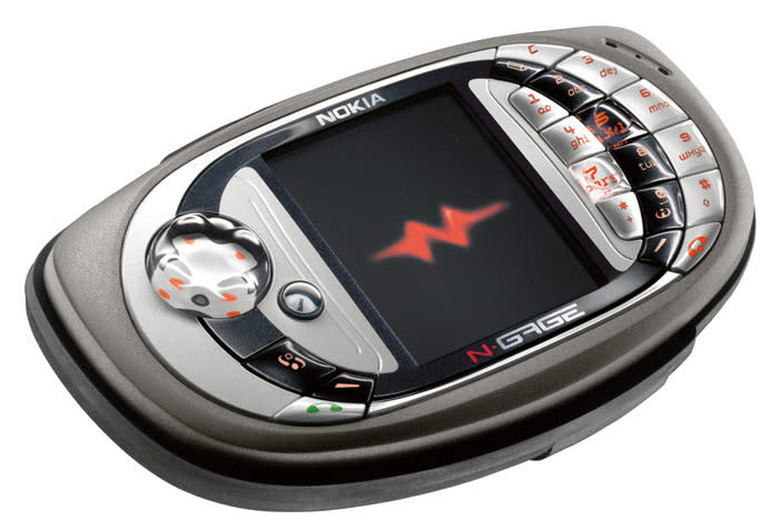
    GamesIndustry.biz has an interview with Ilkka Raskinen, the guy at Nokia in charge of gaming, and the person ultimately responsible for both the new N-Gage QD and the fiasco that was the original N-Gage. No major revelations, (apart from the news that they have some online multiplayer games for the N-Gage coming out) but you do have to give props to Nokia for actually trying to learn from their mistakes.

    By Peter Rojas Read More
  • The N-Gage QD

    It's official, and it's not called the N-Gage 2. It's the N-Gage QD (why the "QD" we don't know) and they've fixed a lot of the stuff everyone hated about it: there's no more sidetalkin', an easily accessible memory card slot, better battery life, and a brighter screen. And it's backwards-compatible with all the original N-Gage games. Should be out in Europe in May and here in the States a month later.

    By Peter Rojas Read More
  • N-Gage 2 side-by-side with the N-Gage

    And Flashfly.net has some more photos of the N-Gage 2, these ones showing it side-by-side with the original N-Gage. There's also a rumor going around that none of these photos that have surfaced are actually of the final version of the N-Gage 2, and that there will be some differences in the one we're supposed to see on Wednesday.

    By Peter Rojas Read More
  • Confirmed: N-Gage 2 to drop on Wednesday

    Rumors of the NGage2 have been solidifying in the past month, and confirming what we'd heard earlier, there will be a press conference this Wednesday, the 14th, to launch the next generation of Nokia's gamephone. Photos have been circulating around the internet, but insteading of answering questions, it's only making us all ask more of them. For example one of the softkeys was labeled "Camera," but we don't see a camera anywhere. And where did the music button go and what's that checkmark button in its place? FeetUp.org asks: Will they be announcing some new games this week as well?

    By Peter Rojas Read More
  • N-Gage 2 coming on April 14th?

    We're hearing that Nokia is is going to rock our worlds on April 14th with a glimpse "into the revolutionary future of 21st century mobile gaming". If the N-Gage 2 turns out be just as revolutionary as Nokia claimed the original N-Gage would be (i.e. not very), some heads are going to roll in Finland. [Via GadgetMadness]

    By Peter Rojas Read More

Laptops (5)

  • The OQO on 24

    OQO411 has posted up a short clip of the scene from that episode of the TV show 24 we mentioned yesterday where an OQO Ultrapersonal Computer turned up in the hands of one of the bad guys.   UPDATE: And jasmeet.blogs.com has some screenshoots from the show of the OQO in action. Check 'em out!

    By Peter Rojas Read More
  • JVC bringing their new ultralight MP-XV841 Mini Note laptop to the US

    It's been already been out in Europe and Asia for a little while, but JVC says they're finally going to sell their ultralight MP-XV841 Mobile Mini Note laptop here in the States. The MP-XV841 should be out in June, and has a 1GHz processor, a combination DVD/CD-RW drive, built-in 802.11g WiFi, 256MB of RAM, a 40GB hard drive, and what they claim is up to 6.7 hours of battery life. The only thing is that the screen is way too small — just 8.9 inches — and your money (the MP-XV841 is set to retail for $2,399) would probably be better spent on Sony's new TR3API, which has similar specs and a slightly bigger display but sells for a hundred bucks less.

    By Peter Rojas Read More
  • Fujitsu's new ultralight Loox laptops

    Fujitsu has a couple of new ultralight laptops in their Loox series, both of which come with WiFi and built-in biometric fingerprint scanners (for that added security you're always craving). The main difference between the T70H (the one on the right) and the T50H (the one on the left which looks eerily like Sony's TR1A), is that the former features a DVD-RW drive while the latter only has a CD-RW/DVD combination drive. And we hate to be a tease, but don't expect to see either to be sold here in the States anytime soon.

    By Peter Rojas Read More
  • ThinkPad to come in many colors

    Worried that members of the fairer sex aren't buying ThinkPads (like the T41, pictured at right) because they only come in one color — black — IBM is going to start selling laptops in a whole range of colors beginning later this year. (It only took them six years longer to figure this out than it took Apple.) We're not exactly complaining, since design is important, it's just that we find it hilarious when manufacturers think that the only thing they need to do to make gadgets appeal to women is to build them in different colors, rather than bother to figure out what features they might be looking for. [Via The Register]

    By Peter Rojas Read More
  • The pink iBook

    We'll spare you the Legally Blonde jokes, but check out this pink iBook that a guy in Minneapolis made for a friend of his. People are apparently harrassing him to do one for them, but if you really, really want one there's a company called Colorware that colorizes iBooks as well as iPods and Powerbooks. [Via shiny shiny]

    By Peter Rojas Read More

Lifestyle (1)

  • ESC chairs

    Technically not a gadget, but what the heck: a furniture company in Germany is selling these chairs designed to look like giant ESC keys. [Via CacheOp]

    By Peter Rojas Read More

Microsoft (2)

  • Microsoft's Xbox 2 iPod killer?

    Could Microsoft be preparing to drop a potential bombshell with the Xbox 2? We don't know anything for certain yet, but check out this tantalizing bit of gossip we received in response to our post earlier today about the Xbox 2 and whether or not it's going to sport a hard drive: Regarding the Xbox 2 hard drive, I was snowboarding in Whistler, B.C. from February 19 - 26, 2004.  We were in a bar called the Amsterdam Cafe in the village one night and J. Allard, the head of Microsoft's Xbox division was in the bar with some friends. I recognized him from a recent Business 2.0 article and we started talking. (He bought my friends and I a round of drinks he called "Hey Zeuses" - they were Red Bull and tequila and they were nasty.) Anyway, we were talking about the Xbox 2 and he said their current plan was not to include a hard drive in the Xbox 2 itself, but to offer a portable hard drive as an accessory you could buy separately. Here's the kicker: He said what they were trying to do was to incorporate MP3 (and WMA, obviously) functionality into the portable hard drive and turn the thing into an iPod killer.  Basically, the idea was to come up with an MP3 player that was as good or better than the iPod that would also serve as the hard drive for the Xbox 2. And he said they planned to sell them as a loss leader at $100 each.  If this is true (and let's be clear that we haven't gotten any independent confirmation of this), it would be huge, although we're still a long way off from the Xbox 2 going on sale and a lot of things could change between now and next year.

    By Peter Rojas Read More
  • How Microsoft got into cellphones

    If you've ever wondered why exactly Microsoft started making software for cellphones (you know, beyond the usual stuff about wanting to take over the world), the LA Times has an abridged history of how they got into the cellphone game. The part most people don't know about is that back in 1998 Microsoft tried to convince Nokia to partner with them and sort of divvy up the cellphone world between themselves, but Nokia rebuffed them and ended up joining up with Ericsson, Motorola, and others to create a little venture called Symbian. [Via MSMobiles]

    By Peter Rojas Read More

Mobile (41)

  • Mobile operators preparing for second wave of number portability

    The number of complaint calls from customers trying to switch mobile service while keeping their numbers has decreased from 2400 to 400 per month. CNN thinks this is because the companies are doing a better job of switching customers — we think it's just the volume of requests that has decreased after a big initial demand. Transfers during this initial period were only for the top 100 metropolitan areas so let's wait until May 24 when the number portability kicks off to the rest of the country.

    By Alberto Escarlate Read More
  • A Slurpee and a cellphone: 7-Eleven gets in the wireless game

    Proving that almost anyone or anything can do get into the wireless biz, 7-Eleven (yes, that 7-Eleven) is now officially a cellphone company. They've just started their own pre-paid cellular service called Speak-Out (leasing space on Cingular's network) with calls costing 20 cents-per-minute no matter what time of day it is, and are selling Nokia 3560 handsets to go along with the service. [Via PhoneScoop]

    By Peter Rojas Read More
  • iPod update problems?

    First it was the problems with iPod mini from a few weeks back, now Apple admits that there have been some reports of problems with their latest software update for the iPod, with at least a few users complaining that aren't able to load the update onto their players.

    By Peter Rojas Read More
  • First ringtone album

    It's one of those weird things. It's pretty hard to get people to pay 99 cents to download a song when they can download it for free, but they will shell out a few bucks for a crappy, MIDI version of the same song to use on the cellphone. So a band called Super Smart decided to be super smart and release their new album, Panda Babies, entirely as a series of ringtones for you to play on your cellphone. Is this the start of a new genre? Probably, but it's easier to get away with if your music consists mainly of bleeps and blips anyway, since it's not as if CDs or even MP3s are necessarily going to sound a lot better. All we know is that we can't wait until someone releases the first album exclusively for the Game Boy Advance; we're guessing that there has to be a band somewhere in Japan that's already working on it. [Thanks, Simon]

    By Peter Rojas Read More
  • Cellphones mean never having to say hello?

    We were just thinking the other day about how, with the rise of cellphones and caller-ID in a few years, there will be a whole generation of kids who will be pretty much unfamiliar with the concept of calling someone and not knowing who is going to pick up. Anyway, Daytona Beach News-Journal columnist Mark Lane says that we're already pretty much there, and writes about how cellphones are making people so accustomed having the person they're calling be the person who answers that they're dispensing with all the usual pleasantries of introductions, salutations, or even asking for the person they're calling for, and instead launching right into conversations, oblivious the fact that it could be someone else they're speaking with. [Via Textually.org]

    By Peter Rojas Read More
  • Sprint's new PCS Connection Card

    It's technically a violation of your terms of service to hook up a laptop to a cellphone to piggyback on its $15 a month unlimited Sprint PCS Vision wireless data connection, mainly because they want people to pony up for their more expensive standalone data service service for laptops that requires a separate PC card (it's also why Sprint won't put put a cellphone with Bluetooth — it makes connecting to a laptop a little too easy). There are ways to use your phone as a wireless modem — there's a program called PdaNet that'll let you do it with your Treo 600 — but if you get busted you could find yourself with a hefty bill for all the data that you've transferred, since unlimited doesn't mean unlimited if you do something you're not supposed to do with the phone. Anyway, making the prospect of going legit somewhat more palatable, Sierra Wireless has a new wireless PC card, the Sprint PCS Connection Card PC3300, that can access Sprint's wireless network (top speed: 144 Kbps, though 50-70 Kbps is more likely) and automatically roll-over to Sprint's new WiFi service wherever it's available. Though it's not quite as good as it sounds, since the laptop has to already have WiFi — the card itself doesn't have 802.11b or 802.11g built-in.

    By Peter Rojas Read More
  • Yep, lots of kids have cellphones these days

    I think we're very rapidly approaching the point where stories about the surprisingly high numbers of toddlers and pre-teens with cellphones will no longer be surprising, but since we're not quite there yet, let's all gasp in amazement at a new study that says that 25% of 7- to 10-year olds in the UK have cellphones. [Via TechDirt]

    By Peter Rojas Read More
  • No mobile gambling for you

    We were all set to try and make few extra bucks playing Blackjack using mCasino, Casino Phone Techonologies' new Internet gambling software for cellphones, but there's just one problem: Federal law prohibits interstate gambling transactions conducted using a telephone or over the Internet. So we'll have to wait until somebody gets this set up in Vanuatu or Antigua or some other place that isn't quite so worried about this stuff.

    By Peter Rojas Read More
  • AT&T Wireless takes the plunge

    Eric's gonna kill me, because I'm only getting to this now, but I meant to post something on his piece for The Feature on Friday about how AT&T Wireless just dropped the price on their unlimited wireless data plan (for PDAs only — no laptop cards) to just $45 a month. It's still way more than the $15 you'll pay with Sprint, but a tad better than the $50 Verizon charges. PS - A commenter over Mobile Gadget News notes that sometimes "unlimited" doesn't really mean "without limit", and that in the terms of service AT&T Wireless reserves the right to charge you the old rate of $79.99 if use more than 100MB of data for two consecutive months.

    By Peter Rojas Read More
  • Pics of Acer's new n30 Pocket PC

    Some pics of turned up the n30, a new Pocket PC from Acer that won't be coming out here (or Japan). Not a ton of detail, but we do know it'll have built-in Bluetooth, and a page on Microsoft's Windows Mobile website for Hong Kong says it'll have a 266MHz processor, 64MB of RAM, and the standard 3.5-inch LCD. [Via Mobile Gadget News]

    By Peter Rojas Read More
  • Korean Air to serve up in-flight WiFi

    Korean Air says it's going to join Lufthansa, Scandinavian Airlines System, Japan Airlines, ANA, Singapore Airlines and China airlines and become the latest airline to offer Boeing's Connexion WiFi service on its flights. You'll note the conspicuous absence of any US airlines on that list JetBlue, we're looking in your general direction).

    By Peter Rojas Read More
  • India's cellphones for the illiterate

    Over a third of the population of India can't read, but that shouldn't stop them from being able to participate in the cellphone mania that has swept the sub-continent. Reliance Infocomm has some new voice-recognition software for handsets out that works with many of the languages and dialects spoken by the illiterate poor of India (most speech-recognition software out there is for English speakers), and lets them just say the name of who they want to call and it automatically dials it. Since someone who can't read might not be able to afford a new cellphone that works with the software (or be able to program the phone with each of their contacts' names and numbers in the first place), they're also working on a version that pulls up names and phone numbers over the network. PS - And perhaps assuming a bit too much about their audience, the article in Rediff.com about this starts out: "Illiterate but want to use a mobile phone?" Hey, if I couldn't read, do you think I'd waste my time staring blankly at your website, trying to figure out what everything means? [Via Textually.org]

    By Peter Rojas Read More
  • Adding WiFi to the mix: cellphones getting WiFi

    The story is really on the business tip, but Wi-Fi Planet takes a look at the how cellphones are going to start coming with built-in 802.11b (with the first ones — HP's h6300, Nokia's 9500 Communicator, and Motorola's MPx [pictured above] out later this year) but how even five years from now only 7 percent of phones will sport WiFi. We'd settle for being able to add a WiFi expansion card to our Treo, but for reasons we won't get into here, that's just not possible.

    By Peter Rojas Read More
  • Cellphones that double as ATM cards

    Oki Electric and NTT have set up the first ATM in Japan that lets you use your cellphone, via its infrared port, to log-into your account and withdraw cash rather than have to carry around a cash card. One more reason why you really won't want to lose your cellphone, but we figure there's probably not much difference between entering your PIN on your phone or entering into a machine.

    By Peter Rojas Read More
  • Vodafone's concept phones for Japan

    Following on from the interesting-looking but averagely specced KOTO phone it announced yesterday, Vodafone Japan has held a press conference to announce all sorts of vapourware concept models, some of which it claims may actually be released in Japan later on in the year. We shouldn't be too unkind, as Vodafone are definitely the underdog in Japan and it's good to see that they're trying to innovate their way out of the hole, and admittedly the KOTO phone that they managed to produce does look a lot like the concept drawing; but the rest of the designs smack of the standard "let's have a round one, and a square one, and one that folds out in a novel way" variations that have been featured in every single "cellphone of the future" concept design since time immemorial. We hope they can prove us wrong, though, because there are some things in their portfolio that it'd be interesting to see on the shelves rather than languishing in Photoshop.

    By Gareth Edwards Read More
  • TV-to-cellphone SD card video recorder

    We're amazed they even got anything built with this many cooks stirring the soup, but Japanese firm Solid Alliance, in partnership with Mitsubishi Plastics, Media Ring, and Connect Technologies, has come up with a little pyramidal device that hooks up to your TV and records video in 3GPP format onto an SD or miniSD card for playback on a cellphone. We're sure we've seen an air freshener that looks like this somewhere, but hey, looks aren't everything. Two hours' worth of programming will fit on a 128MB card, and can be played back on any of DoCoMo's recent FOMA phones or a couple of the new Vodafone Japan handsets. You have to love the fact that the specs go so far as to note that the shape is a 1/2000 scale model of Khufu's Pyramid, too. Should be out in Japan in June, and will apparently sell for around Y20,000. [Via K-Tai Watch (Japanese)]

    By Gareth Edwards Read More
  • Almost 90% of cellphones sold in Japan are cameraphones

    We just wrote last week about the news that sales of cellphones were down for the second month in a row in Japan, and now Japan Today (the source of that original story, too) is reporting that sales of cellphones for the fiscal year ending on March 31st were actually up 22.3% over the year before (of course, these aren't necessarily contradictory statistics). Anyway, what's actually interesting about all this is that the research study they quote says that 89.3% of all handsets sold there are cameraphones. It won't be too long before it's the same thing here.

    By Peter Rojas Read More
  • IDT wants to make an end run around the cell carriers with WiFi phone service

    About a year ago, almost as a joke, we speculated in Wired mag about how you could conceivably use WiFi and Voice over IP to build your own DIY cellphone service. We didn't think anyone would actually do it — cellphone service isn't that expensive, and it'd be hard to get anything close to full coverage using WiFi — but long-distance company IDT says they're doing just that and are making an end-run around the cell carriers and are creating their own low-cost Voice over WiFi mobile phone service. Vonage is supposed to have a WiFi phone out later this year, but IDT is taking a slightly different approach. They'll be giving away the WiFi phones, which cost about $100, for free, and charge $2 a month for service, with pre-paid minutes costing about 5 cents each (incoming minutes are free). They're aiming the service at people who might not be able to afford both regular cellphone service and landline, and are going to put WiFi access points in places like senior-citizen and affordable-housing complexes so that people could use the WiFi phone could double as their home phone. We're not saying this isn't gonna work, except that we're saying it isn't gonna work. We have a feeling that the only people who are going to want a WiFi phone, at least for the immediate future, are business travelers who want the convenience of being able to get their calls anywhere, including overseas. With pre-paid cellular plans so cheap, it's hard to see why anyone would settle for a bastardized cellphone service that didn't work in most places.

    By Peter Rojas Read More
  • The union of European cell carriers

    Several European cellular carriers — Vodafone, Orange, Telefonics Movilers, TIM, and T-Mobile — have joined together to create a new alliance so they can use their combined buying power to get better deals with cellphone manufacturers. They want more control over both the operating systems used (there's talk about turning to a new mobile OS called SavaJe which hasn't shown up on any phones yet) and the actual specifications of the handsets themselves. Ultimately want they want is to be more like carriers in the US and Japan, which, for better or for worse, hold all the cards when it comes to determining which cellphones consumers can and cannot buy. [Via The Feature]

    By Peter Rojas Read More
  • When animals attack cellphones

    First it was that fish in England that swallowed cellphones. Now some actress we've never heard of (Elizabeth Regen) from some show we've never watched (Whoopi, on NBC, though obviously we've heard of Whoopi), lost her cellphone at the Central Park Zoo yeterday when her daughter grabbed the phone and threw it into the monkey house. Regen wanted her phone back, but the zoo keepers refused to give it to her, because it had been, shall we say, defiled and was no longer safe for use by humans and had to be destroyed.

    By Peter Rojas Read More
  • The text message chandelier

    Spotted at this year's Milan Design Week: a spiraling chandelier made out of thousands of Swarovski crystals that can display text messages sent to it from a cellphone. The "Lolita", which has tiny LEDs embedded in it, will sell for over $18,000. [Via Textually.org]

    By Peter Rojas Read More
  • Sony Ericsson's GC82 EDGE Card

    In most major markets around the US, AT&T Wireless has upgraded their network with a higher speed data service called EDGE. Cingular has launched EDGE in a few states as well. It's basically GPRS on steroids, finally bringing America's GSM networks up to 21st century data speeds. A few phones have been announced with EDGE, but only the Nokia 6200/6220 is on sale so far. If you want take real advantage of EDGE's raw speed (which tops at whopping 164 kbps), you'll need a PC Card and a laptop. JIWire, a Wi-Fi networking site, reviews the Sony Ericsson GC82 — everything about it, right down to the case it comes in (which is pretty swank, actually). They even tested its performance around the Eastern Seaboard and got anywhere from 50 to 155 kbps downloads. That's way faster than GPRS, and on par with CDMA 1xRTT in terms of speed, but not quite in terms of coverage — yet. Since EDGE isn't everywhere, the card can drop down GPRS where EDGE isn't available so your laptop can stay connected in pretty much every major city in the States, and doesn't that make your laptop (and you) happy?

    By Eric Lin Read More
  • Down on O2's Digital Music Player

    Ok, someone has to talk to O2, because their new Digital Music Player is a disaster waiting to happen. Actually, it's a disaster already. The idea is that you have a 64MB Flash MP3 player that, via an infrared port, can piggyback on your cellphone's Internet connection to download songs from an online music store. Besides it probably taking ages to download an entire album this way, the songs themselves cost upwards of £1.50 each, you can't listen to any of the songs you've bought on any other device but the DMP, and because it uses infrared rather than Bluetooth, you actually have to keep the infrared ports on the player and the phone in line of sight of each other, something that kinda defeating the purpose of being able to download tunes whole on the go. [Via StreetTech]

    By Peter Rojas Read More
  • WiFi goes to the (motor) races

    PC Watch reports on what sounds like a trend that could be taking hold at Japanese motor racing events: streaming live video from cameras around the circuit to a ton of WiFi access points so that anyone with a PDA and a wireless card can view the race live, whatever ditch or hospitality tent they happen to be in. At the moment the scale of the back end is such that providing web access alongside the video and audio streams apparently tends to clog things up, but unplugging the web allows pretty satisfactory results, as shown by a recent experiment during the Indy Japan 300 race at Motegi circuit. Future plans include upping the access points to 802.11g from the current 802.11b, which would allow multiple video streams and faster switching between cameras; one of the cool applications envisaged is the ability to specify a particular car that you want to track and switch camera views automatically to follow it.

    By Gareth Edwards Read More
  • AT&T Wireless offers song identification by cellphone

    This has been around for awhile now in Britain, but AT&T Wireless is the first carrier in the US to offer Shazam's song identification service. If you hear a song you like (or don't like, as the case may be) but don't know who it's by, you can just dial #ID (or #43) on your cellphone, hold the phone near the speaker for at least 15 seconds, and then moments later you'll get a text message with the name of the song and recording artist. They say they've got a million songs in the database, and that for right now you can try it out for free, though later it'll cost 99 cents a pop.

    By Peter Rojas Read More
  • Nextel gets into the wireless broadband business

    Nextel, of all companies, has started offering a wireless broadband Internet service in North Carolina with download speeds of 1.5 Mbps, which is about as fast as a regular cable Internet connection. They also say they're going to sell PC cards so you'll be able to get superfast wireless connections to your laptop anywhere within range. It's not clear when they might roll this out nationwide, but they do say that it would cost them $2 billion to do it, so they're probably just testing it in North Carolina while they decide whether or not to expand. [Via MobileTracker]

    By Peter Rojas Read More
  • Iogear focuses WiFi

    Iogear just came out with WiFi access point with a directional antenna that can concentrates its signal to one specific area or part of your home. The idea behind the GWA502 Wireless-G Broadband Router is that it's harder for other people to spy on you or freeload off of your network if the WiFi signal is restricted to just one specific location like your desk. The thing is, if you're really that worried about your neighbors snooping or logging onto your wireless network, just switch on the security. It's really not that hard. Besides which, isn't the point of WiFi supposed to be that you're untethered from your desk and able to use it all over the house? [Via TechDirt]

    By Peter Rojas Read More
  • Speed your trip and pay by cellphone

    East Japan Railway says that next year they're going to start letting passengers pay for tickets by just swiping their cellphones over electronic readers at ticket gates. The phones themselves have to be equipped with special integrated circuit chips, but DoCoMo is already working on putting that into its phones. [Via Textually.org]

    By Peter Rojas Read More
  • Why cellphones are annoying

    Not that we felt like we really needed an explanation, but some researchers at the University of York in Britain have been trying to figure out what it is about listening to someone talk on their cellphone is so annoying. Turns out it's not really the loudness, it's that it's harder to ignore a conversation when you can only hear half of it. [Via Slashdot]

    By Peter Rojas Read More
  • Using cameraphones to combat ticket fraud in Barcelona

    A soccer team in Spain is using barcode scanners connected to cellphones to verify the identities of season ticket holders and make sure they don't sell their tickets or give them to someone else. It's crazy enough that Futbol Club Barcelona went out and took photos of some 112,000 ticket holders, but we're finding it hard to believe that thousands of people showing up for a game would all be able to wait the 90 seconds it takes for turnstile workers at the club's stadium to scan each ticket holder's card and then wait for their photo to appear for verification. Either they're only checking a relatively small number of people, or fans must be lining up hours earlier to get in. And now that we think of it, why exactly is this a problem that needs solving in the first place? If you paid for a ticket and you can't go, why shouldn't you be able to give the ticket to a friend?

    By Peter Rojas Read More
  • Using cameraphones to know exactly where you are

    Rather than use GPS to find your way around town, a couple of researchers at Cambridge University are working on a program that can match up a photograph of a building taken with a cameraphone with a database of images and tell you, to within one meter, exactly where you are (regular GPS is only accurate to within about ten meters). Since the program could tell from the photograph you sent it not only where you were but also your orientation, it could give you directions like "turn left" rather than "go east." We're way skeptical of this for a lot of reasons. The resolution of photos taken with cameraphones will have to get a lot better for this to work. And besides which, whoever is offering the service will have to create a massive database with information and images of every building on every street in every city and then constantly update it to make sure it's accurate. How expensive and labor-intensive is that going to be? [Via TechDirt]

    By Peter Rojas Read More
  • Is there something wrong with T-Mobile's voicemail system?

    A fair number of people have been complaining about weird things going wrong with T-Mobile's voicemail system, like outgoing messages being replaced with other people's outgoing messages, getting voicemails meant for other people, calls going straight to voicemail, then ringing, then going back to voicemail, etc. It's hard to tell how widespread this might be or whether it's just the usual network troubles (there's always bound to be someone experiencing problems on a network as large as T-Mobile's), and when we called T-Mobile's PR rep last night they told us that they hadn't heard of anything unusual going on.

    By Peter Rojas Read More
  • PDAs not dead yet

    There's a lot of talk about how smartphones (like Motorola's MPx200, pictured at right) are going to make regular old PDAs a thing of the past, but Ed Hardy of Brighthand argues that there's always going to be people who want more than they can get out of a fancified phone: All those articles about the impending death of the handheld imply that you'll have fewer options in the future, which absolutely is not true. If anything, you'll have more. If you just want a simple device that stores addresses and phone number and lets you make phone calls, these will still be around in the future. If you are happy with your current handheld, you'll be able to get something like it in the future, except it will be able to wirelessly access the Internet. Or if you want a handheld that has a very high resolution screen, gigabytes of storage, and talks via Bluetooth to a mobile phone, you'll have that option, too. Which is why we like the future of this stuff: you'll pretty much be able to get exactly what you want. 

    By Peter Rojas Read More
  • Vonage over cellphones?

    Sure, we wouldn't mind having a Vonage WiFi phone that we could use to make cheap phone calls from any hotspot, but what we really want is for them to come out with a softphone (a software version of the service) that'll run on our Treo 600. Sprint's PCS Vision network is probably just fast enough to be able to make Voice over IP calls, and we'd be able to use Vonage's unlimited long-distance calling service. That way we wouldn't have to use any of our minutes and could avoid having to pay Sprint for anything except for data (we have a $15 unlimited flat-rate plan). Our old friend Om Malik is in India right now, and basically did this, just using his laptop with a wireless cellular card and a headset rather than a PDA to make Vonage calls to the States that cost a fraction of what it could cost him to make a call using the regular phone network (about 25 cents versus 12 dollars). There's no technical reason why you couldn't do the same thing with a cellphone or smartphone.

    By Peter Rojas Read More
  • Consumers Union says: Unlock these phones!

    Consumers Union, the people behind Consumer Reports magazine, are launching a campaign to get the FCC to force cellular carriers to end the practice of "locking" handsets and making them impossible to use on another carrier (it's sort of a moot point for anyone with Verizon or Sprint, since they use CDMA phones, and even when unlocked they usually need to be reprogrammed to be used on another carrier). Carlo Longino over at The Feature argues that while it's an appealing sentiment, forcing carriers to offer unlocked phones is actually a bad idea. Why? Because without a way to make sure they can make back their money, carriers will simply stop subsidizing handsets, meaning that that "free" cellphone you got when you signed up for service might cost $200 next time around. And besides which, if you really want to unlock your phones there are ways to do it cheaply or even for free.

    By Peter Rojas Read More
  • The PocketSurfer

    Brighthand spent some time with the PocketSurfer, a little handheld with a 5.3-inch, 640x240 pixel LCD screen and a small QWERTY keyboard that you can use to surf the Web (and that's all you can do with it, there's no organizer or email applications). You can't actually use the PocketSurfer just on its own, you have to connect it up to a cellphone using Bluetooth so it can piggyback on your phone's Internet connection. 

    By Peter Rojas Read More
  • Cameraphones and disposable memories

    Doug Rushkoff gets what John Dvorak doesn't get — that the whole point of taking pictures with cameraphones is that the photos are ephemeral and frivolous and spontaneous: The cameraphone is terrific in that it gives us the ability to snag a photo whenever we want, even if we never carried a camera around, before. They certainly don't cost us anything in weight, and given how we already keep our phones in the most accessible pockets we've got, it costs us almost nothing in time to click off a few shots. And here we are passing digital photos around to one another like they were email signatures - moblogging them onto our websites or just passing our phones physically around our classrooms and workplaces to share the accident or sexy person we happened to capture. But that's just the point: it's the photo we happened to capture. Instead of elevating the events in our lives to "memories," as we did in the Kodak era, we are simply grabbing some visual data points or a momentary sensation. The intentionality is gone. And unless the image is spectacular (not in execution, but in its content) we'll trash it without printing. Who can be bothered filing all those little jpegs?

    By Peter Rojas Read More
  • Cellphones might damage blood cells. Or they might not.

    Swedish physicists are saying that, at least in theory, the electromagnetic radiation from a cellphone could damage blood cells by messing with the polarity of water molecules in the cells. They actually haven't been able to demonstrate whether cellphones have this affect on actual living tissue (they're basing their conclusions on a mathematical model they've created), so it'll be a long time before they can say for sure if there is a risk to humans. So basically we have yet another vague, useless report that doesn't tell us anything about whether or not it's safe to use a cellphone. [Thanks, Mike]

    By Peter Rojas Read More
  • No meat to Sanyo's bone conducting phone

    All the leaks about the NGage 2 indicate Nokia has put an end to sidetalkin', but if you're disappointed that there won't be any cellphone users out there looking like idiots to make fun of, rest easy. You can continue beating the dead horse for a while, since Nokia still has one more sidetalkin' phone, the 7700, on the way. But supplying a whole new target on which to sharpen your wit, MobileBurn checks out another way to look foolish while you talk on the phone. A few months back, Sanyo introduced a handset in Japan that claimed to use bone conduction in place of a regular speaker so users could hold the phone up to their cheek or jaw and make the phone calls in virtual silence without even having to open the phone. It turns out that Sanyo's bone conduction is just a glorified speakerphone. There's no actual bone conduction going on — the pad broadcasts the sound loud enough for everyone around to hear, including the user, obviously. (And you thought Nextel users doing that push-to-talk thing were annoying.) Anyway, as entertaining as this sounds, it's unlikely you'll see anyone using the cheekpad speakerphone here since it's only available on one phone, the TS41, that you can only use in Japan.

    By Peter Rojas Read More
  • DoCoMo's directional cellphones

    Japan's NTT DoCoMo is working on cellphones that'll use GPS to convey a sense of the direction from which the person on the other end of the phone is speaking to you. Like if they somewhere to the east of you and you were facing north, it would seem as if their voice was coming from your right. Yeah, we thought it sounded totally useless at first, too, but there are a few practical applications for it, making it easier to distinguish between people in a conference call or finding another person in a crowded public place ("Just go in the direction of my voice!"). How they're gonna get simulated surround sound out of a cellphone speaker is beyond us, but we're sure they'll figure it out. [Via MobileTracker]

    By Peter Rojas Read More
  • Sharp's new Zaurus SL-6000 PDA

    They sure took their time getting around to it, but Sharp is making their latest Linux-powered PDA available for sale in the US (it's been out in Japan for a few months now). The Zaurus SL-6000, which slides open to reveal a small QWERTY keyboard, comes with  a high-resolution 4-inch LCD screen, a 400MHz processor, built-in WiFi, and CompactFlash and SD expansion card slots.

    By Peter Rojas Read More

News (102)

  • How to rob a bank and talk on the phone at the same time

    You can argue all you want about when it is and isn't appropriate to chat on your cellphone, but we can probably all agree that robbing a bank is almost certainly one of those times when you'll want to have your full attention on the task at hand. But that's not to say it can't be done, as a man who robbed the Regions Bank in Dacula, Georgia proved the other day when he managed to shake down the place will talking on his cellphone the entire time. He must have been doing something right, since he's still at large. [Via TechDirt]

    By Peter Rojas Read More
  • Bearly an MP3 player

    Since Worlds of Wonder seems in no rush to update Teddy Ruxpin for the digital age (you can't really blame them, since they went backrupt years ago), you'll probably have to settle for this toy bear from FIONSON that comes with a 256MB MP3 player hidden inside. Not that there's anything untoward about it, but doesn't anyone else think that a little kid would be just the tiniest bit creeped out by the cable that's coming right out of the top of the bear's head?

    By Peter Rojas Read More
  • Handheld MPEG4 video player

    Japanese firm System Talks has a fairly neat, compact-looking mp4 video player coming out on June 1. You can record direct from a TV or from a PC via USB2.0, and there are a variety of storage options including CompactFlash cards, Microdrives of up to 4GB, and a 20GB 1.8-inch hard disk that clips onto the rear. It's also possible to play back mp3s and display JPEG images. The life of the internal lithium-ion battery is a touch disappointing at 2.5 hours using a CF card or 1.5 using a hard drive—it would have been nice to get enough to watch one movie, at least. Price should be around Y35,000, though it looks like the 1.8-inch hard disk attachment will cost you an unspecified amount on top of that. [Via Ascii24 (Japanese)]

    By Gareth Edwards Read More
  • Talking to your TV

    Motorola and AgileTV are working on a way that you can feel less embarrassed when you talk back to your television: set-top boxes with built-in voice recognition so you can change channels and schedule shows to be recorded just by talking into a little microphone built-into your remote control. Sounds like a headache if all you want to do is switch channels, but with digital video recorders being integrated into all of these boxes, being able to just say what show you want to watch or record will probably be a heck of a lot easier than trying to tap it out on a keypad.

    By Peter Rojas Read More
  • An even earlier six-wheeled sports car

    So the Covini C6W, that six-wheeled sports car we reported on yesterday, isn't actually the first sports car of its kind, as the company claims (they do acknowledge that there was a six-wheeled race car in the Seventies). Anyway, Simon Perry notes that the Panther 6, which came out in 1977, had six wheels, and was also a sports car.

    By Peter Rojas Read More
  • Turn a disposable camera into a stun gun

    We're not saying this is exactly legal (we're not saying it's not, either), but TechTV, of all places, has DIY guide to converting a garden variety disposable camera into a stun gun that can deliver a 600 volt shock. [Via BoingBoing]

    By Peter Rojas Read More
  • iRiver's MP3 player/digital camera

    Not sure if this is gonna make it out over here, but iRiver is releasing a combination MP3 player/digital camera that can also snap digital photos. The only thing is that the iFP-1090 Prism Eye isn't really either a great MP3 player (it only has 256MB of storage) or a great digital camera (the resolution of its sensor is only 0.3 megapixels — AkibaLive gets it wrong when it lists it as 3.0 megapixels) so there's not so much room for music and you probably wouldn't want to look at any of the photos you took. On the bright side, it does have a 1.2-inch color LCD and an integrated FM tuner, so it's not all bad.

    By Peter Rojas Read More
  • See a concert, then copy it onto your USB drive

    Yeah, getting a CD of the show you just saw is fine and all, but putting that to shame (at least from a gadget nerd's perspective), New Jersey indie rock club Maxwell's is installing new digital kiosks that will let you download shows directly to one of those USB keychain drives. Shows cost $10 each, with an extra $20 for the 128MB drive, and we're assuming that you can use your own drive if you have one. And what's even better is that they're using unrestricted MP3 files, so you can just take the drive home with you, pop it into your computer, and copy the show onto your iPod — or share it with your friends.  [Via TechDirt]

    By Peter Rojas Read More
  • The QQO gets ready for its close-up

    That vaporous OQO Ultrapersonal Computer we've been hearing about for years now might not be showing up in stores any time soon, but it is turning up on TV. We didn't catch it ourselves, but we heard that some bad guy on 24 was spotted using one. No word on whether the remaining episodes of the series will be spent determining whether the OQO is for real or not. [Thanks, Wells]

    By Peter Rojas Read More
  • Visa working on credit card with a screen

    Visa says they're working on a credit cards with tiny screens that would let you see a record of your recent transactions, bank balances, and even the local currency rates when you're shopping overseas. Still a few years away, though, since they still haven't figured out how to make a credit card with a screen that doesn't break too easily. [Via TechDirt]

    By Peter Rojas Read More
  • Buy, sell and talk without noise

    If you've never been to the NYSE trading floor, believe us that it's pretty noisy there during trading hours. Technology created to help the traders to be understood while talking on their headsets is now available to us non 'wall-streeters'. TheBoom is a celular phone headset that uses a two-port microphone case that concentrates the speaker's voice on the front port and deflects it away from the back port. [Via BoingBoing]

    By Alberto Escarlate Read More
  • KiSS Technblogy's high-definition DivX DVD player

    KiSS Technology, which last year came out with the first DVD player that could playback DivX video files (you know, the kind people download off of the Internet), is working on a version of their networked DivX DVD player that'll be able to playback high-resolution DivX files (that are stored on a PC) on a high-definition TV.

    By Peter Rojas Read More
  • The RIOT Wheel

    We're guessing that he mainly did this so he could impress everyone at Burning Man last year, but a guy named Jake Lyall spent $5,000 and 900 hours building a massive 1,100-pound motorized monowheel (and we're not talking about some fancy unicycle, either). The RIOT Wheel (which stands for Reinvention of the Wheel) reaches a top speed of about 28 mph, but they're aiming to break the world record for the fastest single-wheeled vehicle with a new version this summe, though they might have some competition from the Embryo (assuming that no one gets killed first, that is). [Thanks, Obi]

    By Peter Rojas Read More
  • Computerworld duped by ID-Sniper rifle hoax

    Note to Computerworld: you've been duped. Your article about the ID-Sniper, a rifle that supposedly can shoot a tiny GPS chip into someone, is based on a hoax. Seemed pretty obvious to just about everyone else when this first popped up a few weeks ago. [Check this one out quickly, they'll probably take it down soon.]

    By Peter Rojas Read More
  • The Trim Trolley

    When this came through the wires last night we realized two things: first, that England must be undergoing an America-style obesity epidemic, and second, that honestly this is probably the worst idea we've ever heard for getting people into shape. Tesco, the biggest supermarket chain in London, is touting a Trim Trolley that tracks the pusher's calories and heart beat through a handle bar sensor while they go about their shopping routine. Even worse, an adjustable resistance wheel can make the cart increasingly harder to push, on a scale from 1 to 10. Ok, but what supermarket customer would actually choose a harder-to-push shopping cart? And then increase the resistance as they strolled around London's crowded stores? We would say none, but Tescos in Kensington and West London think otherwise and plan to debut the carts tomorrow. Too bad the carts cost £500, (almost $1,000 dollars these days), as opposed to the standard £50 cart. And while the Independent says that experts believe that this is the answer to England's rising obesity rates, this so-called "trolley revolution" will face a dismal fate at the hands of irritated shoppers. Less work, not more, is what usually keeps customers, even British ones, happy.

    By Peter Rojas Read More
  • The Magnetic Desk

    Drawers are so last century, so it's a good thing that Jörg Gätens invented the Magnetic Table, a desk with a special magnetic foil underneath where when you put something away (like a pencil sharpener or executive desktoy) you just stick it underneath the desk and forget about it. It does mean that everything you want to put away has to be magnetic someway, and, also, unless there is some major electromagnetic shielding going on, this could be a recipe for destroying lots of your valuable computer equipment and storage media. 

    By Peter Rojas Read More
  • When vacuum cleaners attack

    A man in Scotland is suing vacuum cleaner manufacturer Dyson for £20,000, claiming that he fell down a flight of stairs and was knocked unconscious after being hit on the head by the hose attachment of their Root Cyclone model. Sure you were buddy, sure you were. (Pictured at right, the inventor of the Root Cyclone, James Dyson, gets friendly with his creation.)

    By Peter Rojas Read More
  • Matsunichi's new 1.5GB MP3 player

    Whether the MD-288 uses the same tiny hard drive used in the Rio Nitrus, we're not sure, but Matsunichi (no, we haven't heard of them either) has a new 1.5GB coming out with a built-in FM tuner, a mic for making voice recordings, a removable battery (a rarity, we assure you), and an OLED screen.

    By Peter Rojas Read More
  • World's slimmest two megapixel digital camera (with LCD) arrives

    We spotted this at CES, and NHJ's Che-z! Foxz2 (that's seriously what it's called), which they claim is the world's slimmest two megapixel digital camera with an LCD, has finally made it over here to the States. Not sure about the quality of the pictures, but the Foxz2 is just 9.8mm thick, and has a slot for SD memory cards. Retails for just $99.99, too.

    By Peter Rojas Read More
  • Gadget rage!

    Yeah, we all get pretty pissed off when our gadgets don't work, but we don't think we've ever been this angry, at least not with an audience: after not being able to get palmOne to fix a problem with his Zire handheld, Miami radio DJ Kenny Walker decided to take matters into his own hands and smash the PDA live on the air. [Thanks, Mario]

    By Peter Rojas Read More
  • Froggy, the weather sensor

    Now you can have at the same time a weather sensor and a buddy for your iDuck. Froggy (or Rita) is a barometer, hygrometer, thermometer and data logger. You attach your PC to its rear via a serial cable and the software that comes in the package monitors all the data. To expand your zoo just wait until they launch Rulio, the rooster — an anemometer, weathercock, heliograph and radio link. [Via The Raw Feed]

    By Alberto Escarlate Read More
  • Moxi finds its moxie

    We've been hearing about Moxi forever — it must have been about three or four years ago that the first stories about it started surfacing, and now it looks like Comcast is taking the plunge and will offer its cable subscribers the Moxi Media Center, a cable set top box with a built-in digital video recorder. There are plenty of those around these days (Time Warner has carried one from Scientific Atlanta for months now), but the twist to the Moxi is that it can also connect to a home network to stream digital music and video files that are stored on a PC. Digeo, the company behind the Moxi, says that future versions will support high-definition broadcasts and could also have built-in DVD players. All of which, of course, is just more bad news for TiVo. [Via Uprez]

    By Peter Rojas Read More
  • Erasing the present

    Joanne Wane argues that with the shift to digital we're at risk of not leaving behind much of a photographic record of our lives. Yeah, it's a bit alarmist, since the number of photographs taken each year with both digital and film is massive, but it is true that photos taken during the Civil War are more likely to make it to the next century than those pics you just snapped with your cameraphone: [W]hile the public and the professionals have embraced this magical technology that allows pictures to be viewed in an instant and transmitted around the globe, concern is being raised that our pictorial history is at risk. Few of the images taken on digital cameras are ever printed out, which means many are permanently lost when the file is deleted or damaged. Even if prints are made, the cheaper commercial models currently used for family snapshots reproduce at significantly lower quality and have less depth than film, especially when enlarged. Imagine, for example, the exhilarated couple who snap off some shots on their mobile phone to announce the arrival of their newborn baby to the world within minutes of his birth. Later, when they're looking for pictures to frame or save in an album, they'll be caught short if that low-resolution mobile-phone image is all they have. At the professional level, the more critical problem is digital storage. The fear is that as technology evolves, any storage medium in use today will eventually become obsolete and the material it holds lost to future generations. We'd be hard pressed to find anyone stupid enough to use a cameraphone to take photographs of their child's birth (even a $5 disposable camera will take better pictures), so that part of the argument seems entirely disingenuous to us, but she does have a point when it comes to the problem of storage. Hard drives crash and CD-Rs aren't quite as hardy as we were led to believe, and there's no guarantee that twenty years from now you'll even be able to look at all those JPEGs on your PC (or whatever it is we're using to waste time during the day). Your memories are just one upgrade away from obsolescence, so print them out. [Via SmartMobs]

    By Peter Rojas Read More
  • First HDTV TiVo is out

    After many agonizing months of waiting, the first high-definition TiVo, the HR10-250 from Hughes, is out (you wouldn't believe how many times over the past year we've been asked about when this was going to arrive). It's only for use with DirecTV (so it's really a DirecTiVo), and can only fit about 30 hours of high-def programming onto its 250GB hard drive, but it does have dual tuners for recording two different TV shows at the same time. [Thanks, Alberto]

    By Peter Rojas Read More
  • Britain's red phone boxes disappearing

    You might have searched on a recent trip to London for those classic red oh-so-English phone booths, only to find yourself asking: where have all those bright-red boxy booths gone? (Which leads to the second question you might have been asking: what will all those postcard punks on Kings Road stand next to while tourists take pictures of them?) The answer (at least to the first question) is that British Telecom, the company operating the public booths, is catching on to what the locals have known for years — that the booths are mostly for tourists. Though the Brits may lament the loss of the 80-year-old iconic boxes, they hardly ever use them. 84% of the British population has gone mobile (compared to 47.3% here in the US), and the pay phones simply don't pay anymore. BT plans to remove 10,000 by next year, bringing the total down to 65,000 from 140,000 in 1999. Of course some local-use of the public phones occurs and there's a law requiring BT to provide "reasonable public access to public call box services", so rest assured that there'll always be a few kicking around in places like Piccadilly.

    By Peter Rojas Read More
  • Getting around the FCC

    Could TiVo and other digital video recorders connected to the Internet be the way to skirt around the new puritanism of the airwaves that the FCC seems determined to impose on broadcasters? Nigel Walley of NewMediaZero talks specifically about the situation as it relates to television advertising in the UK, which in some cases is even more restrictive than here (though in many ways not), but the point is that programmers could relatively easily deliver the "too hot for TV" parts of the show over broadband, and insert them into shows at the appropriate times (like get Jerry Springer without all the bleeping and blurring). They could even charge an extra subscription fee for viewers who really want to see the salacious stuff. [Via TechDirt]

    By Peter Rojas Read More
  • Maxing out at mini?

    Sorta going against the conventional wisdom that bigger is always better, Jupiter Research has a new report out saying that MP3 players with 4GB of storage space is more than enough for most people since 90% of consumers don't have more than a thousand MP3s, AACs, WMAs, or whatever other audio format they listen to anyway. It's a little patronizing when you think about it, but maybe Apple was a bit shrewder than we thought when they came out with their 4GB iPod mini. Though you're not gonna be able to convince us that if they came out with a 50GB or 60GB or 80GB iPod tomorrow it wouldn't sell like crazy.

    By Peter Rojas Read More
  • Motorola's new dual-purpose cable modems

    Hopefully reducing the number of little boxes you have strewn about by at least one, Motorola is coming out with a couple of cable modems that double up as something else: the SBG940 (pictured above), which comes complete with an 802.11g wireless access point built-in; and the SBV5120, which has an integrated analog telephone adapter for making Voice over IP phone calls (they came out with one of these that works with Vonage last year).

    By Peter Rojas Read More
  • The price is wrong

    This is the kind of mistake you really don't want to make: Japanese computer retailer Catena mislabelled a 5-pack of Apple DVD-R discs as a 17-inch eMac on its shopping site, which happened to be hosted on the shopping section of a certain rather popular website by the name of Yahoo Japan. So what happens when you offer eMacs for Y2,787 including tax (about $25)? 20,000 people try to order 100 million of them, is what. (We can't deny a bit of scepticism about the numbers—were people really ordering an average of 5,000 units each?—but apparently the site may have been up for 12 hours or more with the wrong price, so perhaps other retailers with moderately deep pockets were moving in for the kill.)

    By Gareth Edwards Read More
  • The WiFi Seeker

    There were a couple of credit card-sized WiFi detectors that came out last year, Kensington's WiFi Finder which turned out to be a dog, and SmartID's WFS-1, which was better, but still no great shakes (though we still use ours fairly often). Anyway, Glenn Fleishman checks out a brand new one, the WiFi Seeker from Chrysalis, which can tell the difference between 802.11b/g and other signals occupying the 2.4GHz part of the spectrum. He says it's the best of the bunch and that it should be on sale by June. 

    By Peter Rojas Read More
  • The FUNkey

    Since we wrote about those ESC key chairs the other day, we felt obligated to point out the FUNkey, another line of stools that are shaped like giant keyboard keys. These ones come in a whole bunch of other keys besides the ESC key, though it looks like you're gonna have to fight this cat over the "Pause" key.

    By Peter Rojas Read More
  • WiFi digital camcorder

    Speaking of WiFi'd cameras, Tech Digest says they've spotted a digital camcorder from Shuoying International at the Hong Kong Electrical Fair with built-in WiFi that can beam a video stream directly back to a PC and that can also snap five megapixel still photos. There are already WiFi surveillance cameras (D-Link, Linksys, and others sell them), but those are meant to be used like webcams, not capturing those precious moments you're capturing for posterity.

    By Peter Rojas Read More
  • Saab's Windows car crash

    Yeah, it's a cliché, but this new Saab running Windows on its electronic dashboard gives new meaning to the term "car crash". [Thanks, Sean]

    By Peter Rojas Read More
  • Trust's combination binoculars/digital camera

    A new pair of binoculars from Trust that comes complete with a built-in 1.3 megapixel digital camera for surreptitiously snapping those covert photos of your quarry (though that sounds sort of like the opposite of trust to us). The 580Z Binocular DigiC@m also sports 12MB of internal memory and an SD card slot for adding extra storage capacity.

    By Peter Rojas Read More
  • Koolio

    When it comes right down to it, all we want are robots that can attend to our every need, no matter how trivial. Which is why we were so heartened to learn about Koolio, a dreadlock-free, non-rapping mobile refrigerator robot that the geeks at the University of Florida's Machine Intelligence Lab built so that they could have the cool, refreshing beverage of their choice automatically delivered to them anywhere in the building. Now all they need is robot that can restock Koolio when it runs low on Mountain Dew - Code Red. [Via Metafilter]

    By Peter Rojas Read More
  • Shiny shiny, shiny stick of leather

    Following on from the leather-bound PC case we came across the other day is a leather USB memory—all we need now are a keyboard and mouse to complete the ensemble. None of this enviro-conscious wooden stuff. The downside to this one is that it's only available in a 128MB, USB1.1 version at present, but the (non-detachable) case itself looks to be a decent enough piece of work (we'll overlook the fact that the flap leaves the sides of the USB connector open to the elements). Out now in Japan, price Y6,279. [Via Akiba PC Watch]

    By Gareth Edwards Read More
  • Little known Chinese manufacturer builds world's largest plasma TV

    Up until now the heated competition to see who could build the world's largest plasma TV has been a pitched battle between only Samsung and LG, with each managing to emerge on top for only a few months before the other battled back with an even larger display (notice how no Japanese companies even pretended to compete). Now a dark horse, a Chinese company, has come out of nowhere and wrested the title away from both of the South Korean heavyweights with an 84-inch plasma TV that they've been showing off at the Hong Kong Electrical fair.

    By Peter Rojas Read More
  • The new StealthSurfer

    If you're the type to worry about these sorts of things (and we're not exactly saying you shouldn't be), there's a new USB 2.0 version of the StealthSurfer, a USB key drive with up to 512MB of storage on it that you plug into a PC and that stores all the evidence of your nefarious websurfing activities (including cookies, downloaded images, the browser cache, etc) on the disk itself so that when you log off you take all the incriminating evidence with you.

    By Peter Rojas Read More
  • Mitsubishi's goes overboard

    Mitsubishi announced no fewer than 27 new digital TVs and displays yesterday, including twelve high-definition or high-definition capabable rear-projection televisions, three plasma displays, six widescreen models using their new microdisplay technology, five LCD computer monitors, and its flagship 82-inch HDTV that uses Intel's new Liquid Crystal on Silicon, or LCoS, technology. Oh, and five of the TVs also come complete with built-in high-definition digital video recorders with 120GB hard drives for recording up to 12 hours of HDTV. [Via Uprez]

    By Peter Rojas Read More
  • The Dodgeball circle expands

    Yep, along with all of our friends, we signed up for Dodgeball, that new service for cellphones we mentioned a few weeks back that can tell you which of your friends are within a ten block radius of where you are ("it's like Friendster for cellphones!"). Then we got bored of it and stopped using it almost immediately. Now Dodgeball is expanding its original environs and is available in San Francisco, Los Angeles, Boston, and Philadelphia, but as is the hallmark of any hot trend, once it leaves New York and hits the provinces, it's all over.

    By Peter Rojas Read More
  • The text messaging Barbie

    We already knew that Barbie had a blog (with an emphasis on the "had", as it seems to have disappeared), but apparently times have gotten so tough for Mattel that the next gimmick will be a Barbie that comes with a mini-cellphone that kids can use to send text messages. Though, we're glad to see Barbie finally getting with the program (next step: a WiFi Barbie) it doesn't say whether she'll come with a real phone that can send real text messages or a play phone that can send, um, play text messages. We're leaning towards the latter.

    By Peter Rojas Read More
  • It's not all in the wrist

    When it comes down to it the mouse hasn't evolved all that much over the past couple of decades: they're only marginally more ergonomic than the mice that came out in the early Eighties and are almost certainly responsible for our complete inability to sign our own name or scrawl even the most barely legible note by hand (why do you think we bought a Treo?). A few engineers at Iowa State University fed up with the current state of affairs decided to invent a better mouse that's supposed to take all the pressure off of your wrist. The result is a sort of baseless joystick with a pressure plate at the thumb-end for moving a cursor around and two buttons on the side for left- and right-clicking. Does it do the trick? We don't know, but we'll be sorely disappointed if it turns out to be just some sort of fancified touchpad that you hold in your hand.

    By Peter Rojas Read More
  • Visiting the Popiel Collection

    IDFuel hit the Ron Popiel, um, retrospective at the Chicago Cultural Center and reports back on the several decades of the master's surprisingly useful gadgetry to be found there. If you've never been awake watching infomercials at three in the morning, Mr. Popiel's oeuvre includes such classics as the smokeless ashtray, Mr. Microphone, the Chop-O-Matic, the Mince-O-Matic, and the Corn-O-Matic. Though, we have to admit that until we actually saw this photo of the Pocket Fisherman, we'd always assumed that its existence was apocryphal. [Via BoingBoing]

    By Peter Rojas Read More
  • Causing problems for pacemakers

    The whole thing about how pacemakers and microwaves don't mix has been repeated so many times that it almost seems like a weird urban legend by this point, but the New York Times notes that there are all sorts of other things, like metal detectors and cellphones, are also starting to cause problems for people with pacemakers.

    By Peter Rojas Read More
  • The coming DVD format war

    We've hit on this before, but the AP dives into the mess-in-the-making that is the coming war between several competing formats to replace the DVD. Sony has their Blu-ray disc, Toshiba and NEC have the High-definition DVD, Microsoft has its WMV HD standard, and a bunch of Chinese manufacturers are backing the Enhanced Video Disc, or EVD. There's at least one other they neglected to mention, the Forward Versatile Disc. Usually this sort of nonsense about competing formats usually only results in only one thing — lots of pissed off consumers who refuse to buy any of them until a single standard is settled upon — but nobody remembers that there was more than one competing standard for the original DVD, too. And that turned out just fine, didn't it?

    By Peter Rojas Read More
  • The CoCoPod

    Yeah, so it's cheaper than the iPod, and right around the same size, but for some reason S-Media forgot something really important when they designed their 20GB CoCoPod MP3 player — to not make it look so unappealing to look at (or at least whoever actually built it forgot that, since S-Media probably just stuck their label on it). The cheap-looking CoCoPod does have one saving grace, and a feature we'd LOVE to see on the iPod - a built-in SD memory card reader for saving images from a digital camera. (And what's with all the new 20GB players today?)

    By Peter Rojas Read More
  • The Molino Media Mogul

    It's not supposed to be out until the end of the summer or so, but a new startup called Molino says they're working on a digital multimedia jukebox called the Media Mogul that will come in both 300GB or one terabyte versions and will be able to store your entire collection of MP3s and DVDs. Their website is perilously thin on details (like whether the Media Mogul has built-in WiFi or an Ethernet port for connecting to a home network) nor is there a photo of it anywhere, but they do mention that they'll be able to get around that pesky problem of DVDs being copy-protected by just copying the entire disk bit by bit.

    By Peter Rojas Read More
  • Karl Lagerfeld's forty iPods

    Yeah, Karl Lagerfeld is a little obsessive about stuff, but is he obsessive enough to buy forty iPods? MacBidouille says that he's quoted in the French version of Elle saying "I love the iPod, I have forty", but we're gonna guess that he what he actually meant is that he has the 40GB version, not that he's spent twenty grand on MP3 players. We're not saying that Karl Lagerfeld doesn't own forty iPods (or couldn't if he really wanted to), but something probably just got a little lost in translation here. [Via The Unofficial Apple Weblog]

    By Peter Rojas Read More
  • Two new digital camcorders from Canon

    A couple of new digital camcorders from Canon that can also snap 2.2 megapixel still images. The Optura 30 has a 12x optical zoom lens, an SD memory card slot for storing digital images, and can shoot in 16:9 widescreen mode; the Optura 40 is about the same, just with a 14x optical zoom lens. Both should be out in late May.

    By Peter Rojas Read More
  • Sony's iPod clone is coming

    This isn't going to surprise anyone, but Jay Samit, the general manager of Sony's new online music store, Sony Connect, says that the sleeping giant is finally going to come out with a hard drive based MP3 player to compete with the iPod later this year and that it should sell for at most $300. It's gonna be tough to wrest away market share from Apple, but if Sony does something smart, like give away $500 worth of tunes by Sony Music recording artists with each purchase, they might actually have a shot at it.

    By Peter Rojas Read More
  • The $400 Yo-Yo

    It's hard for us to criticize anyone for buying a $400 yo-yo at a time when people will drop twenty grand on a cellphone without thinking twice, (ok, well maybe it actually isn't that hard), but Duncan's just come out with the Freehand Mg, a new super high-end model made out of magnesium alloy that comes with a special axle to make it spin longer than a normal yo-yo. And, yes, it does cost four hundred bucks.

    By Peter Rojas Read More
  • Olympus's new AZ-1 compact digicam

    Olympus's latest digicam, the compact Camedia AZ-1, hits Japanese shops this June. Standout feature aside from the compact size (94 x 21.9 x 67 mm) is a 2.5-inch, 210,000-pixel screen with a 160-degree viewing angle, and 3X better contrast than previous Olympus models. In short, they're pitching it as something of a portable photo viewer as well as a camera, a notion that's backed up by the ability to create 12 photo albums, each containing up to 100 shots, which can be viewed as slide shows with a variety of transition effects. The camera itself is a 3.24-megapixel unit with a 3X optical zoom that takes JPEGs up to 2,048 x 1,536 pixels in size, or QuickTime movies at up to 15 frames per second. Storage is via xD-Picture Cards.    [Via PC Watch]

    By Gareth Edwards Read More
  • The Sexy New Intelligent Fragrance

    A British design company called PDD is showing off a concept for a wearable fragrance patch that can automatically release more or less perfume depending on what kind of space you're in, like it'll produce less if you're in a confined space like a car and more if you're in a larger room like a dance club (though we have no idea how it can accurately determine this sort of thing). They're hoping that perfume manufacturers will want to license the Sexy New Intelligent Fragrance, or SNIF, but we're not sure that being able to "optimize" how fragrant you are at all times really offsets the fact that you have to walk around wearing some freaky patch on your arm. 

    By Peter Rojas Read More
  • Frontier Labs' 1GB NEX IA MP3 player

    You really gotta wonder why anyone in the market for an MP3 player would buy Frontier Labs' NEX IA rather than an iPod mini. They both cost the same ($250), but the NEX IA has only 1GB of memory (compared to the mini's 4GB), uses the much slower USB 1.1 rather than Firewire or USB 2.0 for transferring files from a PC, has about half the battery life (just 3 hours and 20 minutes with alkaline double-As), and both weighs more and is bigger than the iPod mini. The only real advantage it has is an FM radio and a microphone for making voice recordings, but we doubt these would be enough to convince anyone to choose the NEX IA over the mini.

    By Peter Rojas Read More
  • From the editor: Introducing Engadget's new contributors

    We've got some big news about some awesome new additions to the editorial team here at Engadget: Phillip Torrone, gadget geek extraordinaire, will be writing a weekly column for us with all sorts of tips and hacks for getting the most out of your gadgets. His column will run every Friday, and his very first column, about reading RSS feeds on your iPod, should be up later this afternoon. Gareth Edwards, who runs one of our favorite Japanese technology blogs, Dottocomu, and is a translator, writer and musician living in Japan, will be joining us as our new Tokyo correspondent. We also have two new contributing editors: Katie Fehrenbacher, a reporter for the Yomiuri Shimbun, the largest daily newspaper in Japan, who will be covering the social side of gadgets for us; and Bernie Yee, who teaches video game design at Columbia University and who ran product development for Sony Online Entertainment and En-Tranz Enterainement, will be focusing on the video game industry. Please join me in welcoming them aboard!

    By Peter Rojas Read More
  • A guy who really likes his peace and quiet

    Combine a crowded bus or commuter train with a rider who won't stop their irritating cellphone chatter, and it's not that completely unheard of for a dirty look to end in a shoving match (at least not here in New York, where it's happened before). But in Japan, where aggressive behavior is a rare scene, public outbursts are as uncommon as they are shunned (well, as long as you avoid the after-work drunk salaryman). So the news that a middle-aged man was arrested for punching a young woman in the head after she refused to stop using her cellphone on the train was enough to make national headlines in Japan. Though the Japanese researcher responsible might regret his spontaneous fisticuffs, he probably earned some fans since the only thing Japanese train riders hate more than violence are noisy trains.

    By Peter Rojas Read More
  • The rise of luxury gadgets

    With high-end electronics getting cheaper by the minute and even normal people are buying plasma TVs, digital SLR cameras, and Treo 600s, the only way left to use gadgets to show you're a cut above the iPod-toting masses is to go way over the top, and this week's Circuits section of the New York Times has an article about the emergence of gadgets-as-luxury-brands. We've already heard plenty about the $20,000 Vertu that Gywneth carries or the Dior iPod case, but  Sony will be taking things up a notch here in Manhattanwhen they open up their new appointment-only showroom for their line of ultra high-end Qualia electronics next month. We've already scored an invitation to come by, but we're not sure we're ready to drop $25,000 on a home theater projector. 

    By Peter Rojas Read More
  • The Cyruslink networked digital audio system

    From Cyrus, a new high-end networked digital audio system for all the audiophiles in the house. The Cyruslink consists of two parts: the Linkserver, a new digital audio server with up to 250GB of storage space that you can just hide in a closet somewhere; and the Linkport, a full-fledged stereo amplifier that can wirelessly access the music stored on the Linkserver or stream Internet radio. And even better yet, the system comes complete with special remote control software so you can control it using a Pocket PC or Tablet PC. [Via eHomeUpgrade]

    By Peter Rojas Read More
  • Your next TV: made by Canon?

    Despite having failed out of the LCD business in the Nineties, Canon says it's getting back into the flat-panel game, but this time they're going to be selling TVs that use a newer technology called surface-conduction electron-emitter display, or SED, which is supposed to have the brightness and contrast of CRT displays, but use one-third less power than of plasma TVs. You should be able to buy your first Canon TV next year.

    By Peter Rojas Read More
  • Hitachi's 400GB hard disk video recorder

    Hitachi has announced a crop of new DVD/HDD recorders for release in Japan later this year. Flagship in the excitably named WOOO range (which signifies "wonder", "world standard" and "worthwhile", in case you were wondering) is the MS-DS400, the first product to get the recently announced Hitachi Global Storage Technologies 400GB drive. It'll play DVD-RAM/-RW/-R discs, and will record to DVD-RAM/±RW/±R. As far as we can tell it doesn't have any TiVo-like technology for divining your tastes, though it does allow an extensive list of preferences and apparently has a range of search and display functions to help you keep track of all that's in there (which with a 400GB drive could be up to 67 hours even at the highest quality). An unfortunate omission is the ability to stream video over a network to a PC (present on the previous MS1000 model), which, so Hitachi claims, it left out to keep the product simple to use. The MS-DS400 should be out in mid-June in Japan, and will apparently sell for around Y145,000.

    By Gareth Edwards Read More
  • iPod sales soar

    Not only did Apple sell more than 900% more iPods last quarter than they did the same quarter last year (no doubt the new iPod mini has something do with this), they're also selling more of them than all the Macs they've sold put together and now claim that they've got 40% of the marketshare for MP3 players. You can hate on the iPod all you want, and how you can get more features and more storage for less money with other players, but you can't deny that Apple is doing something right.

    By Peter Rojas Read More
  • The Garmin Marine Network: how not to get lost at sea

    From Garmin, a couple of new waterproof GPS handhelds designed specifically for seafarers. The GPSMAP 3010C (pictured above) has a 10.4-inch color LCD screen, while the GPSMAP 3006C has a smaller 6.4-inch screen. Both of them work with the Garmin Marine Network, Garmin's new line of peripherals that you can attach to the handhelds. The first two to be available will be the GDL 30, which connects to XM's satellite weather service and can download real-time graphical weather data (there's another version, the GDL 30A, if you want to tune into satellite radio, too), and the the GSD 20, for adding sonar. A marine radar attachment should be ready sometime next year.

    By Peter Rojas Read More
  • Upgrades on the cheap

    Now that gadgets become obsolete roughly five seconds after you buy them, it's mighty tempting to get an upgrade on the cheap for, say, your cellphone, by buying insurance for it (usually $3 or $4 a month) and then when a better phone comes out pretending that it was stole. We're definitely not recommending this (hey, we're not going to jail so you can get the new Treo for free when it comes out), but a new study in Britain says that there's a significant percentage of people (including about one in seven 16 to 24 year olds) who think that the insurance on their gadgets should also cover obsolesence and gadget envy.

    By Peter Rojas Read More
  • Don't stick it in your eye

    As if you needed to actually be officially discouraged from doing this, the American Academy of Opthalmology is warning people not to jump on the latest trend sweeping the Netherlands and have little pieces of jewelry implanted into their eyes. The implants (aka JewelEye) are nearly impossible to remove once they're in there and could lead to a "vision-threatening infection". But you probably don't need to be a doctor to figure out that this is a bad idea.

    By Peter Rojas Read More
  • New LCD TV with WiFi coming from Philips

    eHomeUpgrade dug up a draft of a forthcoming press release from Philips detailing their plans for a new wireless LCD TV they have coming out later this year. Unlike Sharp's new wireless AQUOS LCD TV, which uses WiFi to connect back to a base station so you can carry it around the house with you, the 23-inch Streamium 23PF9976i has built-in 802.11g for streaming video and audio files off of the Internet or from PCs in your home network. Should be out sometime in the third quarter of this year.

    By Peter Rojas Read More
  • Sony's even thinner five megapixel digital camera

    Ok, so maybe it's a good thing we haven't bought the DSC-T1 yet, because Sony is coming out with an even thinner five megpixel digital camera later this month (at least in Japan), DSC-T11, which'll have the same large 2.5-inch LCD screen as its predecessor but be 4mm thinner (21mm vs. 17mm) than the T1 (we hope that as the camera gets thinner and thinner they just keep adding "1's" to the end of the name). They also have a few other five megapixel cameras coming out, the DSC-P100 and the DSC-W1, as well as two new four megapixel cameras on the way, the DSC-P43 and the DSC-P73. But we're really only interested in the DSC-T11.

    By Peter Rojas Read More
  • Stay away from these gadgets!

    TechTV has the put together the latest installment of "Don't Buy It!", their regular roundup of gadgets to stay away from. This one features JoyFaktory's JoyPort2 Digital Media Receiver ("When you actually get this gadget to power up, you'll look forward to watching substandard quality video"), Rain Design's iGo iMac Desk ("can only be used with a post-2001, flat-panel iMac"), and Concord's Eye-Q Go Wireless Digital Camera ("at least give us a camera that people can figure out how to turn on").

    By Peter Rojas Read More
  • iRiver's other new portable video player

    Another new portable video player coming from iRiver, but this one doesn't run on Microsoft's new Portable Media Center software like the other one, the PMC-100. The PMP-100 runs on a custom-built Linux operating system, and comes with a 3.5-inch LCD screen and either a 20GB or 40GB hard drive and supports playback of MPEG4 and DivX video files. [Via I4U]

    By Peter Rojas Read More
  • Bluetooth SIG against Bluetooth Against Bush

    Bluetooth Against Bush, that website which wanted like-minded anti-Bushies to use their Bluetooth-enabled cellphones, PDAs, and laptops, to find each other when out in public and then cause trouble or something, received a cease-and-desist letter. But not from the Secret Service or the Republican Party. Rather it was the Bluetooth Special Interest Group, which owns the Bluetooth trademark, that came down on them. So far the site is still up, and you'd think that the people who are responsible for promoting Bluetooth and making it a success would think it was good that people were finding unusual and creative uses for what until relatively recently was a completely moribund wireless networking standard. [Via SmartMobs]

    By Peter Rojas Read More
  • Pop-ups coming to digital TV?

    Since everyone loves pop-up ads on the Internet so much, a company called MyDTV is working on a system called ContentIQ that would bring them to digital television, as well. You could be watching a show and an ad could appear for a pay-per-view movie starting in a few minutes. Supposedly the pop-ups would only be for programming that matches viewers' pre-defined "profile", but obviously it could be used to insert advertising for anything, and in the post-TiVo age, this might prove a little too tempting for networks trying to shore up revenues.

    By Peter Rojas Read More
  • Man shot twice for refusing to give up his cellphone

    Just around the corner away from Engadget HQ, a guy was shot twice early yesterday morning while crossing the Williamsburg Bridge for refusing to give up his cellphone: Mr. Muchalski, who said he had woken up only 15 minutes earlier, tried to argue with the man, showing him that his backpack contained only CD's and notebooks. He offered the man his rusty mountain bike, but the man quickly became fixated on Mr. Muchalski's cellphone, which he refused to hand over, the police said. "Hey man, I'm a hard-working guy, I don't make much money," Mr. Muchalski said he told the man. He spoke to reporters from his bed at Bellevue Hospital Center, where he was in stable condition yesterday. But what's even crazier is that he got himself shot over such a crappy phone — Nokia's 3390, which sells for about 15 bucks on eBay. Cops busted the culprit standing a few blocks away from the bridge with the bike. [Via Gothamist]

    By Peter Rojas Read More
  • Problems with the iPod mini?

    There are reports of some problems with the iPod mini, and we don't mean that Apple is having trouble keeping them stock. Over at iPodLounge some iPod mini owners are complaining about its sound being distorted and crackling whenever any pressure is applied anywhere on the player. The problem apparently is that the part that the mini's headphone jack is connected to its main board using only a small connector, and that doing almost anything to the mini — like putting pressure on its case, putting it in its dock connecter, or plugging in the headphones — applies tension to this connector, gradually wearing it out and causing this noticeable degradation in sound.

    By Peter Rojas Read More
  • The running geek

    Blame it on Dr. Atkins, blame it on Queer Eye, or blame it whoever you want — but even geeks have to look good these days. Our pal pt (aka Phillip Torrone) always takes the cake when it comes to putting gadgets to new and unusual uses, but this time, rather than just taking a few pictures of whatever strange gadget he's built or bought, pt's built us all a web site with resources to put our technology to better use. He's tracked down some of the highest tech toys for running, and we don't just mean that new iPod mini. From video systems that help you buy the right shoes to GPS that tracks your training, he's found just about every gadget that will help you toward that 5 minute mile or that pair of slim fit jeans.

    By Peter Rojas Read More
  • WirelessCabin's wireless cabin

    While we can't wait for the day when we can enjoy some mid-air WiFi nearly every time we fly, we're also secretly dreading the day when people are able to start using their cellphone mid-flight as well (does anyone really want to get stuck next to someone yammering away on their cellphone for seven interminable hours?). Well, both of those days might turn out to be the same day thanks to a company called WirelessCabin, which is working on laptop-sized "picocell" base stations that is installed in airplanes and then uses a satellite link to safely connect cellphones to cellular networks and WiFi-enabled laptops to the Internet. [Via Wi-Fi Networking News]

    By Peter Rojas Read More
  • Trouble in the House of Aiwa

    Dottocomu reports that all is not well in the House of Aiwa (which is really just a subsidiary of Sony). A bunch of the new MP3 players this past January are now beset with problems: the AZ-FS256, an MP3 player built-into a pair of headphones has been cancelled because they couldn't manage to find an FM tuner that would fit into it; their two hard drive-based players which were supposed to come out this month, the HZ-WS2000 (pictured at right) and the HZ-DS2000, have been delayed until next month because the 2GB hard drive they were going to put into them wasn't reliable enough, so now they're using 1.5GB drives instead, but keeping the price the same; and their two players using Aiwa's Pavit USB Flash memory drives have been held back until June because of, once again, reliability problems. It's better that they're choosing to delay things rather than put shoddy products onto the market, but it sounds like there is something seriously wrong there at Aiwa.

    By Peter Rojas Read More
  • Philips' Ambilight TV

    We're sorta scratching our heads over this one: a new line flat-screen TVs from Philips that come with ambient backlighting for illuminating the wall behind the screen and creating sort of halo around the TV. The backlight can also automatically adjust it's brightness depending on the brightness of whatever is on screen and the lighting of the room. Ok, so we get what it does, and we don't necessarily think it's a bad idea, but is there really that much demand for having a halo around your TV? Is this a solving a problem we somehow weren't aware of? [Thanks, Kelly] UPDATE: A few people wrote in to mention that the backlight is supposed to make it easier to watch plasma TVs, which sorta does make sense.

    By Peter Rojas Read More
  • The Quicklook

    An article in the New York Times about the Quicklook, an $800 device for people losing their sight which uses a small digital video camera and an LCD display screen to magnify any text up to 1-inch high. Though speed-reading might lead to a case of carpal-tunnel, Quicklook can help users maintain their pre-vision-loss reading ability, as opposed to turning to goods like big-text books or books-on-tape, which let's admit, are kind of like giving up. Plus, you can use it to read all sorts of things that don't come in a large-print edition (like, um, this weblog). Anyway, with 16 million Americans stuck with uncorrectable vision, and The National Eye Institute suggesting that that number will double in 30 years (as all those damn baby-boomers get old), easy-to-use vision-aides are going to become a hefty market.

    By Peter Rojas Read More
  • The Q-Zone

    Here's an idea that's not going to work: a company called Bluelinx is pushing a technology called Q-Zone that uses Bluetooth nodes to automatically put cellphones into "quiet mode" when they enter a specific area (like a movie theater, hospital, library). Besides the fact that so few people have Bluetooth on their cellphones here, the big problem is that for it to be useful on any meaningful scale the Q-Zone software will have to be installed on a significant number of phones (the nodes won't have any effect on their own, whether a phone has Bluetooth or not), and we just can't see many people voluntarily agreeing to software that let's someone else control how their phone works (it's the same thing for that software that's supposed to be able to disable the cameras in cameraphones). Never gonna happen, and there isn't much incentive for manufacturers to build this into their phones, either. [Via MobileGadgetNews]

    By Peter Rojas Read More
  • Finding all the bad apples

    The USDA is working on a machine that can pick out bad apples without actually having to bite into them. It works by beaming the apples with lasers and then using artificial neural network software that can tell from how much light is bounced back the sugar content and firmness of each apple. (We were almost going to write "How do you like them apples?" for the title to this post, but then we thought better of it.)

    By Peter Rojas Read More
  • The M-Bird karaoke MP3 player

    A new MP3 player called the M-Bird which doubles as a karaoke maching, though we suspect you'd have to hold this thing pretty close to your face to be able to read song lyrics off of its tiny little screen. Only has 512MB of storage space, potentially limiting the number of karaoke tunes you can embarrass yourself with. Also potentially limiting your embarrassment: the fact that the M-Bird is only sold in South Korea.

    By Peter Rojas Read More
  • iPod as the weapon of choice

    Sure, you can use an iPod mini for self-defense, but what you really need is a regular iPod, which according to some calculations made by Mobile Entropy, has the density approaching that of a housebrick. [Via The Cult of Mac]

    By Peter Rojas Read More
  • Going up in flames

    Reuters reports on a small village in Sicily called Canneto di Caronia where all sorts of gadgets, including fuse boxes, lamps, cellphones, air conditioners, microwave ovens, and cars have been spontaneously combusting — and it keeps happening even though they've evacuated all the local residents and cut off the village's electricity. While the local Catholic priest is considering a massive exorcism and somebody is trying to convince the town's mayor to sacrifice a black goat in order to solve the problem, all sorts of scientists have now staked out the village and the leading explanations for what's going on are that is something to do with a buildup of electrical energy from the groundwires running off of nearby railroad tracks or maybe some sort of rare surge of electricity rising from the earth's core (we like this theory best). [Via Metafilter]

    By Peter Rojas Read More
  • Downloading Music Gets More Expensive

    In a movement 180 degrees opposite to what we've been reporting in Europe and Australia, five of the major music companies are discussing hiking the price of digital downloads on new releases — to anywhere from $1.25 to as much as $2.49.  According to this article yesterday on the WSJ several hot new-release albums already sell on Apple iTunes for more than Amazon.com CD. For months, digital-music services have been touting albums for $9.99 to entice more people to buy online. But Apple Computer Inc.'s iTunes Music Store has been charging $16.99 for "Fly or Die," while Roxio Inc.'s Napster service sells the 12-song collection for $13.99. Both prices are higher than the $13.49 that Amazon.com charges for the CD itself. The same pricing shifts are showing up on albums by a growing slate of artists, from Shakira to Bob Dylan. In case you don't have access to the WSJ here's a NPD group chart showing some titles that are cheaper on CD than when purchased in digital form. Artist/Title Publisher iTunes Napster Musicmatch Retail Stores* Amazon.com Anastacia, Freak of Nature Sony $13.99 $13.99 $11.99 $11.98 $14.99 Beyonce, Dangerously in Love Sony 9.99 15.842 9.99 13.87 13.49 Chingy, Jackpot EMI 13.99 13.99 11.99 12.78 13.99 Fountains of Wayne, Welcome Interstate Managers EMI 13.99 9.95 11.99 13.88 13.49 Jewel, 0304 Warner Music 11.99 12.88** 9.99 13.25 13.99 Korn, Korn Sony 11.99 9.95 9.99 13.85 13.98 Liz Phair, Liz Phair EMI 13.86 13.99 11.99 12.46 13.49 Norah Jones, Come Away With Me EMI 13.86 13.99 12.49 13.74 13.49 Norah Jones, Feels Like Home EMI 12.87 13.99 11.99 12.58 13.49 OutKast, Speakerboxxx/The Love Below

    By Alberto Escarlate Read More
  • When Bluetooth bites

    If you're looking for a reason for why Bluetooth has been taking so long to catch on, look no further than the mess that's trying to use a use a Bluetooth headset with a Bluetooth-enabled cellphone has become. Should be easy, right? Except that different phones and different headsets each support different Bluetooth "profiles" which are supposed to make it easier for different devices to connect together. First came complaints about Nokia's Series 60 smartphone and Bluetooth, and that users could only only use a select few Bluetooth headsets because Series 60 phones only support the hands-free profile, which was meant for in-dash or other speakerphones. Only a few headsets support the hands-free profile, and when they do, all control is surrendered to the headset whenever it's on. The phone won't even ring if the headset is on nearby. Sony Ericsson took the opposite approach with the P800 and P900 smartphones (pictured at right, the P900). They chose to support the Bluetooth headset profile, which is great for using headsets from Sony Ericsson, Jabra, Bluespoon and others. However, they left out the hands-free profile, which wouldn't be such a big deal except that a number of cars now come with Bluetooth kits, and many of them (like the Acura TL) only support the hands-free profile, leaving P900 users out in the cold. Line Of Site just published some archives from Sony Ericsson's developer forums revealing it's unlikely that any P series smartphones will support hands-free any time soon. We're wondering now if Nokia will continue being equally as stubborn about supporting the headset profile. Either way, can you really blame people for not wanting to bother with Bluetooth at all?

    By Peter Rojas Read More
  • The disk-erasing paddle

    Talk about a gadget with potential for abuse: a disk-erasing paddle from Applied Magnetics Laboratory with a massively powerful magnet that can completely wipe hard drives (and any other magnetic media) clean of all of their data. Hopefully, the AML-6KG's $799 price tag will keep it out of the hands of all but the wealthiest infovandals. [Via The Red Ferret Journal]

    By Peter Rojas Read More
  • DVD Rot

    We've known for years that many CDs start to oxidize and become unuseable, so it makes sense that it would be a problem with DVDs, too: [I]t has come to light in recent months that a certain percentage of DVDs are suffering deteriorating effects, such as cloudy areas (that look like coffee stains), holes, and specs that show up after repeated playings. In addition, some multi-layered DVDs (DVDs that in which the movie is extremely long or has lots of features on a single disc) seem to be experiencing layer separation or other defects that show up as skips or pixelization when the laser in the DVD player has to switch between the layers. Sometimes the DVD player will actually freeze at this point, preventing the playing of the next DVD layer. The problem can mainly be chalked up to shoddy quality control at manufacturing plants, but obviously if you don't take good care of your DVDs they're eventually going to become unwatchable.

    By Peter Rojas Read More
  • Gateway: everything must go!

    Just a heads-up that you're going to want to get yourself to a Gateway store before they shut all of them on Friday. They're trying to get rid of everything and have cut priced everything to move — some people are reporting picking up their Connected DVD Player for $86 (pictured above) or their 20GB iPod clone for $169.

    By Peter Rojas Read More
  • No free PC for you

    You might remember how last year a British company called Metronomy announced that they were going to start giving away up to two million free IBM desktop PCs to nearly anyone who wanted one. The catch? That for every hour you spent on the computer you had to watch three minutes of commercials. The first PCs were set to be doled out this month, but Metronomy has delayed the roll-out until Fall (why are we not surprised?), saying that they received too many phony applications and that they want to wait a few months to more "fully test our security procedures and technical infrastructure".

    By Peter Rojas Read More
  • The Guardian Rechargeable Lantern

    A nightlight rarely merits a write-up (and when it does, it's usually about some novelty faux-retro Jesus nightlight you'll find at the local Urban Outfitters), but Vessel has a new one called the Guardian that doubles as a lantern that you can grab and take with you on those emergency late night runs to the bathroom. Recharges magnetically when it's returned to its base.

    By Peter Rojas Read More
  • Kodak's new digital SLR

    I4U reports that Kodak is supposed to be coming out with a new 13 megapixel digital SLR later this month, though we think what they're talking about is the new DCS Pro SLR/n which Kodak announced back in February and which already came out here last month. [Thanks, Mike]

    By Peter Rojas Read More
  • GoVideo's personal video player

    GoVideo is coming out with a new personal video player with a 3.5-inch LCD screen that can playback WMV, MPEG4, and DivX video files. The catch is that it comes with a mere 128MB of onboard memory, so you pretty much have to spring for an extra memory card (it has an expansion slot for SD cards) if you want to carry around anything more than a minimal amount of video. [Thanks, James]

    By Peter Rojas Read More
  • The dirty hands scanner

    A company called eMerge Interactive is selling the VerifEYE, a fluorescent blue-light scanner that can reveal instantly whether minute amounts of fecal material still remain on your hands. The sooner people start using these things the better, since dining out here in New York tends to be one of those "don't ask, don't tell" type of situations where you really don't want to know how dirty it is back there in the kitchen. (We know a few people in the restaurant industry who won't ever eat out because they know how bad it can get.)

    By Peter Rojas Read More
  • FlashMob I fails

    The University of San Francisco's attempt on Saturday to create a supercomputer called FlashMob I by connecting up the laptops of whoever showed up to the campus gymnasiu that morning, failed when only 669 volunteers turned up with PCs in hand. 669 laptops still isn't bad, but it's short of the 1,200 they were hoping for, and the top speed clocked was only about half of what was needed to crack the list of the world's top 500 fastest supercomputers. We don't think it helped that they tried to piggyback on the now beyond passé flash mobs fad, but at least they proved that the concept can work and now anybody with access to enough computers could conceivably create networked supercomputer of their own .

    By Peter Rojas Read More
  • The Muse Pocket

    From Hercules, a new external USB sound card for adding 5.1 channel surround sound to any PC. What's noteworthy about the Muse Pocket is that they've combined the sound card with a volume knob, so you can crank it up just like you would on your stereo (sadly, it does not go up to 11). Anyway, ExtremeTech doesn't think very highly of the Muse Pocket's sound quality, and that better USB sound cards can be had for just a few bucks for.

    By Peter Rojas Read More
  • RipeTV

    While it's not exactly the on-demand network we've been dreaming of, we were pleased to learn that around the end of this year a company called Ripe Digital Entertainment is going to start offering a line-up of TV shows that will be available both as on-demand programming for cable customers and online downloads for broadband Internet subscribers. First up: a variety of magazine-style shows with girls, sports and gadgets for download every Monday. We were hoping for something meatier, like actual drama or maybe a comedy series, but it's a start. The other "gotcha" is that the shows will have "TiVo-proof" advertisements — they'll actually be embedded into the content of the program, or they'll run simultaneously in a window during the show if you're watching on a PC. Come to think of it, maybe RipeTV isn't gonna be so ripe after all.

    By Peter Rojas Read More
  • OD2 reaches first millionth download

    Reporting a 1000% increase over Q1 last year — UK-based digital music service —announced one million downloads during the first quarter of 2004. This shows signs that the music download business in Europe might be ready to take off. But nothing yet compared with US as The Register reports. But OD2's progress pales before the 50 million songs downloaded from Apple's iTunes Music Store in the US during the store's first 11 months online. Even Napster managed five million downloads during its first three months of operating as a sing seller. OD2 covers roughly the same population base as the US, and Europe lags behind the States in the degree to which its citizens download music from unlicensed P2P networks. Yet Europe - the UK in particular - consumes a significant portion of the world's musical output.

    By Alberto Escarlate Read More
  • Putting your finger on it

    Mastercard has already been testing credit cards with RFID tags that let you pay for things merely by waving it near a receiver (solving that massively annoying problem of having to swipe a card through a reader to pay for things), but now a professor at MIT (where else?) wants to combine that with biometrics and let you authorize payments by gliding your finger over your card: Prof Selker has suggested taking the technology a step further and using the properties of radio waves as a security check. "By watching a finger moving around an antenna, we can literally see that the finger changes the antenna's behaviour," he told BBC News Online. "I could draw letters and it would tell just by where my finger is how that is affecting the radio signal, whether or not it was me." Maybe we're missing something, but apart from scanning your fingerprint (which it doesn't sound like this does), how can the card actually know that it's your finger and not somebody else's? Would each individual person affect the RFID tag's radio signal in a unique way?

    By Peter Rojas Read More
  • Separated at birth?

    We know this is totally stupid, but we couldn't resist posting this: Doesn't the white version of Nokia's new 7700 smartphone bear a passing resemblance to the a stormtrooper helmet from Star Wars? Ok, maybe not.

    By Peter Rojas Read More
  • Panasonic's new portable DVD player

    A new portable DVD player from Panasonic with a massive 9-inch LCD screen that tilts around for easier viewing. The DVD-LX8 can also play regular music CDs and has an SD memory card slot for looking at digital photos and a built-in TV tuner. [Thanks, Joe]

    By Peter Rojas Read More
  • The Visi'ON

    We promised ourselves we'd stop betting on robotic atheletic competitions (we only lost a few hundred bucks on this year's ROBOlympics), but it's gonna be hard not to put a line down on the the Visi'ON, a 38-inch tall, bipedal robot designed to play soccer games in the upcoming RoboCup tournament being held in Osaka.

    By Peter Rojas Read More
  • Live from Albertsons: Using the Scan 'n' Save

    Lots of people responded to our post yesterday about Albertsons' new pilot program where they're giving handheld scanners to customers and letting them ring themselves up as they walk around the supermarket. Most people just wanted to mention that supermarkets in Britain and New Zealand have been using these for a few years now, but Steve Wootton responded to our plea for first-hand reports with the following:     I tried the Albertson's Shop 'n' Scan here in Dallas this past weekend. It's basically a labor-saving device for the store, not for the shopper (like a CueCat for groceries). You walk in, scan your Preferred card (you have to have a Preferred card for the system to work), and pick up one of the hand-held laser scanners from the kiosk near the front door. Don't forget to grab a supply of shopping bags! While shopping, you pick up an item, scan it, and then put it in one of your shopping bags. The display on the scanner shows the name of the item you've scanned, plus the purchase price. Every once in a while, a graphic will appear noting a Shop 'n' Scan-only sale item in the store ($0.50 for a dozen eggs is the only one I can recall). If an item won't scan, the barcode scanner chirps loudly, and you're asked to set the item aside in your shopping cart as an "exception." Exception items have to be manually scanned when you're ready to leave the store. For produce, or other items that don't normally have a barcode, there are electronic scales around the store. Place the item on the scale, and when prompted you look up and key in a 4-digit code number found in a booklet next to the scale. The scale then prints out a barcode sticker that you can attach to the item and scan with the barcode reader. The benefit of all this work only appears at the end of the shopping trip. When you reach the checkout lanes, there's a "done shopping" barcode you have to scan. The display on the barcode reader will either show "EXPRESS" or "ACCU-CHECK", and you can drop the scanner into a rack near the cash registers. If the display said "EXPRESS," you can go to any cash register (including the self-check lanes), swipe your Preferred card over the scanner, and immediately pay for your purchases and leave. If you had any "exception" items, those will need to be individually scanned before you can pay. If the display said "ACCU-CHECK," then you've lost any benefit to scanning and bagging everything yourself. You're required to find a cashier, who will remove several items from your shopping bags and scan them individually. Presumably, this is to discourage shoplifting (in the EXPRESS case, there's no way to tell if you're walking out with an unscanned item). Like the self-check lanes, it's another step toward the unattended grocery store. Walk in, find your groceries, scan and bag them yourself, pay the machine, and walk out without ever interacting with another human. I'll probably use the system again, but I'm a geek, so I'm like that. I'm not sure why anybody else would want to use it, though. [Photograph courtesy of Begging to Differ]

    By Peter Rojas Read More
  • Vonage's WiFi phone

    We first heard some rumblings about this late last year, but we guess it's semi-official now: later this year Vonage is going to offer a portable WiFi phone that can make and receive Voice over IP calls from nearly any wireless access point. The cool thing about the Vonage service is that you can make regular phone calls with it to any number and you get a regular phone number that anyone can call you at (we have a 212 number for the Vonage line here in the office). Since it works no matter where you are (all that's needed is a broadband Internet connection), you could conceivably take a Vonage WiFi phone with you overseas, and as long as you're within range of a WiFi hotspot, you could receive all your calls just as if you were back home. [Thanks, JP]

    By Peter Rojas Read More

Nintendo (5)

  • Overclocking the Game Boy Advance

    Probably just to prove that they can, the modders over at Ahead Games are overclocking the Game Boy Advance so that they can play Super Nintendo games on it. There's apparently already an SNES emulator for the GBA available called SNES Advance, but the portable console doesn't quite have the horsepower on its own to do the job properly. [Via Slashdot]

    By Peter Rojas Read More
  • An EyeToy for the GameCube?

    It might be too little, too late, but Nintendo is said to be coming out with a GameCube version of the EyeToy, Sony's USB camera attachment for the PS2 which lets you interact with games through body movement. There's also some speculation that they're going to announce online gaming for the GameCube at next month's upcoming E3 trade show in LA.

    By Peter Rojas Read More
  • The future of Nintendo

    GameSpy has a lengthy interview with Nintendo President Satoru Iwata, which seems like it's sorta lost the plot lately, at least when it comes to game consoles. Sony and Microsoft eating their lunch (the GameCube ranks third behind the PS2 and the Xbox) and there are rumors they'll give up on that part of the business altogether. Iwata says they will definitely make a GameCubeNext, but that they won't try to compete with Sony and Microsoft in the race to build the biggest, baddest, fastest console. Which sounds little bit like a cop-out to us. All we know is that Nintendo better hit a home run with their new portable console (the DS/Nitro/whatever-they're-calling-it), and Iwata says that the company's future plans might include a souped-up Game Boy that can play both Game Boy Advance and GameCube games. [Via FirstAdopter]

    By Peter Rojas Read More
  • The Game Boy Advance Wireless Adapter

    Speaking of wireless portable gaming consoles, Nintendo says that their Game Boy Advance Wireless Adapter, which has been out in Japan since January, is going to finally come out here in the States on June 28th. The adapter lets you compete head-to-head against your friends (or sworn enemies) without having to be connected via a cable. [Via Designtechnica]

    By Peter Rojas Read More
  • Nintendo to announce the Nitro next month

    This isn't exactly shocking anyone, but Nintendo is confirming that they'll be taking the wraps off of their next-generation portable game console, the Nintendo Nitro, at the E3 video game trade fair next month. The one thing they're not confirming is whether the Nitro (which is officially code-named the Nintendo DS because of it's dual-screens) will come out before the end this year or not. They better hope it does. [Via GadgetMadness]

    By Peter Rojas Read More

PC Gaming (1)

  • Behind VoodooPC

    Om Malik has piece in the next issue of Business 2.0 about VoodooPC, the Canadian company which makes those super high-end PCs for hardcore gamers who need/demand to have the absolute best gear available, like a liquid cooled system with dual processors that costs $19,000 or a gold-plated desktop that sold for $52,000.

    By Peter Rojas Read More

PlayStation (4)

  • Sony stops production of the PSX

    Sony has temporarily stopped production of the PSX, their souped-up version of the PlayStation 2 that comes with a hard drive for recording TV shows like a TiVo which came out in Japan last year and is supposed to come out in Europe and the US around the end of the year. The official reason is that they're overstocked and want to sell what they have before they start production again, but there's some speculation that the real reason is that the PSX is too buggy (there have been numerous complaints) and that they're putting things on hold while they work on the problem.

    By Peter Rojas Read More
  • PS3 to have built-in WiFi

    We already knew that Sony's PlayStation Portable is supposed to have built-in WiFi for wireless gaming, but now they've revealed that the PlayStation 3 is going to come with WiFi as well, and that you'll be able to use the PSP to access movies and music stored on the PS3's hard drive.

    By Peter Rojas Read More
  • More dirt on Sony's PS3 and PSP

    David Reeves, the president and COO of Sony Computer Entertainment Europe, dishes some more dirt on the PlayStation 3 and PlayStation Portable. Among the juiciest tidbits: that PSP games won't be region-coded, so you can buy games in Japan and use them here (nice!); that there will probably be a version of the PS3 with a huge hard drive that can record TV shows and double as a home media server (like their new PSX); and that a stripped-down version of the PS2 (like they did with the PSOne) is likely.

    By Peter Rojas Read More
  • PS3 might use 50GB Blu-ray discs

    In an interview with a Japanese magazine one of Sony's managers says that they want to use Blu-ray discs, which can hold up to 50GB of data, in the PlayStation 3. It's not confirmed or anything, but it does give an indication of where they're going and how complex PS3 games could be. On the other hand, by the time PS3 comes out (2005 or maybe 2006), discs that can hold 50GB might not seem like such a big deal.

    By Peter Rojas Read More

Reviews (37)

  • Sony's other new five megapixel digital camera, the DSC-P100

    Much as we like to obsess over the world's smallest five megapixel digital cameras, the DSC-T1 and the even slimmer DSC-T11, Sony does actually sell other five megapixel models. Steve's Digicams reviews the newest of them, the DSC-P100, which while it isn't quite as dimunitive as those other two cameras, is still pretty compact. [Via Photography Blog]

    By Peter Rojas Read More
  • Dual-format DVD burner roundup

    We're mildly annoyed by the existence of two competing formats for recordable DVDs (only mildly because it's hard to get too put out by something like that), and the inevitable response to the confusing situation wasn't to have everyone get together and settle on one standard or the other, but for manufacturers to start coming out with dual-format DVD recorders that could burn to both DVD-R and DVD+R. Anyway, AnandTech has a roundup of six of the newer dual-format recorders to hit the market, ASUS' DRW-0802P, AOpen's DDW8800, Gigabyte's GO-W0808A, NuTech's DDW-082, Sony's DRU-530A, and Toshiba's SD-R5272. The end up giving the nod to the NuTech, which also heappens to be the least expensive drive in the roundup. [Via Designtechnica]

    By Peter Rojas Read More
  • Review of Creative Labs' Sound Blaster Wireless Music system

    PC Mag checks out the new Sound Blaster Wireless Music system from Creative Labs, which is one of the few networked digital audio adapters (you know, which can stream music files from your PC to your stereo over a home network) with an LCD screen actually in the remote control itself so you can scroll through your collection without having to hook up the adapter to a TV (or squint at the receiver's display, if it has one, from across the room). They say that the software is a bit confusing, but otherwise they like it.

    By Peter Rojas Read More
  • Review of the TomTom GO 3D GPS navigation handheld

    If you've been jealous of those fancy 3D navigation systems that are coming out in Japan, Joel over at Geek.com checks out the TomTom GO, a new Linux-powered standalone GPS handheld that uses a 3D graphical map to show you how to get to where you're going. The GO also sports a new feature called Assisted Satellite Navigation, which helps keep things going in places like tunnels or cities where the GPS satellite signal fades out. Should be out this summer.

    By Peter Rojas Read More
  • Reviewing the Rev Drive

    Iomega has had so much trouble since the Zip Drive faded into near-obsolescence that we almost feel bad picking on them (almost, but not quite), but we've tried to give them the benefit of the doubt with their new Rev Drive — a line of external drives with swappable 35GB hard disk cartridges. A regular old external hard drive is definitely a better deal, but Pocket Lint seems to think that with the Rev Drive that Iomega has a shot at convincing companies looking for a reliable way to backup their data to abandon tape drives.

    By Peter Rojas Read More
  • Roundup of new Zire reviews

    And just because we can, here's a roundup of the first few reviews of those two new Palms, the Zire 31 (pictured at right) and the Zire 72, that we could find so far. We'll be adding more to the list as they start showing up, so if you spot a review we haven't linked to yet, send it in and we'll include it on the list. Read - Zire 31 - Brighthand Read - Zire 72 - Brighthand Read - Zire 31 - InfoSync Read - Zire 72 - InfoSync Read - Zire 31 - BargainPDA Read - Zire 72 - BargainPDA Read - Zire 31 - TechTV Read - Zire 72 - TechTV Read - Zire 31 & Zire 72 - MSNBC Read - Zire 72 - PDA Buyers Guide Read - Zire 31 - PDA Buyers Guide Read - Zire 72 - Palm Infocenter Read - Zire 72 - Time Read - Zire 72 & Zire 31 - Forbes.com Read - Zire 72 & Zire 31 - ZDNet UK Read - Zire 31 - CNET Read - Zire 72 - CNET Read - Zire 72 & Zire 31 - WFAA.com

    By Peter Rojas Read More
  • Getting the perfect piece of toast with the no burn toaster

    Toast is something of an endangered species in these Atkins-crazy times we live in, but since we're pretty sure there are at least a couple of people out there who aren't avoiding carbs, this prototype for a new toaster that guarantees a perfect piece of toast everytime should find a few fans. The way it works is that it has a special sensor that can gauge the levels of carmelization in the bread, making sure that the toasting ends when it's been browned to just the right level. When the toast is done, it'll automatically pop out, and even if you try to trick the toaster and pop in a piece of already toasted bread it'll just spit it back out. [Thanks, Chris]

    By Peter Rojas Read More
  • Rating the in-ear headphones

    We've bitched enough about how the headphones that come with the iPod are sub-par at best, and Leander Kahney checks out three pricey new pairs that help you get the best sonic experience possible out of your iPod (or whatever else you use to listen to music), the $130 ER-6 canal phones from Etymotics Research, the $180 E3c earpieces from Shure that we mentioned a few weeks back, and the $160 Ears EM3 canal phones from Future Sonics (pictured above). He ends up tipping his hat towards the Ears EM3, which despite chafing his ears, has slightly better sound than the other two.

    By Peter Rojas Read More
  • Review of Sony's new Clie TJ37

    Palm Infocenter has an in-depth review of Sony's new mid-level Clie handheld, the TJ37, which sports built-in WiFi, 32MB of RAM, a 200MHz processor, a low-resolution digital camera, and a high-resolution LCD screen. The TJ37 has been sorta lost in the shuffle lately, and hasn't gotten much attention despite being the least expensive Palm (or at least one of the least expensive) to come with built-in WiFi.

    By Peter Rojas Read More
  • Review of the Nokia 6820

    InfoSync review of the Nokia 6820, the new version of their 6800 cellphone that comes with a fold-out QWERTY keyboard for writing text messages. It's a big step up from tapping out missives on a regular numeric keypad, but it sounds like Nokia skimped on the quality of the 6820's screen and built-in digital camera.  

    By Peter Rojas Read More
  • The myth of more megapixels

    Digital photography might not be so good at preserving the past, but TheTechLounge takes a look at its future, and tackling an increasingly important issue — that these days it's not just about the megapixels: Don't get me wrong, I find that "8.0 megapixel" stamp on the front of the camera as enticing as any other high-tech craving camera connoisseur. The problem lies not in the number of pixels recorded, but in the quality of those pixels. Now, if I am to make any sort of logical argument that labels these new cameras as having "low-quality" pixels, I must provide a concrete example of "high-quality" pixels for direct comparison. Thus, I introduce into the argument the current crop of digital single lens reflex (DSLR) cameras. Until recently, these cameras would have been labeled as "professional", but with the introduction of Canon's Digital Rebel and, more recently, Nikon's D70, DSLRs have entered the same price segment as their 8 megapixel prosumer brethren. The DSLRs in this price range are 6 megapixel variants with a sensor size that is approximately the dimensions of an APS film negative (22.7 x 15.1 mm). In contrast, the 2/3" sensor size of the 8mp digicams is dramatically smaller, about the size of the tip of your pinky (8.8 x 6.6 mm). So what! An 8 megapixel outputs a larger, higher resolution image than the 6 megapixel cameras and is therefore superior, right? Wrong. The people that buy into that argument are the same ones that purchase a 2.4ghz Pentium 4 instead of a 2.2ghz Athlon 64. That's right fellow geeks, the "megahertz myth" is quite synonymous with what I shall refer to as the "megapixel myth." [Via Slashdot]

    By Peter Rojas Read More
  • First look at Sony's Librie eBook reader

    Over at dottocomu are some extensive first thoughts on Sony's Librie eBook reader contributed by fellow gadget enthusiast Kakyou. The hardware looks pretty good but, as documented elsewhere, the DRM is less so—you pay a non-refundable fee to rent ebooks for 60 days, at which point your investment vanishes in a puff of smoke. So the end analysis is that this is a great first step device that showcases some cutting edge technology as well as pointing out that genetically altered monkeys should not be allowed to submit marketing plans for Sony. Until there is a hack out there for personal published documents (like there is for the Rocket Book) this product will go down in Sony's vault for stupid expensive ideas. At least it's so small it should fit. It's getting crowded down there lately.

    By Gareth Edwards Read More
  • Review of the KAS-303, Gateway's new home theater in a box

    You'd figure that abruptly shutting down all their retail stores would be a pretty clear signal that they're giving up on the consumer electronics game, but it's not clear what Gateway is planning to do either way. Anyway, whether it's the last one of these they'll be selling, we don't know, but ExtremeTech reviews Gateway's new home theater in a box system, the KAS-303, which comes with a combination DVD player/surround sound receiver.

    By Peter Rojas Read More
  • First look at Sony Ericsson's S700 cameraphone

    Pocket Lint played with a pre-production model of Sony Ericsson's new swiveling S700 cellphone, which comes with a built-in 1.3 megapixel digital camera (it's actually meant to be held sideways and used like a regular camera with snapping photos), Bluetooth, and a large 2.3-inch, 262,000 color LCD screen. Probably not going to come out here in the States, at least not anytime soon.

    By Peter Rojas Read More
  • The Nokia 6230: feature packed, but not perfect

    Nokia has tiny new phone that will be arriving in US stores in a few weeks. The 6230 is small — like Sony Ericsson T610 small — and somehow Nokia manages to pack in even more gadgetry goodness. In fact, they've packed so much into this tiny phone we hardly know where to start. It's got Bluetooth, Infrared and a pop-port for connectivity. There's a VGA camera that can record video clips up to four minutes in lenght. Even better, Nokia squeezes in an FM radio and an MP3/AAC player, rounding out its multimedia skills. All the features work reasonably well, but a few shine, like Bluetooth which is easier to setup and use than on most other phones. The features may have you drooling, but the style isn't quite as infallible. Sure it's small and the keys are big, but Mobile Burn doesn't like the feel of the keys, supersize or not. We like size and smooth design, but Mobile Burn thinks it's boring. We both agree on one thing: it looks better in black. (Doesn't just about everything?) PS - Before you click on "Read", be sure to clear your schedule, this review is huge!

    By Eric Lin Read More
  • Review of Logitech's Bluetooth Headset

    Logitech is getting into the Bluetooth headset game — and from the looks of it, is behind a generation or two from the latest headsets from SE, Motorola, Jabra and Nokia: In tests under normal operating conditions (for example driving and talking), the Logitech headset performed fairly well. Most people on the other end said the voice quality was good, though several complained about a buzzing and/or echo sound. However, it wasn't clear to us whether this is a condition of the headset's Bluetooth connection or normal cellular usage. On the owner's side of things, sound quality was strong and fairly clear with only some once-in-a-while crackling. A touted background noise cancellation feature worked as advertised, blocking out exterior noise effectively from one caller who was inside a noisy mall. Another claim made by Logitech of a 30 foot maximum distance from phone to headset before the signal dropped out was somewhat accurate. Tests showed the signal starting to get choppy around 15 or 20 feet, with callers having a difficult time hearing. Still, Logitech perfected the wireless mouse, and we wouldn't be surprised to see them get it right, later on down the road.

    By Peter Rojas Read More
  • Casio's new six megapixel Pro EX-P600 digital camera

    Steve's Digicams checks out the latest from Casio, a six megapixel prosumer model called the Pro EX-P600, which has a shutter lag time of just one-hundredth of a second, a 4x optical zoom lens, and even comes with an infrared remote for taking self-portraits. [Via Photography Blog]

    By Peter Rojas Read More
  • The Linksys Wireless-B Music System

    A new networked digital audio adapter from Linksys that let's you wirelessly stream MP3s and WMAs stored on the hard drive of your PC using 802.11b. The Wireless-B Music System (which can also tune in to Internet radio stations) actually gives you two options: you can either hook it up to your stereo or attach a couple of speakers to it and use it like a boombox to listen to music anywhere in the house. [Via eHomeUpgrade]

    By Peter Rojas Read More
  • Review of Korg's video Kaoss Pad

    Sonic State has a hands-on review of Korg's successor to its groundbreaking Kaoss Pad effects unit, which allowed you to do all sorts of wild things with audio using a trackpad-style interface. The new Kaoss Pad Entrancer adds video inputs and 100 video effects, plus 100 combinations allowing you to mangle audio and video at the same time. It will also generate 60 types of graphics based on the audio or video being fed into it—think iTunes visualizations, perhaps—to overlay on the video. Aside from a few quibbles about an external power supply that's probably not the best thing for use in a club, Sonic State think it's the perfect thing for DJs looking to raise their game by adding video to their sets.

    By Gareth Edwards Read More
  • The Pyramat PM300

    The Pyramat PM300 isn't just for the lazy gamer who knows how to get comfortable while getting down to business, it also has a built-in speaker in the cushion so you can actually feel the sound of your lazy ass being kicked at Far Cry.

    By Peter Rojas Read More
  • Is less more? Thoughts on the N-Gage QD

    Yep, it's out, and the QD doesn't stand for anything, but now that we've had some time to think about it, we're realizing that the new N-Gage doesn't really add features so much as trim off the fat and fix the mistakes. Sidetalkin': fixed. Buried MMC card slot: fixed. Inserting an MMC didn't start up the game: fixed. No button for game launcher: fixed. Dull screen: fixed. Battery life: fixed. But now the radio and MP3 player are gone and there's still no camera (despite that leaked screen shot). Nokia has also broken the QD up into 2 dual band models (GSM 850/1900 for the Americas, GSM 900/1800 for everywhere else) instead of a single tri-band model, so it's no longer a "world" phone that you can use anywhere. Oddly enough, there's no EDGE either. We thought Nokia had announced all their GSM phones for 2004 would include EDGE, yet neither this new N-Gage nor the 7610 feature support for the new high-speed data network. Nokia claims to have left all this out in order to cut the price, and you'll be able to get one for about 99 bucks with a contract or $199 without in May (for the GSM 900/1800 version for Europe and Asia) or June (for the GSM 850/1900 version for North America). Regardless of these omissions, with this redesign Nokia actually responded to most of the complaints about the original N-Gage. They moved the speaker to the face, killing sidetalkin' (for good, we hope). The MMC slot is now on the bottom instead of under the battery, and it's auto-play, so when you insert a game card, it will automatically start up. Games suck up battery life, so they added an extra 200 mAH to the new battery- it should last more than a day now. Finally, though they didn't upgrade the screen to a 65K model, they did spec an improved unit with a brighter backlight. Taking out the radio and mp3 player aren't that big of a deal, I mean what good 21st century citizen doesn't own an iPod or some type of mp3 player? But leaving out a camera is killing me. Being a fan of series 60, I thought the 7610 would be my next phone. But after getting totally addicted to Splinter Cell Team Stealth Action while playing it at CeBIT, the improvements to the QD make it awfully tempting. Now Nokia has forced me to choose - games or camera.

    By Eric Lin Read More
  • An Actual Review of Creative's MuVo2

    Finally, someone leaves the Microdrive in the MuVo and reviews one as the MP3 player it was designed to be. Since it's about the same as also uses a 4GB MicroDrive and its size and battery life are about the same (the MuVo is 2.6" x 2.6" x .8" and lasted through about 9 hours of playback), it's hard for us not to compare it to the iPod mini, but Tbreak rates the Muvo2 on it's own merits. They say that the sound is good, but not through the included headphones (don't they always stink?). Other than the disappointing headphones, the only other complaint is that Creative only put a measly two line display on the MuVo's huge face.

    By Eric Lin Read More
  • Review of The Apprentice PC

    FiringSquad actually has a review of the Tek Panel 300, that all-in-one PC with the 30-inch LCD screen we mentioned yesterday that's featured on The Apprentice. They're suitably impressed with it, calling it a "no compromise system that impresses both in looks and performance, showing that it is possible to combine beauty and brains, at least with computers." All we know is that for $6,495 it better be the best you can buy. [Via eHomeUpgrade]

    By Peter Rojas Read More
  • First look at Pentax's Optio MX

    LetsGoDigital takes a look at the Optio MX, an unusual-looking new combination three megapixel digital camera/tapeless camcorder from Pentax with a fold-down grip that makes it look almost like a handheld radar detector or a vintage super 8 camera (remember those?). Besides the fold-down grip the Optio MX has a 10x optical zoom lens, a pop-up flash, and an LCD screen that folds out. Should be out this coming June.

    By Peter Rojas Read More
  • Review of the DoubleSight DS-1500

    For the past few days we've been playing with the DoubleSight DS-1500, a dual-screen monitor with two 15-inch LCD screens mounted side-by-side. Anyone who has visited Engadget HQ knows how much of a weakness we have for the whole dual-monitor thing, so of course something like this appealed to us immediately. Having all that extra real-estate (the DS-1500 gives you a full 2048x768 pixels of screen space to work with) definitely makes it easier to get get things done. DoubleSight didn't skimp on the quality of each display either (they probably could have gotten away with it), but each panel has contrast ratio of 400:1 and a decently wide viewing angle of 130 degrees. We wouldn't have minded the panels being a bit brighter, but they're about average for any 15-inch LCD you'd buy. We also didn't like the fact that you can't tilt the panels towards each other, which would make them a bit easier to look at. The one big thing to keep in mind before buying a DS-1500 is whether you'll be actually use it. And by that, we don't mean whether or not you'll actually take advantage of having a second screen, we literally mean that you might not be able to plug a dual-screen monitor into your PC — the DS-1500 requires a PC with two VGA ports, or, if you buy a DVI adapter, one with both a VGA port and a DVI port. Since none of the five PCs we own has two VGA-out video ports (and we couldn't be bothered to track down a DVI adapter), we ended up hooking the DS-1500 up to both of our Media Center PCs. Maybe not what DoubleSight is going for, but it sure made it easy to work on both PCs at the same time.

    By Peter Rojas Read More
  • Down on Sharp's new wireless LCD TV

    Stephen Williams of Newsday knocks Sharp's new wireless AQUOS 15-inch LCD TV, saying that, yeah, it looks good and it eliminates some cable clutter (since you plug in your cable box, DVD player, etc. to its base station), but that the range is terrible (fifty feet at best) and that its battery life leaves something to be desired.

    By Peter Rojas Read More
  • Checking out MyOrigo's tilt-controlled smartphone

    Rob Enderle checks out MyOrigo's smartphone prototype which you can control by tilting in different directions, and says that this feature could make the Treo 600 (and other smartphones) obsolete: The MyOrigo phone prototype is smaller than the Treo and larger than the x200. Accelerometers are used heavily in the design, and this allows the screen to change orientation simply by turning the phone. It also allows the creation of a virtual mouse, which also works by tilting the phone. The cursor, or scene, moves by simply tilting the device much as you would if you were balancing a ball on the device. This is the first solution to the "mouse" problem that would allow you to one-hand the device that I've seen. The prototype includes a special touch screen and a virtual keyboard. The touch screen is much more robust than others we have seen, and a device in the phone provides tactile feedback when you push a virtual key. This feedback created the first virtual keyboard that I enjoyed using, and it makes a huge difference in the user's experience, and likely in the user's acceptance, of the new platform. We suspect he's getting a bit ahead of himself by pronouncing the obsolescence of the Treo 600 (the non-virtual keyboard has a lot going for it), but he does have a point — if we're ever going to use smartphones to spend lots of time online or get substantial amounts of work done then they have to get a lot better than what we have now.

    By Peter Rojas Read More
  • MP3 player roundup

    Probably nothing you haven't seen before, but IGN.com has a little roundup of hard drive-based MP3 players, including the iRiver iHP-120, the Rio Karma (pictured at right), the Dell Digital Jukebox, the iPod (of course!), and the Creative Nomad Zen Xtra. [Via Player Blog]

    By Peter Rojas Read More
  • Surviving the laptop torture tests

    Laptop Magazine put several ruggedized laptops through a torture test that included freezing them, putting them through a simulated rainstorm, baking them for an hour, dropping them, and found that Panasonic's Toughbook CF-29 that made it through (another one of the laptops in this line was used by a soldier in Iraq to stop a bullet during a firefight).

    By Peter Rojas Read More
  • Review of Sony Ericsson's K700 cameraphone

    Mobile Review takes a look at a new cameraphone Sony Ericsson from that probably won't be coming out here in the States, the new K700, which comes with a built-in VGA quality digital camera with flash, 32MB of memory, and an FM tuner. The K700 is also one of the first of Sony Ericsson's new line of phones that are meant to be held sideways when you're taking pictures so you can use more like you would a regular digital camera. [Thanks, Jack]

    By Peter Rojas Read More
  • 50-inch plasma TV roundup

    TechTV takes on four 50-inch plasma TVs from Gateway, LG, Philips, and Pioneer. They liked Pioneer's PDP-5040HD (pictured at right) the best, but at a suggested retail price of $14,500, it's also more than double the price of the least expensive plasma display they looked at (though you can definitely find it for a lot less than $14,500 if you check around). [Via Uprez]

    By Peter Rojas Read More
  • The one problem with Sony Ericsson's P900

    Dan Gillmor of the San Jose Mercury News says that Sony Ericsson's P900 smartphone gets everything almost right — ithas an intuitive interface, a built-in digital camera, and Bluetooth — but that there's one thing missing from it that he can't live without: a built-in keyboard. For that he goes with the Treo 600, since having a mini-keyboard makes all the difference in the world when you're trying to pound out text messages and remotely updating your blog. This is why Motorola's MPx Pocket PC Phone, the one with the QWERTY keyboard that flips open one way as a phone and the other as a PDA, is going to be such a huge hit later this year.

    By Peter Rojas Read More
  • Philips KEY019 key ring camcorder

    Everyone goes crazy about cameraphones being snuck into locker rooms and all that, but what they should really be worried about is stuff like the KEY019 from Philips, a new key ring-sized camcorder which besides being able to record video clips, can also snap two megapixel digital photos and play MP3s. PC Mag has a review.

    By Peter Rojas Read More
  • Digital media adapter roundup

    CNET roundup of a four different digital media adapters, Slim Devices' Squeezebox, Icube's Play@TV NMP-4000, Prismiq's MediaPlayer, and Creative's Sound Blaster Wireless Music Adapter. It's sort of an apples and oranges comparison, because as eHomeUpgrade points out, the Prismiq and Icube can stream both audio and video, while the Creative and Slim Devices can only stream audio. Anyway, the end up giving the Prismiq (pictured at right) the highest ratings of the lot. [Via eHomeUpgrade]

    By Peter Rojas Read More
  • Mass piracy made easy: The Bravo II Disc Publisher

    Mass piracy gets even easier. There's a new CD and DVD duplicator from Primera called the Bravo II Disc Publisher that can burn up to 25 discs at a time and then automatically print custom labels onto them. All you've got to do are pop the discs into cases and you're in business.

    By Peter Rojas Read More
  • Cutting too many corners: Nimble's V5 mini-PC

    Mike Langberg reviews the Nimble V5, a desktop PC the size of a large paperback, and says that they've cut way too many corners to get the size down: The V5 uses a VIA C3 Eden processor running at a paltry 733 megahertz because slower chips use less power and create less heat. But the V5 still has a cooling fan, and the fan on my unit — while not especially loud — was still noisier than many full-size desktops. This is a particular problem if you want to use the V5's microphone and speaker, because you have to keep the unit near the keyboard and monitor. A conventional desktop computer, if noisy, can be exiled to the floor. The lack of CD or DVD drive also hurts. If you want to install software on the V5, you either have to buy an external CD or DVD drive, which costs about $100 and up, then connect the drive to a USB port, or make a network connection between the V5 and another computer's CD drive. Adding an internal CD drive to the V5 would significantly increase the size, but I think the trade-off would be worthwhile. It's just too much of a hassle to add an external drive or tinker with Windows networking to use the drive on another computer.

    By Peter Rojas Read More

Robotics (10)

  • The 11th Annual International Fire Fighting Robot Contest

    First off, not only where we surprised to discover that there's an International Fire Fighting Robot Contest, but it was even more shocking to learn that it's in its eleventh year. Where have we been? Anyway, for whatever reason the Israelis totally dominate the world of fire fighting robotics competitions (sorta like the East Germans and Olympic swimming back in the Seventies, but without the steroids), and came away with all three top prizes at this year's event which was held this month at Trinity College in Connecticut.

    By Peter Rojas Read More
  • The robotic king of comedy

    Shaming us once again with our backwardness, the world's first ever human/robot comedy duo makes its debut tonite in Japan. Consisting of human comedian Zenjiro (who from what we can tell mainly makes jokes about the differences between Japanese, Korean, and Chinese people) and his robotic sidekick, PaPeJiro, will take the stage for a new TV show that has something to do about learning English. Winning big points for its creativity, the show is rather cryptically entitled "Zenjiro and Robot Sketch Comedy". [Via BoingBoing]

    By Peter Rojas Read More
  • Robotic traffic cones

    Researchers at the University of Nebraska are working on robotic traffic cones that can be used to open and close lanes whenever there are road repairs or accidents. Each set of robotic traffic cones has a leader with built-in GPS which all of the other robots follow, and the cones can be automatically controlled using a wireless laptop — you just click on a picture of the road wherever you want them to go. People are going to love stealing these.

    By Peter Rojas Read More
  • The Octopus Robot, Not A Robot Octopus

    This summer Doctor Octopus will be using four mechanical arms to help him climb up buildings and terrorize New York. It's not going to take over the world this summer, but researchers at the Lausanne Polytechnic University in Switzerland have developed a mechanical Octopus of their own. It too has four mechanical arms, but it can't climb the Empire State Building just yet. It's called the Octopus because it moves much like an octopus skims the sea floor. It rolls along on eight wheels with infrared sensors embedded in each one to detect obstacles, whether barriers or holes. The robot can then adjust its arms (which have 2 joints and 2 wheels) to tackle the obstacle. [Thanks, Paul] ?a??Ÿ%??

    By Eric Lin Read More
  • The robobomber

    The Air Force successfully tested an umanned bomber yesterday called the X-45A that can automatically fly to designated coordinates using GPS, deliver its "payload", and return to base, all without having to be piloted remotely by a human (insert obligatory Terminator comment here).

    By Peter Rojas Read More
  • The PatrolBot

      If you think that Tsmuk's Banryu guard-dragon isn't quite old school enough for you, check out the new PatrolBot from ActivMedia Robotics, which looks like a 1980's interpretation of a 1950's sci-fi bot. Besides the usual security and surveillance stuff, the PatrolBot can do a bunch of other useful things like greet guests, lead building tours, and find out which parts of your office or home have crappy WiFi coverage. Starts at $30,000.

    By Peter Rojas Read More
  • The first robotic casualty of war?

    We hadn't even been aware that the US military was already using these there (we'd heard about their use in Afghanistan), but iRobot, the company behind the Roomba RoboVac, says that the first PackBot has been destroyed in action in Iraq. They also reveal that there are somewhere between 50 and 100 of the robots on the ground in both Iraq and Afghanistan that are being used for stuff like reconaissance and the finding and disposing of explosives. If you don't count any of those Predator unmanned surveillance drones that have been downed, could this be the first robotic casualty of war?

    By Peter Rojas Read More
  • Japan's therapeutic robots

    If you ever needed a way to illustrate the difference between the US and Japan when it comes to technology, you need look no further than the fact that in Japan they're already well on their way to having robots take care of the elderly (we're just getting started here). The New York Times had an article about this a few weeks ago, focusing mainly on robotic machines for washing people and that sort of thing, but the AP has a story about the use of robots for more therapeutic purposes (no, not like that!). Mainly it involves helping people with memory loss by making robots that mimic cuddly animals, like the Paro, a robotic baby seal, or dressing up Sony's Aibo robotic dog in plush clothing (do we detect the beginnings of a new trend?)

    By Peter Rojas Read More
  • The all-new Banryu guard-dragon

    Sanyo and Tmsuk just came out with a brand new version of the Banryu robotic guard-dragon, though this new version, which can give quizzes and forecast horoscopes, puts a little less emphasis on the guarding and more on the entertaining (unless, of course, the plan is to frustrate intruders with inane banter). Like the original Banryu, this new one can also be remote-controlled using a cellphone or a wireless PDA.

    By Peter Rojas Read More
  • The Automower

    New robotic lawnmower From Electrolux, the same people who also make that Trilobite robotic vacuum cleaner. Rather than moving across your lawn in neat little rows, the Automower moves around erratically in all directions until your entire lawn has been convered. Also comes with a security code to deter "kidnappings by jealous neighbors". [Via The Red Ferret Journal]

    By Peter Rojas Read More

Samsung (6)

  • First OLED from Samsung due out in June

    Samsung is set to introduce their first cellphone with an Organic Light-Emitting Diode screen for its main display this coming June. The big deal about OLED screens is that, once some more economies of scale have been achieved, will be cheaper, brighter, clearer, and cost less to produce than LCD screens. [Via PhoneScoop]

    By Peter Rojas Read More
  • Samsung's Portable Media Center to come out in July

    Just in time for our summer trip (don't worry, we'll be obsessively updating as usual), we're hearing that Samsung's new personal video player, the YH-999, should be out this July. The YH-999 will be one of the first PVPs to run on Microsoft's new Portable Media Center software, and will sport a 3.5-inch LCD screen and a 20GB hard drive (which seems rather puny to us — would it kill them to put 40 gigs in there?).

    By Peter Rojas Read More
  • Samsung fighting Japanese plasma TV ban

    Samsung has decided to fight that two-year ban on selling plasma TVs in Japan that a court there decided to impose while they sort out the patent infrigement case Fujitsu filed earlier this month against the Korean manufacturer. We get the feeling that Samsung isn't hurting too much, though — they only sell about 3% of the plasma screens they make to Japan anyway.

    By Peter Rojas Read More
  • Samsung's plasma TVs get banned in Japan

    Saying that the South Korean manufacturer infringed on some of its patents, Fujitsu's successfully convinced the Japanese government to ban the import of Samsung's plasma flat-panel televisions. The ban is supposed to last two years or until a Japanese court rules on the patent suit Fujitsu filed against Samsung earlier this month.

    By Peter Rojas Read More
  • Samsung's high-resolution cellphone screen

    Samsung is showing off a high-resolution 2-inch LCD for cellphones at this year's EDEX 2004 Electronic Display Exhibition with a resolution of 400 pixels per inch (that's starting to approach the sort of quality you'd get with paper). Not sure when it comes out, but we absolutely need to have one of these on our next phone. [Via MobileMag]

    By Peter Rojas Read More
  • Samsung's ten-hour laptop fuel cell

    Samsung says they've developed a new fuel cell that can power a laptop for up to ten hours on one 100cc cartridge of methanol. Which we'd be excited about if hadn't heard announcements about a half-dozen other similar "breakthroughs" in fuel cell technology from NEC, Toshiba, etc over the past year. Could someone just get down to business and sell me a laptop that will last more than 45 minutes without needing to be plugged in?

    By Peter Rojas Read More

Science (13)

  • Looking for a spiderweb gun

    Frustrated by the large numbers of people who commit or threaten to commit suicide by jumping off of the Golden Gate bridge each year (it's seriously a much higher number than you'd expect), the California State Highway Patrol are hoping that someone, anyone, will create a special gun that could ensare would-be jumpers in a sticky spider-like web and make it impossible for them to jump. [Via Technology Review]

    By Peter Rojas Read More
  • Wrapping food in smart wrappers

    The deflated finale of your grocery store trip is finding rotten milk or rancid meat after lugging those goods up to your 5th floor walk-up (even though it clearly says right there you've got at least a day before it's supposed to be thrown out!) Well, you really shouldn't have to play roulette with grocery goods, and something called "active packaging" is on its way to help us out. Already in use in are some products like Guinesses' nitrogen-widget beer can (pictured at right), which tries to imitate the foamy head of on-tap beer. And while the beer market has been one of the main vehicles for active packaging, (they're also looking to tout the self-cooling beer can), other industries have been slower to jump on. Maybe the biggest yet-to-be tapped potential is in supermarkets to help shoppers determine food freshness. Temptime, a New Jersey company, has started selling a Time Temperature Indicator, or TTI, and supermarkets in France are already using the product in their freshest goods. TTI uses a polymerizing chemical on its bulls-eye label that tracks the temperature and sitting time, and changes color accordingly — clear to dark, with the cooler the product the slower the reaction time. And California-based Landec has developed a membrane wrapper called Intelimer that changes permeability along with temperature change, letting products "breathe" depending on how hot or cold it is. Whether these technologies will really improve upon products or just raise prices remains to be seen, but anything that eliminates moldy bread from our lives is a good thing.

    By Peter Rojas Read More
  • Smart shipping containers

    Homeland security mavens have been warning us about the risks from cargo containers since 9/11. Filling the ports of harbor cities like Oakland and New York, traversing international seas and literally holding up America's import supply chain, experts have warned that the murky world, of the maritime shipping industry, which is ripe with shady practices, smugglers, and even (arghh) modern-day pirates, is an easy target for terrorists. Only 2% of international shipping containers are inspected upon arrival.(Not to give saboteurs any good ideas or anything). The current dog-sniffing, x-ray scanning system could be easily scammed, so in response security companies have begun deploying "smart containers" — cargo containers equipped with bomb-sensing devices and chemical, nuclear and biological weapon detectors. They want to make smart-shipping the new standard, and have already been testing the Ports of New York and New Jersey. The gadgety angle on all this is that the company doing the testing, System Planning, says that they will include 8 smart containers on shipments through August 2004, and that inspectors will be able to read the conatiners' sensors using Bluetooth-enabled handhelds, as well by way of satellite to a central command post. Though the detection system may make shipping companies and privacy advocates nervous, the multi-billion dollar industry has more than enough incentive, and overhead, to toe the homeland security line.

    By Peter Rojas Read More
  • The 'fly in my soup' detector

    The bioMérieux FoodExpert-ID Array is able to detect DNA sequences of up to 33 different species of animals in any food product. It utilizes Affymetrix GeneChip microarrays, designed to detect different gene sequences "making the array a natural technology to distinguish between animal species that might be present in food." [Via BoingBoing]

    By Alberto Escarlate Read More
  • Laser vision

    You'll have to feel totally comfortable with beaming lasers into your eyes to want to try this out, but a company called Microvision has come out with the Nomad Expert Technician System, which uses a wireless computer and a sort of monocle to project a virtual image by beaming lasers directly into the retina. Microvision says they're perfectly safe (they better hope so!), and the US Army is already using them in Iraq to give soldiers a heads-up display with a view of the entire battlefield. Next up, they're being tested by surgeons, who would actually be able to see inside of their patients or keep taps on vital data like heart rate and blood pressure during surgery, and Honda is trying it out with its auto mechanics, who would be able to view car diagnostic and repair information while working. Right now the quality of the images is pretty low, but you know that they'll eventually get it right and it'll be full-color, fully immersive virtual reality for everyone. Or at least everyone who can afford it — right now the Nomad Expert Technician System costs four grand.

    By Peter Rojas Read More
  • The spit stress detector

    When you're stressed out you probably really don't need anything to measure just how stressed out you really are, but just in case you like to keep track of these sorts of metrics, Yamaha's coming out with a little gadget which can gauge your stress level by reading how much amylase is in your saliva (we don't know how exactly that works, but we're not going to stress out about it). Besides, the stress detector is mainly meant for use by researchers, anyway.

    By Peter Rojas Read More
  • Military working on liquid body armor

    The US Army Research Laboratory has developed a new type of liquid body armor made out of a special liquid, polyethylene glycol, with bullet-stopping particles suspended in it. The liquid armor actually stiffens on impact to stop projectiles, and before you start worrying about the prospect of soldiers springing leaks on the battlefield, is actually soaked into the Kevlar fabric used in bulletproof vests, holding the liquid in place. [Via Slashdot]

    By Peter Rojas Read More
  • One step closer to a quantum computer

    It sounds like something out of Star Trek, and the science behind it has often been just as hokey. Actual engineers and scientists (Geordie LaForge doesn't count) have been working on technology to build computers that work at an atomic level. Why? Because an atomic computer could be totally tiny and unimaginably fast. You'd want one — once they cost less than a billion dollars. The big discovery uses lots of confusing definitions, but the final result is that the researchers have used photons (little bits of light) to carry ions spinning in different directions to represent the zeros and ones. Photons are the new copper, people.

    By Eric Lin Read More
  • New conductive plastic for printing electronics

    It's way far away from being a reality, but a company called TDA Research says they've got a new conductive plastic called Oligotron that could someday be used to make spray-on organic LED displays and disposable electronic newspapers: During manufacturing, Oligotron is mixed with a solvent that permits it to be ink-jet-printed into the shape of a circuit. Alternatively, a laser-printed mask on an overhead transparency can be made with the clear part in the shape of the circuit. In either case, ultraviolet (UV) light cures the material, making it solid and insoluble. There are some other conductive plastics out there, but Oligotron is supposed to be the first one that uses noncorrosive solvents and so it's easier to actually make it into stuff.

    By Peter Rojas Read More
  • FDA approves clinical trials of brain implants

    We'll spare you the obvious Matrix reference, but the FDA just approved the testing of brain implantable microchips in clinical trials. The implants are made by a company called Cyberkinetics which wants to try them out on five paralyzed people to see if they can use a computer using only their thoughts. These are the same implants they successfully used to teach monkeys to control a robotic arm.

    By Peter Rojas Read More
  • The Sky Ear

    On May 4th, the National Maritime Museum in London is hosting some weird art project called Sky Ear where they're going to raise a thousand helium balloons embedded with cellphones. The idea (at least as much of an idea as we could find) is that the balloons have  sensors that will cause LEDs on the balloons to change color depending on the changes in the electromagnetic field surrounding the balloons. You're then supposed to call into the cloud of balloons to listen in, at the same time changing the electromagnetic field inside the cloud and affecting the colors of the balloons' LEDs. Guess this will be one of those things you just have to see to appreciate. [Via MetaFilter]

    By Peter Rojas Read More
  • The Japanese Home of the Future

    The Japanese don't mess around when it comes to high tech domesticity. Right now in Tokyo, Matsushita Electric Industrial (the company behind the Panasonic brand) is showing off the "home beyond 2010", a Japanese home-of-the-future complete with Jetsons-style family-robot, a slew of fully networked household appliances, toilets which moonlight as personal assistants, an iris-scanner at the front door, and a dining room table with a built-in touchscreen. In the showroom you can sit down for an imaginary supper and a jellyfish-shaped "agent" will swim your way that will let you download text and images from the web — though we can't honestly picture how this works, or understand why we need Internet access during dinner. Matsushita is also testing a service called Kurashi Net, meaning "home life", which let's you control appliances like microwaves and air conditioning using a cellphone or wireless PDA, and a security system that alerts the user if their doors or windows are open. And no home of the future would be complete without a futurisitic approach to the bathroom, would it? Toto, the Japanese toilet company, already sells the ubiquitous self-warming toilet which creates pleasing sounds for camouflaging, um, "noise pollution". Toto has also started selling a toilet which tests the levels of glucose in a person's urine, something that is targeted at diabetics. The next version of the toilet will be networked, so that the health information can be automatically sent to the user's family physician (creepy enough as this sounds). Though privacy advocate groups are complaining of the obvious legal issues involved with toilets that can automatically report on your "activities", a nation with such a rapidly aging population might just have to get used to new ways to keep tabs on the health of the elderly.

    By Peter Rojas Read More
  • The smell cannon

    Maybe the scariest marketing technique we've ever seen, Japanese mad scientists have created the "air cannon", a sniper-like scent-device which can literally shoot odor-infused vapors right at the nose of unsuspecting passersby. While originally designed for use in virtual reality, it's only a matter of minutes until this surfaces at your local mall. Unsurprisingly, scheming marketers see genius and big money in the seduction of smell, and will likely have no qualms about shooting potential shoppers with must-buy perfumes or tempting food odors like baking-bread and freshly ground coffee (how about that next time you walk past Starbucks?). The device uses a mounted camera to follow the victim's eyes and sends a blast so accurate that a bystander merely 20 inches away won't smell anything. What exactly is the advantage to being able to target just one person? Wouldn't an odor wafting pleasantly from a store window (which is artificially created all the time) work much better than a shot to the face? If this thing ever gets out of the prototype stage, it's only a matter of time until someone with allergies gets shot with some perfume and decides to fire back with a lawsuit.

    By Peter Rojas Read More

Smartphones (52)

  • Vodafone's first 3G cellphone

    Unlike 3, AT&T Wireless and a few of the other 3G networks, Vodafone is skipping over the big clunky handsets and jumping right into something nice and sleek for their first 3G cellphone. The Samsung Z105 looks better than most other networks' first 3G efforts and it has decent battery life too, but that's about where the compliments end. The phone excels at video calling, but so far video calling has been a flop on all the other Euro 3G networks so who cares? Bizarrely, the Z105 requires a wired headset to make video calls, which makes no sense to us at all considering the necessary speaker and microphone are already right there in the phone (duh). And the headset is wired because the Z105 doesn't have Bluetooth, nor does it support POP3 email or play back MP3s. In other words, it does less than most high-end 2G phones.

    By Eric Lin Read More
  • Cellphones with hard disks coming soon after all?

    We're hearing some (admittedly wild) rumours to the effect that Vodafone Japan may be planning to release a phone with a hard disk drive in it within the year. This could simply be wishful thinking, since VJ's been pushing handsets with TV tuners in them recently and it may just be that someone is thinking that adding a hard disk for recording would be a cool thing to do. We were also under the impression that hard disks weren't tough enough to put in phones yet. To add to that, infoSync quotes a recent study by IDC that points out the issues of cost, size, and power consumption. But one thing is certain: Vodafone Japan is in need of a killer product to win some subscribers back in the war with its rivals. Could it be that something less phone-like and more iPod or PDA-like might be on the cards? We doubt somehow that Vodafone could come up with something like that out of the blue, but the idea of an iPod with a phone in it is an interesting one to consider.

    By Gareth Edwards Read More
  • Making cameraphones make some noise

    Similar laws have been proposed in South Korea and other places, and now a California Assemblywoman is proposing a law which would mandate that all cameraphones emit an audible sound whenever a picture is taken. Besides the obvious stupidity of the law, wouldn't someone absolutely determined to take surreptitious snapshots with their cameraphone simply find ways to muzzle their phone, like put tape over its speaker? Or since anyone who likes taking sneaky photos would probably just switch to tiny digital cameras, maybe we should require all of those to make some sort of loud, piercing noise, too. The point is, if someone wants to secretly take your picture, they're going to be able to do it. The technology isn't going to go away, so get over it. [Via PicturePhoning.com]

    By Peter Rojas Read More
  • Nokia 6600 arrives in the US: T-Mobile

    We know that some of you couldn't wait and have bought the Nokia 6600 for full price. It's pay-off time for the patient ones, though, now that T-Mobile has started to offer the phone for $399.    There's an even better deal at Amazon. They're selling it for $299 with a new service plan from T-Mobile. [Via MobileWhack]

    By Alberto Escarlate Read More
  • Sprint's new video phone -- the VM-A680 from Samsung

    Meant to hit this last week: there's a new cameraphone from Sprint, Samsung's VM-A680, which has a 1.8-inch main LCD, a smaller external LCD, and a VGA quality digital camera that can record 15 second video clips, and, something that's relatively new for a Sprint handset, support for SMS text messaging.

    By Peter Rojas Read More
  • First handhelds with built-in 802.11g coming?

    We're only just now getting to the point where it seems somehow weird for new PDAs not to have built-in 802.11b, but Atheros has a new wireless chipset for handhelds which means we could start seeing the first PDAs (and maybe even smartphones) with 802.11g, that new version of WiFi that's nearly five times faster than 802.11b.

    By Peter Rojas Read More
  • Sprint to carry Daxian's Pocket PC Phone?

    Perhaps we spoke too soon when we said we had no hope that the CU928, Daxian's new Pocket PC Phone which slides open to reveal a mini-keyboard, would ever show up on these shores. It's not much more than a rumor (based on a fax that someone claimed to receive), but supposedly Sprint is going to carry the smartphone later this year. [Via Brighthand]

    By Peter Rojas Read More
  • The tight little K700

    Sony Ericsson's K700 is the new heir to the T610/T630 throne — or it will be when it comes out later this year (and yes, it is coming to the Americas, Pete [ed. note - YES!]). They upgraded the camera to a VGA model with a flash and tightened up the form factor. They've upgraded the screen to a smartphone-sized 176 x 220 too, but that's not all they fixed up. Sony Ericsson has also made a third revision to their cellphone operating system as well, and have added multiple shortcuts accessible from the home screen and tightened up the menus, making the phone easier to use as well as easier to look at.

    By Eric Lin Read More
  • Saudi Arabia on a collision course with cameraphones

    We've posted a few times about how the Saudi kingdom's crack down on cameraphones, but Saudi blogger Alhamedi Alanezi says that the citizenry there are so attached to their cellphones that when the day comes that virtually all cellphones are cameraphones, the government is going to be in big trouble: When the Saudi people finally rise up in revolt and throw out the House of Saud, it won't be for democratic reform, and it won't be for an islamic republic. It'll be about mobile phones... Arabs in general, and Saudis in particular, live for their mobile phones, in a way that other parts of the world would not understand. And we are physically incapable of ignoring our phone when it rings. Or more likely one of the big manufacturers will kowtow and make sure that there are plenty of alternative versions of their phones that lack the built-in cameras. [Via BoingBoing]

    By Peter Rojas Read More
  • Treo 610 coming from Verizon Wireless?

    Buried at the bottom of this story about how Sierra Wireless, the company which makes the modem used in the Sprint PCS version of the Treo 600 (pictured at right) is supposedly being dropped by palmOne as a supplier, is the tantalizing tidbit that Verizon Wireless is going to carry the long-rumored Treo 610 beginning later this year (and we're especially hopeful that it'll be compatible with Verizon's ultrafast EV-DO network). There's been speculation about this before, but this is the first time we've heard anything about this from such an austere news source as the Dow Jones Newswire.

    By Peter Rojas Read More
  • Even more photos of those new Palms

    BargainPDA links to a photo gallery that someone put up of a ton of photos of those new low-end Zire 31 (pictured above) and Zire 72 handhelds that palmOne is announcing next week. Like we mentioned yesterday, the Zire 72 will have built-in Bluetooth, a 1.2 megapixel digital camera, a 312MHz processor, 32MB of RAM, and an SD memory card slot; and the Zire 31 will be the cheapest Zire with a color LCD screen, and have 16MB of RAM, a 200MHz processor, and an SD memory card slot.

    By Peter Rojas Read More
  • Motorola's A835 3G video phone

    We weren't much impressed with Motorola's new 3G video phone, the A835, when we first mentioned it last month (Eric said that it, along with its American cousin, the A845, was grossly oversized, among its other defects), but GSMBox has a generally upbeat review of the handset, saying that it's "well-conceived and created, with numerous functions and enormous potential." [Via I4U]

    By Peter Rojas Read More
  • Daxian's Pocket PC Phone with a built-in keyboard

    We love smartphones with built-in keyboards, and the CU928, a new Pocket PC Phone from Daxian for the Chinese market, delivers the goods. Besides sliding open to reveal a full, if small, QWERTY keyboard, the phone also has a 400MHz processor, 64MB of RAM, a built-in VGA quality digital camera, Bluetooth, and works with CDMA2000 1xRTT networks, so (at least in theory) the CU928 would be compatible with both Sprint and Verizon should either decide to carry it (which seems so unlikely that we won't even entertain the notion).

    By Peter Rojas Read More
  • Cellphones as car stereos?

    Over at Mobitopia, Frank Koehntopp tosses out an interesting idea: that we replace our car stereos with cellphones. Lots of cars already have Bluetooth for making hands-free phone calls, so it's not such a great conceptual leap to use that same cellphone's built-in FM tuner, MP3 player, and Internet connection to listen to music or stream it off of the Internet. Our only concern is whether a cellphone doubling as a car stereo would be able to survive the rigors of a bass-off, that rareified form of suburban combat where people with massively tricked out car stereo systems compete to see whose speakers will blow out first.

    By Peter Rojas Read More
  • Used cellphones catching on

    We hardly like to even think about gadgets that have been out for a few months, let alone ones that have been already around the block a few times, but this week's Circuits section of the New York Times has a story about how used cellphones, which are pretty easy to find for sale in the developing world, are starting to catch on here in the States. Several of the carriers offer them for sale on their sites, mainly for their pay-as-you-go plans (which makes sense since it's mainly poorer customers and cash-strapped teenagers signing up for these plans), and there are companies like ReCellular traffic exclusively in refurbished handsets which have been collected by charities. If all you're looking for is a cellphone that can make phone calls (and if so, we seriously doubt you'd be reading this weblog in the first place), then a basic used cellphone probably isn't such a bad option.

    By Peter Rojas Read More
  • Touch texting

    Researchers at Bonn University in Germany are working on a cellphone with pins that move up and down under your fingertips, with different motions connoting different meanings and messages. While the system can to recognise circles, lines, squares, or letters such as V, the perception of more complex symbols is highly individual. For instance, the '@' sign might feel like a spiral the word 'I' as a wave that flows towards the person and 'you' as a wave that flows away. We can see how the blind might dig this, but to expect the average person to learn an entirely new language of tactile sensations just so they can read a text message without looking at their phone is sheer craziness. [Thanks, Mike]

    By Peter Rojas Read More
  • PC Pro accidentally leaks news of two new Palms

    Looks like PC Pro just jumped the gun and accidentally posted a story meant for next week about those two new Zire handhelds palmOne is announcing on Wednesday (and in fact, the date of the story is marked as April 28th). Confirming more or less what we already knew, the two new Palms are the Zire 72 (pictured at right), which will have built-in Bluetooth, a 1.2 megapixel digital camera, a 312MHz processor, 32MB of RAM, and an SD memory card slot; and the Zire 31, which will be cheapest Zire with a color LCD screen, and will have 16MB of RAM, a 200MHz processor, and an SD memory card slot.

    By Peter Rojas Read More
  • MPx220 to hit in June

    We're hearing June now as the launch date for Motorola's new MPx220 Smartphone, their much anticipated follow-up to their MPx200 Smartphone which came out late last year that is supposed to have a built-in digital camera (we've seen conflicting reports over what it's resolution will be, but it's probably 1.3 megapixels), quad-band GSM/GPRS (so you can use it anywhere), Bluetooth, and an SD memory card slot (or possibly a mini-SD memory card slot).

    By Peter Rojas Read More
  • Vodafone Japan's would-be radical KOTO handset

    We're having trouble working out exactly what is so innovative about this phone apart from the look of it, since Vodafone Japan's website is extremely long on hot air and short on details; but it looks like the new Toshiba KOTO-V303T is an attempt to inject some much-needed pizzazz into a rather staid lineup. The look is great, but the specs are something of a letdown: 2.2-inch superfine polysilicon TFT display, yeah, but a 320,000 pixel camera is pretty average for Japan, and why having 40-note polyphonic modern jazz ringtones preinstalled is a selling point is beyond us. It does have a cool-looking desktop cradle that looks like it ought to be able to do PC syncing, but it could just be a battery charger—no way to know given the skimpy specs. Out sometime in May in Japan, open-priced.

    By Gareth Edwards Read More
  • The not-quite-surround-sound cellphone

    It's not quite surround sound on a cellphone, but Sanyo's new A5505SA handset does use Spatializer Audio Laboratories' new Spatializer ((environ)) audio enhancing technology, which besides being spelled in a really gimmicky way, is also supposed to be able to get richer sound out of cellphone speakers (the phone does have to have an additional mini-speaker, though). Even without the better sound quality, the A5505SA is nothing to sneeze at: it's got built-in GPS, a digital compass, FM radio, one megapixel digital camera, 2.4-inch LCD screen, and a miniSD memory card slot. Should come out next month, but as you'd expect with a phone this nice, this one is for Japan only.

    By Peter Rojas Read More
  • Motorola goes BlackBerry

    We're thinking that at some point it's going to get easier to list the cellphone manufacturers that don't have deals to license Research In Motion's BlackBerry technology for their handsets, but Motorola has just joined Sony Ericsson, Siemens, Nokia, Samsung, etc. in what is no longer such an exclusive club.

    By Peter Rojas Read More
  • More HP Pocket PC Phone gossip

    We've established, that yes, HP's new Pocket PC Phone with built-in Bluetooth and WiFi, the iPAQ h6315, does certainly exist, and iPAQabilities has a few more tidbits about it, like that it won't be running the latest version of the Windows Mobile operating system (not enough time to test it, but there will be an upgrade at some point), that T-Mobile will have it exclusively beginning next month (with AT&T Wireless to follow in August), and that another Pocket PC Phone in the h6300 series should hit before the end of the year. [Via SmartPhoneToday]

    By Peter Rojas Read More
  • David Beckham's special lady uses a Sony Ericsson T610

    England is all aflutter about a scandal involving some guy named David Beckham who we've never heard about here in the States because soccer isn't really considered a proper sport in this country. We were all prepared to ignore the whole sordid affair, which has something to do with somebody intercepting a bunch of text messages that Becks and Rebecca Loos the woman he was having an affair with) had sent to each other, until Shiny Shiny pointed out for us that the phone she was doing all this adulterous texting with was a Sony Ericsson T610. So we're relieved to find out that at least there was one decent handset involved in all this ridiculousness. We're still not sure we actually care.

    By Peter Rojas Read More
  • Toshiba says no e830 Pocket PC

    Responding to all the rumors and speculation we reported on the other day, Toshiba just issued a statement denying that they're working on a new high-resolution Pocket PC called the e830 that will replace their current high-res model, the e805. The thing about these denials is that obviously they have to be working on something (even if it's not the specific model mentioned), it's just that they don't want to jeopardize sales of the stuff they have out now.

    By Peter Rojas Read More
  • Cellphones that ring and shine

    We're getting a little tired of people tossing around the term "bling bling" like they were kicking it with Biggie and the Junior M.A.F.I.A. back in the day, but that really shouldn't distract us from pointing out this article about what is supposedly the latest hot trend: cellphones encrusted with thousands of Swarovski crystals. Only costs a couple hundred bucks to get it done, but you have to leave your phone with NY Noir for about three weeks, which these days is just about equal to the lifespan of a new handset.

    By Peter Rojas Read More
  • Sony's new Clie TH55 handheld

    InfoSync checks out the Clie PEG-TH55, Sony's new Palm-powered PDA with built-in Bluetooth and WiFi: Sony has at last brought its virtual Graffiti screens to a tablet PDA, and with included dual wireless (Europe only), exceptional battery life and striking design they've made a success of the TH55 experiment. Many won't like the buttons and layout, and the specifications are merely average, but in our opinion users looking for a mid- to high-end PDA would be wise to consider this model. Maddeningly the version of the TH55 that's out here in the US doesn't come with Bluetooth. What's the deal, Sony doesn't think we're good enough for it?

    By Peter Rojas Read More
  • Making cellphones into their own antennas

    Two stories about conductive plastics in two days? We had something yesterday about Oligotron, which might be used to make spray-on OLED displays, today it's Electriplast, which a company called Integral Technologies says can be used to improve cellphone reception by building antennas into the plastic casings of the handsets themselves. [Via TechDirt]

    By Peter Rojas Read More
  • New high-resolution Pocket PC from Toshiba?

    It's nothing more than a rumor for now, but there's talk that Toshiba is planning a new version of the e805, the first Pocket PC with a high-resolution VGA quality display. The e830 is supposed to have a 520MHz processor, built-in WiFi and Bluetooth, a 4-inch LCD, and 128MB of RAM. Or somebody could just be confusing the e805 with the A730 from ASUS. [Via PocketPCThoughts]

    By Peter Rojas Read More
  • Sprint carrying Sanyo's new 8200 cameraphone

    Sprint's started carrying Sanyo's updated version of their 8100 cameraphone, the 8200, which improves upon its predecessor with a higher-resolution camera and support for true SMS text messaging, something which only recently became even possible for Sprint phones. The 8200 also works with Sprint's new push-to-talk walkie-talkie service and has a large-ish 1.8-inch color LCD.

    By Peter Rojas Read More
  • Samsung's new i550 Palm smartphone

    Once again the FCC, which has to approve any cellphone sold in the US, gets us the inside scoop on a new Palm smartphone coming from Sprint later this year. The SPH-i550 is supposed to be an update version of the i500, and will have 32MB of RAM, a one megapixel digital camera that can record video clips, and multimedia software for playing both MP3s and MPEG4 video files. Where's the Bluetooth? We hate to sound like a bunch of conspiracy theorists, but the lack of Bluetooth on any decent Sprint cellphone is beginning to get really suspicious. Anyway, the i550 should be out sometime in the second half of this year.

    By Peter Rojas Read More
  • Nokia's yuppie phone

    We can't really speak for the rest of the country, but here in New York we've pretty much wrapped up with this whole Eighties retro thing and are hurtling straight towards the grunge-tinged nostalgia of early Nineties retroness. Not that any of this matters much to Nokia, it's just that their announcement that their new 3120 cellphone was designed for "young professionals" sent us straight back to the mid-Eighties, a time when people would willing label themselves as young professionals. And besides Nokia simply declaring it so, we're not exactly sure what makes the 3120 a yuppie phone (rather than a phone for anyone else), especially since its only distinguishing features seem to be its color screen and some animated screen savers.

    By Peter Rojas Read More
  • Alps Electric's biometic fingerprint scanner for cellphones

    We swear we've already written about something similar to this (and indeed we have), but Alps Electric (which may or may not be a Swiss company — probably not) is working on what they say is the world's thinnest biometric fingerprint scanners for cellphones and PDAs. The idea is that you can use fingerprints as a more secure way to authenticate paying for things using cellphones, but with handsets getting smaller and smaller, where are exactly are they planning to put a fingerprint scanner? The only thing we can think of would be to have the phone's LCD screen double as a scanner, which surely can't be impossible (though it might be expensive). [Via TRFJ]

    By Peter Rojas Read More
  • Two new Palms from palmOne on April 28th

      The word on the street is that palmOne is going to announce two new Palm handhelds on April 28th. Details are still a little sketchy, by they're supposed to be  the Zire 72 (pictured on the left, sorry about the terrible quality, it's the best we could do), an upgraded version of the Zire 71 that'll have 32MB of RAM, built-in Bluetooth, and a 1.3 megapixel digital camera; and the Zire 31 (pictued on the right), a follow-up to the low-end Zire 21 that will feature a color screen (rather than the monochrome the Zire 21 currently sports), 16MB of RAM, and a 200MHz processor.

    By Peter Rojas Read More
  • Nokia's RFID phone

    We won't bother getting into all the usual stuff about RFID tags and privacy (yawn), but without hardly anyone noticing last month Nokia came out with a "Mobile RFID Kit" as an optional accessort for its 5140 cellphone. It's not meant for the general public, but rather for businesses that want their employees to be able to do things like use their phone to be able to touch a tag on a machine and automatically get its maintenance history or what it's made out of, or call people just by touching their phone to an RFID tagged photo of them.

    By Peter Rojas Read More
  • The "QD" in "N-Gage QD" doesn't stand for anything

    Straight from the horse's mouth: we just rang up Nokia's PR guy and he told us that the "QD" in "N-Gage QD" doesn't stand for anything, it's just a couple of random letters that they picked because they wanted a name that didn't mean anything in any particular language. But why not just call it the N-Gage 2, since it is the follow-up to the first one? He didn't have a good answer for this, but we're guessing that it could be because they plan to keep selling the original N-Gage alongside the new one, at least for a little while, and it's easier to market an older product if there isn't something that is so obviously its replacement already out (sorta like how Nintendo has both the Game Boy Advance and the Game Boy Advance SP).

    By Peter Rojas Read More
  • More details about HP's iPAQ 6000 Pocket PC Phones

    Now that we know that the N-Gage 2 will definitely see the light of day, the next big device everyone is speculating about (besides the existence of the Treo 610) is HP's iPaq 6000 series of Pocket PC Phones. From what is supposedly a brochure for the PDA phone, we get more detail than we probably need about the first phone in the series, the upcoming h6300. MTekk says it will launch on T-Mobile this May, which confirms some other rumors we've heard in the past month or so. Who cares, you want the specs, right? It's actually pretty small: 3" x 4.7" x 0.75", but as heavy as other PDA phones, weighing in at 6.7oz (190 g for all the non-Americans). Quad-band GSM, Bluetooth <i>and</i> Wi-Fi are in every version, but a VGA camera is only present in a few models. Instead of creating two separate lines like they did with their 4000 series, HP will offer a thumb keyboard that'll be sold as an accessory for all models. These specs are still unconfirmed, but the data looks solid and we're guessing HP's 6000 series will be pretty slick.

    By Peter Rojas Read More
  • LG's new G7120 cameraphone

    LG has updated their popular G7100 clamshell cell phone. The new G7120 sports a swiveling display with an external OLED color screen, sci-fi design, VGA-quality digital camera. Bonus: because it's Russian site Digit-Life doing the review, the screenshots of the phone appear to be in the Cyrillic alphabet. We're assuming there's no Bluetooth; nor is there any mention of which GSM bands are utilized. But did we mention the Cyrillic alphabet, comrade?

    By Peter Rojas Read More
  • Nokia's 6255 cameraphone

    Let's face it, there's been some seriously awful phone design these past few years, with a few notable exceptions like the Sony Ericsson T630. Nokia has been shifting away from over the top keypads and shapes, and is introducing a few more sedate, streamlined phones. In Europe, they just introduced their first clamshell, the 7200. But at CTIA last month Nokia announced their first clamshell for North America, and it actually puts the Euro version to shame — both in features and design. The 6255 is a tri-mode CDMA (yes, Nokia is launching more CDMA phones that'll work with Verizon and Sprint) handset with dual color screens, a VGA camera, and Bluetooth! The Bluetooth and a second color screen are already an improvement over the 7200, but Nokia goes on to widen the gap. The 6255 will be the second phone with Nokia's series 45 OS, it has a much nicer keypad than the 7200 plus it has a dedicated button for the camera. The list of features and and the sleek simple design could give any Sony Ericsson a run for its money. Oddly enough, the 6255 has been getting mixed reviews, with The Register complaining that it's boring and Russell Beattie (of Mobitopia) saying that he likes it.

    By Peter Rojas Read More
  • LCD screen shortage could affect the Treo 600

    We don't know if this has anything to do why it's taking so long for Verizon Wireless to carry the Treo 600, but apparently palmOne is saying that they might have some problems getting enough of the LCD screens needed for the smartphone and that they might not be able to meet demand. [Thanks, Archie]

    By Peter Rojas Read More
  • Verizon Wireless erases mention of the Treo 600

    Weird, Verizon Wireless has already changed its web page to remove all mention of the Treo 600 it listed earlier today as coming soon (thanks to MobileTracker for spotting a cached version of the page). Not sure what it means, but if they are going to carry the Treo 600, we'll hopefully be hearing about it soon.

    By Peter Rojas Read More
  • Turn your smartphone into a radiation detector

    From Polismart, an attachment that converts Mitac's Mio 8380 Smartphone into a personal radiation detector. They're mainly meant for use by police, border guards, and emergency response teams, but we wouldn't think you were totally crazy if you felt the need to carry one around, too. [Via MSMobiles]

    By Peter Rojas Read More
  • Verizon to offer the Treo 600

    They haven't said anything official yet, and there's nothing more than a "Coming Soon" on their homepage, but we have some good news that we think is going to make a lot of people happy: Verizon Wireless is finally going to carry the Treo 600. And it sure took them long enough, too. Sprint was offering the phone nearly six months ago, and we'd almost thought that Verizon was going to skip the Treo 600 altogether and just wait for the 610 to come out.   [Thanks, Keith]

    By Peter Rojas Read More
  • Vodafone's new TV cellphone

    A new TV cellphone from Vodafone in Japan, the V401T from Toshiba, which includes both a TV tuner and a built-in FM radio, a high-resolution 2.2-inch LCD screen, and 24MB of internal memory that you can use to record clips from TV shows (though the phone only has enough space to store up to 12 minutes of video). The big downside to the V401T is that using the TV or radio decimates the phone's battery, which only has enough juice for an hour of zoning out.

    By Peter Rojas Read More
  • Dvorak doesn't get cameraphones

    In his typically Taliban-esque manner, PC Magazine's curmudgeonly John Dvorak decides that because moblogs are filled with frivolous, unserious photography and cameraphones might be used to take sneaky pictures of people in bathrooms, that both should be done away with and cameraphones should be banned and/or "crushed by a steamroller in a public square". Is anyone else getting tired of having to point out why John Dvorak doesn't get it?

    By Peter Rojas Read More
  • Cellphones with hard drives

    We really only want one simple thing: a cellphone with a massive hard drive in it so we can reduce the number of gadgets we have to carry around by one (goodbye, iPod!). It might be a long wait, because even though hard drives are finally small enough now to fit into cellphones, but it's gonna be a while still before you can buy a phone with 4GB on it that can double as your iPod mini. You'd think that price would be the biggest hurdle, but actually the main obstacles right now are making sure that the mini-drives are tough enough to deal with the daily abuse people dish out (most people tend to be a lot more careful with their iPod than their cellphone) and that they also don't consume so much power that they kill your phone's battery. Oh, no matter what the Japanese will get them years before we do. [Via SmartMobs]

    By Peter Rojas Read More
  • To catch a cellphone thief

    So some high school student in Ohio had her phone stolen, but rather than just give up, she decided to call the phone and see who answered, and in the process managed to help bust up a ring of thieves who had been breaking into cars all over that part of the state: Dempsey's camera phone, programmed to play Latin dance music when it rang, was stolen sometime after midnight Feb. 22 from her 1989 Buick, which was unlocked and parked in her family driveway. Convinced the phone was too cool for someone to throw away, Dempsey decided to dial the number. A female voice answered. "Hey, girl," Dempsey said. The voice on the other end tried to guess who was calling. "Crystal? Tiffany? Jenn," the voice asked. "Uh, it's Tiffany," Dempsey said. "Hey, girl," the voice said. "I haven't seen you in, like, forever." "I can come right over," Dempsey said. "Tell me where you are." The voice gave the address to Dempsey, who said goodbye and then called police. Police went to a house in rural Columbia Township and arrested two men suspected in a theft ring that broke into 100 vehicles in rural areas of Cuyahoga, Erie, Lorain and Medina counties, said Lorain County sheriff's detective Randy Koubeck.

    By Peter Rojas Read More
  • palmOne cuts price of the Tungsten C

    In what you can usually take as a good sign that they're trying to clear the way for a new model, palmOne is dropping the retail price of their Tungsten C handheld, the one with the built-in keyboard and WiFi, by a hundred bucks.

    By Peter Rojas Read More
  • Cellphones: the detonator of choice

    Another article, this one at CNN.com, about how cellphones have become the detontators of choice for terrorists across the globe. The only real way to stop people from using cellphones to remotely trigger bombs would be to jam cellular signals, something you'd never be able to do at train stations or other busy places.

    By Peter Rojas Read More
  • Pocket PC and Smartphone concept designs

    Smartphone Thoughts has some illustrations of the some of the concept smartphones and Pocket PCs that Microsoft was showing off at their Mobile Developers Conference last week. They're actually a bit disappointing — all of them bear some resemblance to other handhelds we've seen before, and one even likes a bit like a Sidekick ripoff. The only one that is even slightly new-looking is the one pictured above.

    By Peter Rojas Read More
  • Vivienne Westwood redesigns Motorola's V600

    It's been almost three decades since British fashion designer Vivienne Westwood dressed the Sex Pistols and helped invent punk rock fashion, but in a pretty good indication that punk is dead (at least for her), she's designed a limited-edition version of Motorola's V600 cameraphone. They're only making 99 of the phones, which will be sold exclusively at Vivienne Westwood retail shops in Britain and Italy.

    By Peter Rojas Read More
  • BroadVoice's WiFi phone

    We mentioned yesterday that later this year Vonage is going to offer a WiFi phone for making Voice over IP phone calls from any WiFi hotspot, but BroadVoice just beat them to the punch. They're selling WiSIP Mobile IP Phones from Pulver Innovations that have been customized for use with their network and are offering unlimited national and local calling from any WiFi hotspot for $19.95 a month.

    By Peter Rojas Read More
  • Sony Ericsson's first 3G videophone

    Infosync preview of Sony Ericsson's first 3G videophone, the Z1010, which has a built-in digital camera for making video calls, Bluetooth, and can roam on GSM networks when you're out of range of a 3G tower (which will probably be relatively often, at least at first).

    By Peter Rojas Read More

Social Media (2)

  • Mobile Social Networking: Don't I Know You?

    Most urban dwellers use their phones as a way to avoid the people around them. Jabberwocky uses the phone as way to connect with the people you encounter every day (sort of, more on this in a second). It observes the people you pass by and helps you make connections by noting whether you've passed them before. For example: maybe that cute girl on the subway platform looks so familiar because you passed her uptown earlier in the day. Jabberwocky isn't high technology, it's just a highly advanced Bluetooth stumbler. It works like a Wi-Fi stumbler, logging all the open Bluetooth devices as you pass by, and then watching to see if you pass them again. It sounds really cool except for one problem: In order for Jabberwacky to "see" a person, they have to have a Bluetooth device that is on and broadcasting as discoverable. We would say that this means Jabberwocky will help you discover only other geeks who use Bluetooth, except they they've probably already heard about Bluesnarfing and that you have to keep your Bluetooth status hidden to avoid hacking.

    By Eric Lin Read More
  • Like Friendster for your cellphone

    It's like Friendster all over again: we're being barraged by requests to add people to our Dodgeball friends list. Anyway, Dodgeball is a new service which can tell you which of your friends are within a ten block radius of where you are. Once you've signed up and registered your cellphone number with them, you can "check-in" by sending a text message to Dodgeball with your location (it only works in NYC, Boston, LA, Philadelphia, and San Francisco right now, which is already two more cities than we're likely to be in anytime soon), and then if anyone on your friends list (starting to sound familiar?) has also checked-in and is within range, you both get a text message.   UPDATE: Dennis Crowley, Mr. Dodgeball himself, writes in that right now the beta only works in NYC, and that when you "check-in" not only do your friends get a text message of your whereabouts, but your friends' friends do as well.

    By Peter Rojas Read More

Space (3)

  • The Rocketman's record

    It's already the year 2004, dammit, so where are those personal jetpacks we were promised? Apparently, they're in London, where a stuntman by the name of Eric Scott set a world record yesterday for the highest human flight with a rocket belt when he soared a full 152 feet into the skies over north London. The flight only lasted 26 seconds, or just long enough for him to develop a mean case of air rage. [Side note: doesn't that photo of the big even look totally Photoshopped?] [Via bookofjoe]

    By Peter Rojas Read More
  • NASA's black box recorder for people

    They're calling it a "black box for people" (you know, like the kind they put on airplanes) but we're a little disappointed. Sure, the CPOD (which was originally designed by NASA for use by astronauts) can do all sorts of useful things like track your heart rate, blood pressure, skin temperature, etc. and either store it or instantly beam it back to a wireless PC or PDA, but where's the equivalent of the cockpit voice recorder? It probably wouldn't be too hard to make one of these keep an audio record everything you say and hear. Not that you'd necessarily want something that could do that, but still.   [Via Slashdot]

    By Peter Rojas Read More
  • Computer-controlled telescopes

    Article in this week's Circuits section of the New York Times about computer-controlled backyard telescopes like Celestron's NexStar 60GT (pictured at right), where all you have to do to find a celestial body is punch in whatever star, planet, or constellation you're looking for and the telescope can automatically point you towards it. Sorta takes the fun out of the whole process, but we're not saying we wouldn't use one.

    By Peter Rojas Read More

Sports (1)

  • Earthmate's Blue Logger Bluetooth GPS receiver

    Another hardcore Bluetooth GPS module, this one the Blue Logger from Earthmate, which with the right setup, can be accurate to within one meter. And why do these pro Bluetooth receivers always come in yellow?

    By Peter Rojas Read More

Tablets (3)

  • palmOne's new Zire 72 and Zire 31 handhelds

    As expected, palmOne announced its two new budget handhelds today, the Zire 72 and the Zire 31. The Zire 72 (pictured at right) is the followup to last year's Zire 71, and has built-in Bluetooth, a 1.2 megapixel digital camera, a 312MHz processor, 32MB of RAM, and an SD memory card slot. The Zire 31 will be the cheapest Zire with a color LCD screen, and has 16MB of RAM, a 200MHz processor, and an SD memory card slot. Read - Zire 31 - palmOne Read - Zire 72 - palmOne  

    By Peter Rojas Read More
  • Hockey puck meets Tablet PC

    You'd expect a professional sports team in Silicon Valley to use technology to get a leg up on the competition, and Wired News has a story about how coaches of the San Jose Sharks NHL hockey team are using wireless Tablet PCs connected back to a digital video recorder to pour over the minute details of each play so they can adjust their game strategy in real-time. Even creepier, they can also pull up a catalog of video clips of each opposing player to see how they'll react in certain situations.

    By Peter Rojas Read More
  • Motion's new M1400 Tablet PC

    Motion just bumped up the specs on its slate-style M1300 Tablet PC. The new M1400 comes with a 1.1GHz processor, 256MB of RAM, a 20GB hard drive, Bluetooth, a built-in biometric fingerprint scanner (for added security), and a 12.1-inch LCD screen with a wider viewing angle.

    By Peter Rojas Read More

Technology (30)

  • Sharp's digital video recorder with WiFi

    Not a ton of details about this available, but Sharp has just come out with a digital video recorder in Japan that comes with built-in WiFi so you can stream the TV shows stored within to other TVs and PCs in the house over a home wireless network.

    By Peter Rojas Read More
  • pt's How-to Fridays: Turn your PC in to an automatic "moblog" picture posting machine!

    Okay folks, here's another how-to right from my inbox. A few people have emailed me and asked "How can I get my computer at home to post pictures automatically throughout the day like you have on your "moblog" http://pt.textamerica.com (A Moblog is usually a website which displays photos you send photos from your camera phone, but you can use the same site to automatically send and post photos on the web). Keep in mind, there are many many ways to do this on many many platforms with many other applications, but I am going to show just one example that I happen to use on my PCs which is really easy to do. Ingredients: PC: (For this example, XP Home/Pro) WebCam: Just about any WebCam will do, I bought a few $40 ones at Frys. TinCam: A cool PC Application with a lot of options. TextAmerica account: This is where we'll post the photos. Always-on net connection: If your computer is always connected to the web in someway this will be a lot easier, but if needed, it can dial up and send the images off too. Before we get started, why would you want to do this? Well, here's why I do it ??? I have a lot of PCs around the house, and when I am away from home, I like to look in on what the many robots are doing as well as the house cat and dog, or as I refer to them, the meat pets. Maybe you travel a lot, perhaps you simply want to see if you left the garage door open, who knows, but it seems like a view in to one's home or office is something many people want to do, but usually it's a bit too complicated. The first thing to do is install your web camera according the manufacturer's instructions, you know the drill. Next, let's go set up a TextAmerica account at http://www.textamerica.com . What is TextAmerica? It's a free service which allows you to post pictures from your mobile phone, or just anything else which can send email. TextAmerica has pay-for options if you really get in to it, but for the most part a free account seems to suit most folks well, even with a tiny ad here or there. For our automatic computer posting site, we're going to have our PC send an image via email to the TextAmerica account. As you set up the account, you may or may not want to have this public, you can set it up as a private "moblog" and not tell anyone, but what fun is that? Basically, the way it works is as follows: you send any email with a picture attached to your TextAmerica account, the email address is the login/password so it looks like this login.password@tamw.com. When we set up TinCam, the WebCam application, we will enter this info in. If you want you can send a test message to your moblog now, simply send an email and attach a photo, then visit your site to make sure it all worked. This is also a quick and easy way to post pictures on the web as well. Next up, download and install TinCam from http://www.tincam.com TinCam comes with a free 30 day trial and if you like doing this, it'll cost $19 to pay for the application. I've tried a lot of WebCam apps for the PC and TinCan has been one of the best applications in terms of stability, speed and compatibility with a wide variety of PCs and webcams, there are many WebCam applications out there and many even support sending emails with images, so if you have a favorite- use that one, it really doesn't matter as long as it can post to your moblog. Make sire to follow the TinCam wizard and/or installation instructions to get your cam up and running. The most important part of setting TinCam for our Moblog is the email information. Start TinCam and click Setup > Click Auto Capture to expand the options, then click email in the left pane. Here you will enter the email plus password and the tamw.com email address that we'll be sending the photos to. Other options include your SMTP server (the outgoing mail server) which you know about if you need it. Click Auto capture on the left again, and click the Schedule" radio button to select it. For our example we're going to send an image at 8am every day. If you'd like you can also set it to be motion sensitive, in other words, if something moves it'll take the picture and send it to the site. Handy for catching the person stealing paper clips from your cubicle. Click "Send and email" and also decide if you want to play a sound, I found this is handy, sometimes I'm home and when I hear the click I know a picture was taken, hopefully I had clothes on. Click schedule on the left, click add and add the time and frequency you want the photos uploaded. That's it, click OK, Click Capture > Auto capture, you can leave the app open, or minimize it to the tray. You can also select to preview what the camera sees as well by right clicking the preview windows and selecting preview, and if you want to test Click Capture > Capture now. Congrats, you're likely going to tweak the settings and try different things, happy moblogging. Here's mine in action, start your own and drop me a note! Oh, one more thing...This type of "moblog" just isn't for PCs, Macs, Linux machines etc..If you have a Sony Aibo, you can use the built in application which sends a photo email to also send a photo to the Moblog, I have 2 of my Aibos doing that now as well as Tablet PC mounted to a Roomba and it's been working out great. Questions, Comments? Suggestion for the next How-to? phillip@flashenabled.com Phillip M. Torrone is Director of Product Development for Fallon Worldwide (www.fallon.com) and runs the uber-geeky site http://www.flashenabled.com where he writes about the future, gadgets, art, roblogs, physics, and marathon running.

    By Phillip Torrone Read More
  • Viper's WiFi phone

    The WiFi phones keep coming. While we're still waiting for Vonage get their act in gear and get theirs out, Viper Networks says that in a few weeks they'll start selling a WiFi mobile phone for making Voice over IP phone calls from any WiFi hotspot.

    By Peter Rojas Read More
  • Leaked Xbox 2 specs too good to be true

    Those leaked Xbox 2 specs? They're probably fake. Or at least out of date, according to gamesindustry.biz, which says that sources close to Microsoft's Xbox division have pronounced the schematic that surfaced as inaccurate at best and an outright forgery at worst.

    By Peter Rojas Read More
  • Review of Fuji's FinePix S3000 Zoom

    It's been out for a while now, but Photography Blog has a review of the FinePix S3000 Zoom, Fuji's low-end three megapixel that distinguishes itself mainly with its 6x optical zoom lens.

    By Peter Rojas Read More
  • Flat-panel TV stand

    From YCAMI, a sleek new all-aluminum flat-panel television stand with space on the side for storing DVDs and CDs and a rack at the bottom for your DVD player.

    By Peter Rojas Read More
  • pt's How-to Fridays: Using a GPS watch, XML, and satellite photos

    This week's installment of "pt's how-to Friday" is a bit off the beaten path ??? literally ???but surprisingly enough, I've received a lot of emails about a project on my running for geeks web site, so I thought I'd show how I make high resolution maps of the places you jog, with the tracks overlaid on top. This is all possible using a GPS-enabled watch, called the Forerunner 201 from Garmin, the included software (Logbook) and a free application called USAPhotoMaps. A little background, I was traveling a lot in Asia and during the holidays and as opposed to going to the bar each night, I thought I'd take up running again, so I went to the, the gym ???or as I like to call it ??? the anti-bar. Turns out, I really missed running and before I knew it I had converted my basement when I returned to the States, and the "Geek Gym" was born. The Geek Gym has all the distractions a gadget addict needs to exercise, from a Tablet PC mounted on the treadmill to check RSS feeds, IRC, Instant Message and email to a Media Center PC, Xbox and other tech all connected to a LCD screen near the stationary bicycle, Dance Dance revolution mat and the treadmill. But eventually, I wanted to go portable after a co-worker rightly pointed out that I should go outside, since I live in a great area and to get out (Seattle, WA), but I still wanted the Geek Gym with me ??? hence the portable geek gym. Using LCD goggles, Bluetooth GPS, a Pocket PC, heart date monitors, SPOT watches, I had a good thing going, but the GPS stuff wasn't exactly what I wanted or needed, I was about to construct yet another Franken-gadget, but then the Garmin Forerunner 201 was released. The Garmin Forerunner 201 GPS watch is one of the best running gadgets I have used. It's small, but not too small, you can still read the display and it's very powerful in terms of features I wanted. Like most GPS devices, you get latitude, longitude, and altitude data for exact location information. You can mark specific locations and then look-up and navigate to these points using an electronic map. You can retrace your steps to a starting point or reverse your normal route for routine variation. Calories burned can be tracked and calculated over the course of a workout. 2 years of lap history can be stored ???such as lap time, lap distance, and average pace. Pace alerts (if you're keeping up) anddistance alerts (if you reached your goal) are possible. The application it comes with, the Logbook isn't the greatest, but the one amazing feature is has is the abilityexport to XML, and that means you can have a lot of fun. My geeky art project, which is still going on right now, is to run 10 miles (or more) in 10 cities, in the next 10 weeks or so. After running, I take the XML data, export it, convert it and use it in an application which places the path I ran over Satellite photos of the area. The goal is to do all these high-res and have an art project with some cool tech behind it, (of course, I am also considering spelling words and doing some other things, we'll see how that goes). So here's how you do it ??? I was surprised the number of people who wanted to do this, so I hope this guide helps. This assumes you have a Garmin Forerunner 201 GPS watch, if you don't here's an Amazon link??? you can pick one up for $129 or so. Also, consider reading the reviews too, while I love this thing, you might have specific needs that this may or may not meet. After you get your Garmin Forerunner 201, update the firmware, it fixes a lot of issues. You can get the update here. Next, download the Logbook software from Garmin, you can get that here. Now, grab USAPhotoMaps, what is it? USAPhotoMaps creates scrollable/zoomable aerial photo and topo maps from data that it downloads from Microsoft's TerraServer Web site. Latitude/longitude at the cursor is shown. Waypoints can be displayed and transferred to/from most GPSs. Routes can be created, displayed and transferred to/from most GPSs. GPS tracks can be transferred and displayed. GPS position can be displayed. Text can be overlayed. And a lot more. The developer just released a new version which imports the Garmin Forerunner 201 XML format, which isn't a standard format, so until now there wasn't much you could do with the data, you can get the application here: http://jdmcox.com/. It's free, but it's so good I donated $20 to the author via PayPal. Install all these applications as per the instructions. One thing that is a bit of a bummer is the Garmin Forerunner uses a serial port, but most GPS devices do so, that's understandable, that said- a lot of systems do not have serial ports. Run, run like the wind. Use your Garmin Forerunner to run for a few miles. Import the data to the LogBook application. (File > Receive from ForeRunner). Here is where you'd normal just view the data, but now let's get it out of this application. Export the data (File > Export to XML). Save it to a location on your system. Open USAPhotoMaps and start a new map. Name it and enter in the Long and Lat, you can do this by opening the XML file in notepad and looking at the data there, for this example, we're going to use Seattle. 47.64802 -122.33761 Select File > Download Map data > Fill screen. This retrieves the data from Microsoft's Terra Server and displays it. You should see the area you were running in here, you can zoom in and zoom and out, if there are area which are not filled in simply select File > Download Map data > Fill screen again. The map system used on Microsoft's Terraserver Web site (and USAPhotoMaps) is based on a flat UTM (Universal Transverse Mercator) grid. This projection very closely approximates global coordinates on 60 flat rectangular zones, each 6 degrees of longitude wide. What does that mean? It's pretty darn good, it's actually creepily accurate. Now import the Forerunner data. Go to File > Import Garmin Forerunner Logbook and import the data. You'll need to select the XML file you saved from the LogRunner application. USAPhotoMaps will then convert it to a CSV file, save this file somewhere on your system. Now go to menu, go to GPS > Display Tracks, it will ask for the CSV file you just saved, so select that file. Now that it's done, Voila! The tracks are displayed! Depending on how far you ran, you'll either be amazing or discouraged :-] Zoom in or out based on what you want your image to be. Then select File > Download map data > Fill Screen. To save the image, select File > Copy to "Screen01.jpg". In the USAPhotoMaps directory on your system you'll now have a new JPG with the tracks and the photo. That's pretty much it. You can then use your favorite image editing application (I like GIMP and PaintShop Pro) to edit and change the image. Here are some handy links: Garmin Forerunner 201 USAPhotoMaps Yahoo Forerunner Groups: Other Forerunner Software applications SVG web application that supports the Garmin XML format. Running for Geeks Questions, Comments? Suggestion for the next How-to? phillip@flashenabled.com Phillip M. Torrone is Director of Product Development for Fallon Worldwide (www.fallon.com) and runs the uber-geeky site http://www.flashenabled.com where he writes about the future, gadgets, art, roblogs, physics, and marathon running.

    By Peter Rojas Read More


  • Review of HP's Pavilion zd7000

    PC Magazine review of HP's newly updated version of their 17-inch widescreen laptop, the Pavilion zd7000, which sports a 100GB hard drive, a 3.2GHz processor, an 128MB video card, and up to 2GB of RAM. [Via Digital Media Thoughts]

    By Peter Rojas Read More
  • The ZipVision wireless SmartPaper sign

    A new electronic sign from Wagner Zip-Change called the ZipVision eSignage Reader Board that uses Gyricon's SmartPaper and that can be changed wirelessly over WiFi. The signs are meant mainly for use by restaurants, schools, malls, etc. and will almost certainly be hacked immediately after going up.

    By Peter Rojas Read More
  • HP and Nokia's FM radio service

    This one almost slipped under the radar: HP and Nokia are teaming up to offer some services for people who own Nokia phones with built-in FM tuners, like the ability to download radio playlists, get more information about artists, buy ringtones, etc.

    By Peter Rojas Read More
  • Review of Sony's DSC-T1 digital camera

    DCResource has a lengthy review of the digital camera we keep saying we're going to buy, Sony's  DSC-T1, which is currently the world's thinnest five megapixel digital camera.

    By Peter Rojas Read More
  • Keyspan's USB Server

    Keyspan's USB Server is finally out, which let's you connect most USB peripherals like printers, scanners, thumb drives, so that all the PCs in a home network can share them.

    By Peter Rojas Read More
  • Cellphone sales slump in Japan

    Not sure if this means anything (other than that everyone already owns one), but cellphone sales are down in Japan for the second month in a row.

    By Peter Rojas Read More
  • Apple looking into iPod mini problems

    Following up on our report from Friday that some people were complaining about the sound being distorted on their iPod mini, Apple says that they're aware of the problem and that they're investigating.

    By Peter Rojas Read More
  • DIY kitchen PC

    The Tech Report has some tips on building your own PC just for the kitchen (rather than buying one, like Salton's iCEBOX). And if we actually had a separate kitchen (damn these miniscule New York apartments!) we'd probably do this. [Via Designtechnica]

    By Peter Rojas Read More
  • The profanity elimination box

    And speaking of gadgets designed to clean things up, ENCO Systems is coming out with the Guardien, a broadcast delay unit that uses "high-end speaker independent, speech recognition software" to automatically filter out profanity from television and radio broadcasts in real-time. [Thanks, Rick]

    By Peter Rojas Read More
  • iPod mini speakers

    Don't rush out and try to buy this, since for right now it's just a concept-design, but check out these portable speakers for the iPod mini designed by Isamu Sanada. [Via The Cult of Mac]

    By Peter Rojas Read More
  • Introduction to moblogging

    And speaking of moblogging and cameraphones, Darren over at Digital Photography Blog has put together a good introduction to the genre with lots of links to different sites and services you can use to set up your own photo blog or moblog.

    By Peter Rojas Read More
  • The Cadillac gets Bluetooth

    Maybe we shouldn't be as surprised by this as we are, but Cadillac says that the 2005 model of their new STS luxury sedan is going to come with built-in Bluetooth for making hands-free calls with your cellphone. [Via MobileGadgetNews]

    By Peter Rojas Read More
  • Portable gaming adding video to the mix

    Not a ton of new information, but Reuters has a decent article about how both of those new portable game consoles that are coming out from Nintendo and Sony will be able to double as media players.

    By Peter Rojas Read More
  • HP updates its 17-inch laptop

    HP has bumped up the specs on their massive 17-inch widescreen laptop, the Pavilion zd7000, which now sports a 100GB hard drive, a better video card, and up to 2GB of RAM.

    By Peter Rojas Read More
  • The square-wheeled tricycle

    All we know is that this has something to do with teaching kids geometry. At least it better. [Via Roland Piquepaille's Technology Trends]

    By Peter Rojas Read More
  • Where Sony's taking VAIO

    They're frustratingly light on the details, but Reuters says that Sony is going to expand their VAIO line beyond computers and into standalone home entertainment boxes, portable video players, and other mobile devices (Sony already came out with a personal video player in Japan late last year). [Via MobileMag]

    By Peter Rojas Read More
  • Dell working on high-resolution Pocket PC

    Toshiba makes one. And Asus makes one. Now Brighthand reports on a rumor that Dell is working on an Axim Pocket PC with a high-resolution VGA LCD screen (which has four times as many pixels as you'll find on a regular Pocket PC's screen).

    By Peter Rojas Read More
  • Artificial jellyfish

    It's like something out of Blade Runner: an artist in Japan is crafting simulated jellyfish out of artificial human skin. They're not alive, but just like real jellyfish they can float around gracefully in a fish tank.

    By Peter Rojas Read More
  • 39 million domestic robots by 2010?

    We don't have too long to get there, but Future Horizons, a research firm based in Europe, is predicting that there should be 39 million domestic robots worldwide by 2010. Even assuming that most of these will probably be robotic vacuum cleaners, 39 million still seems a little high. 

    By Peter Rojas Read More
  • Fujitsu's new portable Bluetooth printer

    From Fujitsu, a new portable printer with built-in Bluetooth for printing from wireless handhelds and laptops. The FTP-628WSL110 doesn't print out full-size sheets of paper, but rather is actually meant for printing out receipts and invoices and harrassing notes.

    By Peter Rojas Read More
  • Buyer's remorse over at Cingular?

    Cingular might be experiencing some buyer's remorse: their recent purchase, AT&T Wireless, is hemorrhaging subscribers at the rate of 150,000 a month. Most are defecting to Cingular's arch-rival, Verizon. You gotta wonder whether dropping $41 billion on AT&T Wireless was really worth it.

    By Peter Rojas Read More

Tomorrow (6)

  • Toshiba's networked kitchen

    This is the day when the machines in your kitchen start talking to each other. Toshiba's rather pinkly and fluffily named Feminity range features a series of Bluetooth-networked appliances controlled by a touch-screen terminal with voice recognition. The whole lot hooks up to the web, so your fridge (which naturally records what's in it, and the best-before dates) can look up recipes, set the microwave for you, and send a shopping list to your cellphone; conversely, you can look up what's in the fridge via your cellphone to avoid those costly and annoying double purchases of caviar and champagne. The washing machine can be set via the terminal, too, meaning that you can tell it what you're putting in it and have it do the rest rather than ineptly tweaking endless knobs and having everything turn out a pale shade of pink. Sadly, they haven't yet seen fit to develop a robot laundry basket that sorts the stuff and ships it to the washing machine. [Via the Red Ferret Journal]

    By Gareth Edwards Read More
  • Keeping tabs on your kids with RFID

    Talk about your overprotective parents: a subsidiary of Japenese telco NTT West Corp. has decided to market a system enabling parents to monitor their at-school kindergartners with their home PCs. And you thought your elementary school recess monitor was bad. The system plants cameras around classrooms and playgrounds, and the students wear name cards equipped with an RFID tag, exposing their every move to invisible parental eyes. All of the kid-info is relayed home to the obsessive parent over the Internet. The system includes 4 cameras, 80 RFID tags and costs about 3 million yen (around $30,000).

    By Peter Rojas Read More
  • The Beepcard: the voice-activated credit card

    Voice recognition has been working its way into consumer goods for awhile — take that no-hands voice-dialing feature on your cellphone that you never use. Well, engineers at Beepcard, a company in Santa Monica, CA, have taken a similar technology and prototyped the Comdot, a voice-protected credit card which could prove to be the ultimate fraud fighter for online purchases. The card is the first to incorporate a microphone, loudspeaker, battery and voice-recognition chip on one "standard-sized" credit card — though the company admits the card is actually 3 times as thick as the current standard. Operating the card seems simple enough: the user pushes a button on the card, a voice commands you to "say your password". If the password is authenticated, the card emits a special squawk which is then picked up by your PC's microphone and to an online server that verifies your voice-secure password (the card could also be used for transactions made over the phone as well). Battery capacity is the main problem now (we'd hate to not be able to shop til we drop because our card just died), but Beepcard says they're working towards a card with a lifespan of about two years (given 10 transactions a day). Visa does't seem interested, but if the card gets slimmed down, along with the price to make it, the Comdot could potentially stop thieves in their tracks. Or at least have them add making audio recordings of you saying your password to their list of things to do while robbing you.

    By Peter Rojas Read More
  • Paying by sub-dermal microchip

    Expect to see this story blogged to death over the next few days: a dance club in Barcelona is adding support to Applied Digital's VeriPay system that lets clubgoers pay for drinks and food using a microchip tag that is implanted under their skin. Rather than have to worry about carrying cash or losing their wallets, they can just wave their hands past a card reader which automatically debits their account. The whole things sounds like a hoax, but sadly Applied Digital is an all-too-real company that has somehow deluded itself into thinking that this is going to catch on and that they're going to make a ton of money. [Via Dave Farber's IP List]

    By Peter Rojas Read More
  • The future of parking meters: too complicated for most people?

    Apparently drivers in Detroit are finding themselves flummoxed by the new Internet-connected, solar-powered parking meters being testing there that let you pay by cash, cellphone, debit, or credit card: "You need a master's degree or something," said Robert Blackwell as he tried to figure out how to use one of the new meters. "All I'm trying to do is not get a parking ticket." Karen Zarza was lucky she had her 10-year-old son, Joshua, with her when she parked near the federal courthouse. He figured it out in a snap. Zarza said she stared at the silver box and didn't know what to do. "I think they're silly," she said. "I like the old ones. I'm old-fashioned, I guess."

    By Peter Rojas Read More
  • The next big thing: JewelEye

    We always figured that now that tattoos and piercings are really mainstream that the next big thing in body modifications would be some sort of weird amputation craze or something in that vein that would really shock people. Well, we were wrong. It's eyeball jewelry. An opthamalic research center in the Netherlands (where else?) have been implanting small half-moons and hearts (and all the other lucky charms) into the mucous membranes of the eyes of people there. They say it takes about fifteen minutes and there are no known side effects. You mean besides broadcasting to the whole world that you are stupid enough to risk blindness to have a freaking half-moon implanted in your eyeball? And wouldn't fell like you had something in your eye for the rest of your life? [Thanks, Mike]

    By Peter Rojas Read More

TV & Movies (6)

  • The American Idol official phone

    Apparently the promotion ($69.99 after rebates) is over but if you're really into American Idol you can still buy the show's official phone. The American Idol phone comes with all sorts of features like: text and voice messages from Simon and the contestans, pre-loaded theme song ringtone and exclusive pictures of contestants and judges. The phone is the EDGE-capable Nokia 3200 that also includes a built-in camera, FM stereo radio and a flashlight to be used during the concerts of your favorite pop star. [Via Lost Remote]

    By Alberto Escarlate Read More
  • What's a DVR? I thought that was a TiVo

    TiVo is suffering a fate worse than death. The public heard so much about TiVo for so long, it was shocking to learn they didn't even have a million subscribers until six months ago. Now, at least in the US, TiVo has become the generic term for all digital video recorders (like Xerox has for copiers and Kleenex has for tissue). While the name has taken over, the company hasn't. TiVo still partners to create integrated DVRs in DirecTV receivers as well as selling standalone units. Cable companies are introducing boxes with integrated DVRs, but none of them use TiVo's software — and they don't seem likely to, either. Most of the new DVD recorders with hard drives also forgo TiVo for more generic software, too. TiVo seems to be everywhere but in people's homes.

    By Eric Lin Read More
  • TiVo not ruining TV

    Network execs have been worried for years now that the rise of TiVo and all the other digital video recorders that let people watch shows whenever they want and skip commercials would spell the end for TV advertising. One irate exec even argued that they should be outlawed, but now a few of them are admitting that not only is the rise of digital video recordning not bankrupting them, in some instances it's actually led to an increase in viewership, at least.  [Via PVRblog]

    By Peter Rojas Read More
  • Pixar on your desktop

    The newest graphics card from nVidia (the company that makes the graphics chips inside the Xbox) is about to hit the market. According to pre-release reviews, this card offers about twice the speed of the current crop of graphics accelerators. And while we're still a few years from getting Pixar-quality real-time graphics, the latest videos from Unreal3 and Doom 3 show that we're heading towards an unprecedented level of visual quality for our next-generation games.

    By Peter Rojas Read More
  • The family-friendly DVD player

    Kmart and Wal-Mart are going to start selling a DVD player from Thomson that can automatically filter out family-unfriendly content like swear words, nudity, and graphic violence. The player uses technology from a company called ClearPlay (based in Utah, no less), but it only works with movies where they've already gone through and decided what's offensive and what's not (we're assuming there must be some way for the player to periodically upload data about what to filter in new films). Hollywood, of course, doesn't like this, (the Directors Guild of America is already embroiled in a lawsuit against ClearPlay) but they don't really have much control over what people can do with their DVDs after they buy them. ClearPlay isn't actually distributing or selling copies of the movies they're filtering, just letting people alter them in the privacy of their homes. Yeah, we think it's reactionary, but it's definitely not illegal. [Via Designtechnica]

    By Peter Rojas Read More
  • Pics of the new 250GB high-def DirecTiVo

    They're not due out for a couple more weeks, but someone over at TiVoCommunity.com has posted some photos of a prototype of one of the new 250GB high-definition DirecTiVos. They'll probably come with a proper case when they go on sale. [Via PVRBlog]

    By Peter Rojas Read More

Wearables (12)

  • Kidspotter - Legoland's WiFi kid tracker

    Apparently the Danes like futuristic ways to track their children. First it was using Bluetooth at the Aalborg Zoo and Tivoli Gardens, now it's a WiFi tracking system from Bluesoft (which you'd think would use Bluetooth) called the Kidspotter that's being used at Legoland in Denmark. Just slap a Kidspotter tag on your child's wrist, and if you lose track of them just send a text message requesting the location of the tag. In moments you'll get a message back with your child's location — or at least the location of their tag, since they could always take it off. [Via BoingBoing]

    By Peter Rojas Read More
  • Frontier Labs' 20GB L1 MP3 player

    After what seemed like an endlessly long lull of several months, a new 20GB MP3 player from Frontier Labs, the same company that makes the NEX IA player we trashed the other day. The L1 (the "L1" stands for "Love One", we kid you not) is slightly shorter and less wide than the iPod, but is a bit thicker than Apple's player. Also comes with an FM tuner, a built-in mic for voice recordings, a large LCD screen (well, at least one that's large for an MP3 player), and uses USB 2.0 for transferring music over from a PC. [Via DAPreview]

    By Peter Rojas Read More
  • The medical mood ring

    A couple of engineers at MIT have created prototype of a ring sensor that keeps tabs on your temperature, heart rate, and blood oxygen level and can wirelessly connect up to a cellphone or PC to pass this information along to your doctor. It's still a few years off from being put into production, but eventually they hope it'll be used to monitor patients after they've had heart surgery.

    By Peter Rojas Read More
  • Track your kids with Bluetags

    First it was Bluejacking. Then Bluesnarfing. Now it's Bluetagging. The Tivoli Gardens in Copenhagen have a new Bluetooth surveillance system that parents can use to keep tabs on their kids while at the park (a similar system is already being used at a Danish zoo). All you've got to do to track down a wayward child is send a text message requesting the location of the tag the kid is wearing, and in moments you'll get a message back with their location (though only to within 20 meters). It's this sort of thing which only reinforces our belief that Bluetooth is both the cause of, and the solution to, all of our problem

    By Peter Rojas Read More
  • pt's How-to Fridays: Read RSS feeds on your iPod

    Are you an RSS junkie? I am, I rarely read websites unless it has an RSS feed. That said, myiPod mini is always by my side, wouldn't it be great to view RSS feeds on it? Well, you can and I'll show you how. First, make sure you "get" what RSS is, there are million resources on the web which explain it here are few before we begin. What is RSS: http://www.mnot.net/rss/tutorial/ CNN: Welcome to the new web. http://www.cnn.com/2004/TECH/03/15/new.web/index.html Some have said it is like "Tivo for the Web". That's how I like to think of it, I am able to quickly view headlines and text from hundreds of sites, most I don't go to, many I do. On my iPod I read all the headlines and text and later on, visit the sites when I'm back at my PC or Mac. Ingredients needed: 1. iPod with latest updates, etc... 2. PC (Windows XP) 3. iPod agent (http://www.ipodsoft.com/ipodagent.aspx) What is iPod agent? It's a very cool (and free) .NET application, it's in beta, but it's been really solid for me. iPod agent transfers songs from your iPod to your PC, Outlook mail, Outlook appointments, Outlook contacts, Outlook tasks, Outlook notes, Fetches weather forecasts, copies any text file to your iPod - iPod Agent will automatically break these up into 4k size pages if necessary (the iPod has a limit of 4k size notes), creates listings of the songs on your iPod in plain text, HTML or CSV formats and last but not least- fetches RSS news feeds from the internet and makes them available on your iPod. So once you install iPod agent, it's pretty easy to configure and use, but let's add the Engadget RSS feed. 1. Make sure your iPod is plugged in to the PC and you've properly installed iPod agent. Run iPod agent, the program is likely in your start menu on your PC. 2. You'll be presented with a control panel. 3. Click Synchronize. 4. Click RSS News Feed, then Click Options. 5. Click the Check box next to RSS News Feeds, then click Settings. 6. Click Add. 7. Enter "Engadget" as the Name and enter http://www.engadget.com/rss.xml as the RSS Feed. I usually do not check "Pull linked pages" as that will pull all the HTML pages from the site and most likely will fill your iPod up with too many pages. 8. That's it, click Close, then OK, then Sync, in just a few moments you'll have RSS goodness on your iPod. If there are any errors, the application will inform you, sometimes a web connection could be down, other times if a RSS feed isn't valid it'll also bark at you. 9. To access the RSS feed on your iPod, unplug your iPod from your PC. On your iPod, scroll to Extras > Notes > iPod Agent > News > Engadget. 10. Bang-There ya go, RSS on your iPod. Keep in mind, it's not perfect, and some things might not display great- but if you're looking to have yet another time killer for when you're stuck doing something, or somewhere and would like to fill that time with something useful, RSS on the iPod is a good thing. Hungry for more, on more devices? RSS and Mobile devices: http://www.dailywireless.com/modules.php?name=News&file=... And you can get more RSS readers here for PC, Macs and other devices: PC: NewsGator http://www.newsgator.com (provides a mobile version too) Pocket PC: Pocket RSS http://www.happyjackroad.com/AtomicDB/pocketpc/pocketRSS/poc... SmartPhone: http://www.codent.com/rss/ Palm: HandRSS http://standalone.com/palmos/hand_rss/ Symbian: FeedBurner http://www.feedburner.com/fb/a/mfr Linux: Sydigator http://syndigator.sourceforge.net/ Questions, Comments? Suggestion for the next How-to? phillip@flashenabled.com Phillip M. Torrone is Director of Product Development for Fallon Worldwide (www.fallon.com) and runs the uber-geek site http://www.flashenabled.com where he writes about gadgets, art, roblogs, physics, and marathon running.

    By Peter Rojas Read More

  • Cowon's iAUDIO 4 MP3 player

    Yeah, we're finding it hard to get excited these days about MP3 players with less than a gigabyte of storage (we'd rather put the money towards a big memory card for our Treo 600 and save ourselves a lot of trouble), but Vertex's new Cowon iAUDIO 4 does have one semi-interesting feature: its LCD screen can change colors in time with the music. We think something like this would mainly be embarrassing for the person listening to the player, but you never know.

    By Peter Rojas Read More
  • Aiwa's mp3 recorder headphones

    We somehow managed to miss this one amid the recent news of Aiwa's woes (product cancellations, delays, etc.): an actual new product that's in the shops. The UZ-PS128's interesting twist is that it can be connected to an external audio source for use as a conventional pair of headphones, and will also record whatever you're listening to in mp3 format at the same time. AV Watch rates the sound quality as decent, though the feel is a touch on the tight side; the high-sounding 100g weight is apparently not a problem in practice. The catch is that, as the name suggests, the UZ-PS128 is only available with 128MB of memory. Pricing isn't bad, though, at around Y15,000. Out now in Japan.

    By Gareth Edwards Read More
  • NHJ's TV watch coming out soon

    This was first announced so long ago that we'd almost forgotten about it, but NHJ's TV wristwatch is supposed to finally hit stores in a few weeks. The VTV-101 has a mini 1.5-inch LCD screen, though it doesn't say how many hours of TV watching you can squeeze out of it before the battery dies. And because you wouldn't want to interrupt watching The Swan just find out what time it was, the watch also comes with a second, smaller display right above the main display that's just for telling the time.

    By Peter Rojas Read More
  • The MP3 Ultra Disk Watch

    A new wristwatch that not only plays MP3s, but can also be used for karaoke since it can display song lyrics in time with music (though admittedly song lyrics would be pretty hard to read on the watch's tiny LCD screen). The MP3 Ultra Disk Watch, which comes with 128MB of memory, also has a built-in microphone for recording voice memos (or bootlegging concerts). [Via The Red Ferret Journal]

    By Peter Rojas Read More
  • BenQ's Joybee 150 MP3 player

    PC Magazine's review of the Joybee 150, BenQ's improbably-named new MP3 player, mentions all sorts of things about it, like that it uses USB 1.1 rather than USB 2.0 for transferring files from a PC and that it has a built-in FM radio. They just forget to include one important detail: how much memory it has, which is especially odd since that's probably the one thing that most people absolutely have to know about a player before buying it. In case you were wondering, it comes in 128MB and 256MB versions.

    By Peter Rojas Read More
  • Replacing the iPod's headphones

    We're still not entirely certain whether those stories last week about muggers in Britain singling out people with iPods because of their signature white headphones were true (we're leaning against), but there are a lot of people who are tossing out the headphones that come with a new iPod not because they're worried about their personal safety but because they don't like their sound quality. And according to the Wall Street Journal this is creating big opportunities for companies like Sennheiser and Etymotic to sell higher quality headphones to those more discerning iPod owners. 

    By Peter Rojas Read More
  • Tissot's Silen-T: check the time without having to look at your watch

    For some reason looking at your watch to check the time when you're out socializing has become some sort of faux pas, like just wanting to know what time it is automatically means you're bored. It's really meant for use by the blind, but anyone who has ever been on the receiving end of any disapprobation will appreciate the Silen-T, a new wristwatch from Tissot that let's you check the time without actually having to look at it. You just press a button on it, then run your finger clockwise across the face of the watch and you can feel what time it is based on which points on the watch are vibrating. [Thanks, Nick]

    By Peter Rojas Read More

Xbox (6)

  • Xbox 2 specs leaked?

    The specs for the Xbox 2 have turned up on a Chinese bulletin board. You can't take these as gospel — they could easily be faked, or Microsoft could change them before it comes out a year from now — but it's supposed to have a 3.5GHz processor, 256MB of RAM, and a 500MHz graphics chip. Whether or not it'll have a built-in hard drive is listed as "not decided" on the leaked schematic. Since you know Microsoft isn't going to confirm or deny anything, it'll be a long while before we learn whether these specs are for real or not.   UPDATE: Looks like they're fake.

    By Peter Rojas Read More
  • Microsoft wanted to have the Xbox 2 ready by Xmas 2004

    Doesn't look like it's going to happen now, but apparently — at least for a while there — Microsoft had put their Xbox division on a forced march to have the Xbox 2 (mockup pictured at right) ready for a Christmas 2004 launch. That date has now been pushed back to at least mid-2005, though it'll still probably be beat the PlayStation 3 by a more than a few months. Crazy as it would have been to find an Xbox 2 under the Christmas tree this year, there probably wouldn't be many games ready for it (game developers need time for these things), to say nothing of all the potential defects and bugs that could arise from rushing the console into production.

    By Peter Rojas Read More
  • Get Xbox Media Center on your PC

    So last year a semi-legal, err, illegal hack for the Xbox called Xbox Media Center came out that let you use your game console to look at digital photos, play audio and video files, and stream stuff off of a PC over a home network. Now, for some reason, Xbox Media Center has been ported to the PC. There are already a few other applications out there for turning a PC into an digital entertainment hub, but Matt from PVRblog thinks this might be the first time a program has migrated from a console to a PC, rather than the other way around.

    By Peter Rojas Read More
  • MS Xbox 2 iPod Killer?

    Cross-post from Peter Rojas' most excellent engadget: Could Microsoft be preparing to drop a potential bombshell with the Xbox 2? We don't know anything for certain yet, but check out this tantalizing bit of gossip we received in response to our post earlier today about the Xbox 2 and whether or not it's going to sport a hard drive. [Read more at engadget.]

    By Judith Meskill Read More
  • Will the Xbox 2 come with a hard drive or not?

    There's been a ton of speculation that the unlike the current Xbox (pictured at right), the Xbox 2 was going to come without a hard drive. Well, not that you should read too much into this, but Microsoft just received a patent for a "gaming system (that) includes a hard disk drive for storing applications and other data". Doesn't mean they're going to necessarily use that in relation to the Xbox 2, but it kinda seems like a step backwards to get rid of the hard drive in the Xbox.

    By Peter Rojas Read More
  • Limited-edition Xbox comes to America

    It's green, it's $169, and it comes bundled with Halo - Microsoft's new green, special edition Xbox is unlikely to spawn lines camped overnight in Akihabara, but it's a good deal and it's finally coming out here in the US. It is still sorta strange that arguably the best game for the console is still Halo — one of the original launch titles — which is maybe why they're selling them together. 

    By Peter Rojas Read More