Skip to Content

AOL Tech

CloudComputing posts

LTE Connected Car redefines the 'mobile' in mobile broadband (video)

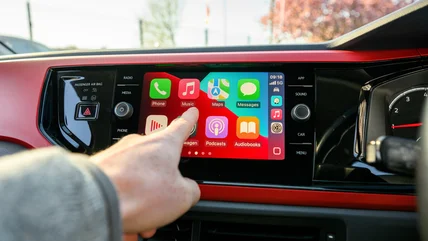
If you think cellphones have become overbearingly complex, look away now. A partnership of tech companies and content providers, known as the ng Connect Program, has revealed a prototype "LTE Connected Car," which, as you might surmise, combines 4G mobile broadband connectivity with a bunch of cloud-sourced facilities, such as video on demand, audio libraries, and multiplayer gaming. It can also serve as a Wi-Fi hotspot, connect directly to home automation or monitoring systems, and probably cook you scrambled eggs if you ask nicely. A Toyota Prius serves as the guinea pig for this new concept, and we've got video of the whole shebang after the break.

Read - ng Connect Program Puts Connectivity in the Fast Lane with the LTE Connected Car Concept Vehicle
Read - ng Connect Program Reveals the Long Term Evolution (LTE) Connected Car

Entelligence: Cloud's illusions I recall

Entelligence is a column by technology strategist and author Michael Gartenberg, a man whose desire for a delicious cup of coffee and a quality New York bagel is dwarfed only by his passion for tech. In these articles, he'll explore where our industry is and where it's going -- on both micro and macro levels -- with the unique wit and insight only he can provide.

It's been the story of the week. T-Mobile Sidekick customers were told that all of their data might be lost and warned not to turn off their devices to prevent losing what's already on them. It's about the worst case nightmare scenario for any vendor and it underscored the weakness and vulnerability of cloud-based computing with no other means of backup and storage.

The Sidekick story is complicated, and there's much rumor and speculation as to what went wrong and how. To be clear, Sidekick is a T-Mobile branded-and-sold device and service, but the Sidekick technology comes from Danger, a former startup now owned by Microsoft, which T-Mobile pays to keep Sidekick going. Trust me, there's going to be lots of finger pointing and perhaps a few class-action lawsuits before this all comes to an end. While finger pointing is fun, it's not the issue. (And, as grandpa used to say, when you point your finger at someone else, three fingers point back at you.) Some argued with me last night that cloud computing is perfectly safe, it's the company deploying that you need to look to. OK. I accept that. Only thing is that Danger's been doing this pretty well since 2002 and at no point did I ever see a single warning from anyone that dealing with T-Mobile, Danger or Microsoft might be a bad idea when it comes to personal data solely living in the cloud.

$100 Nova Navigator cloud-powered nettop in the wild


PCs have fallen wildly in price over the past couple of years, but while the prospect of a "real computer" (well, almost) for a mere $100 isn't completely outlandish these days, it's still rare. The Nova Navigator, built for the India market, is actually down from its originally-projected $199 pricepoint, and commands a monthly subscription fee in the vicinity of $15 and up -- the more you pay the more online storage you get, with 50GB as a baseline. On its sparse 256MB of built-in storage, however, you get a full build of Linux with Firefox and OpenOffice, and the ability to access Windows with a Remote Desktop client. The unit doesn't come with a keyboard monitor or mouse, so once you get around to supplying all that and paying for a few months of service, you might've been better off with a cheap netbook, but the expansion and peripheral-compatibility afforded by this desktop form factor might just make it worth the hassle.

Nokia Ovi crash results in three weeks of lost user data


There's definite risks to hosting all your personal data in the cloud, and users of Nokia's Contacts on Ovi service just got a taste of the dark side: a database crash yesterday erased all data entered since January 23rd, when the service superceded Nokia Chat. That means contacts and images simply disappeared from people's phones overnight with no recourse, which should give pause to all of us relying on third parties to manage and maintain our data. On the other hand, Ovi users now get to relive the past few weeks all over again, so maybe there's a silver lining in there for someone after all.

[Via Unwired View]

$249 CherryPal cloud PC taken for a listless spin


Well what do you know, a real live CherryPal has finally made it into the wilds. TGDaily has the honors of having a first look at the $249 cloud computer. While impressed by the small size and fanless design, the build quality was "flimsy" making the device feel very much like pre-production product. The Xubuntu-based PC with Xfce desktop instantly recognized and connected to the reviewers WiFi network for quick login to the CherryPal cloud. Great, but things fell apart when loading Firefox onto the 400MHz Freescale processor -- the sluggish response experienced is a critical fail for a PC whose applications are stored in the cloud. Something that might be sorted out in future builds of Firefox... or not.

Microsoft gets official with Windows Azure cloud OS, platform

Steve Ballmer himself first dropped word of this one earlier this month, but Microsoft has now finally gotten official about its new cloud computing operating system, and its name: Windows Azure. What's more, the OS is apparently just one component of Microsoft's larger Azure cloud computing platform, which will eventually be fully rolled out alongside Windows 7, and will encompass Microsoft's existing Live services, SQL services, and .NET services, among other things. If that's got you excited, you can find plenty more details at the link below, and even a few SDKs ready for downloading.

[Via Pocket-lint]

Clouds on Vista's horizon to be dubbed Strata?

Windows Cloud becoming Windows Strata?
When Ballmer dropped a few sprinkles of information about Vista's successor, he dubbed it "Windows Cloud," but said the real moniker would be unveiled at the Professional Developers Conference later this month in LA. That show's agenda was recently posted, and interestingly contained a number of sessions under the header "Windows Strata," leading many to believe that it's the true name of Redmond's next offering. That the section was quickly changed to "Windows 7" makes things all the more suspicious, but don't go cyber-squatting WindowsStrata.com just yet (oops, too late). Strata -- a term that can apply to the layers of the atmosphere -- might be more of a general classification for numerous cloud computing-related offerings destined for all manner of devices. But if so, why rename the sessions, and why the secrecy? And, most importantly, why are we so intrigued?

[Via CNET]

Ballmer says "Windows Cloud" OS will debut this month


While a good chunk of this month's Professional Developers Conference will be focused on Windows 7, it looks like Microsoft has another little surprise up its sleeve, with CEO Steve Ballmer himself dropping word that the company also plans to introduce its new, tentatively-titled "Windows Cloud" OS at the conference. Of course, Ballmer isn't about to get very specific about the OS just yet, though he does seem to be dampening expectations a bit by saying, "just like Windows Server looked a lot like Windows but with new properties, new characteristics and new features, so will Windows Cloud look a lot like Windows Server." He also apparently confirmed that geo-replication and other features "designed for the cloud" would be built into the OS, and he confirmed the existence of Midori, but said it was still in the incubation phase, adding that, "the guy in the office next door to somebody working on Midori is not supposed to know about Midori." We assume that also means that Windows Cloud is not Midori, but we'll know for sure once PDC gets underway on October 27th.

CherryPal's $249 cloud PC delayed for another fortnight, vaporware status achieved

Okay, so we're pretty sure a fortnight after August 7th was August 21st, and while CherryPal was adamant it would finally release its $249 cloud PC then, it has since hit another snag. This go 'round, the company is blaming a "glitch with the graphics processor," which "absolutely needed to be addressed." Comically enough, it's suggesting that the unit will now ship -- gasp! -- two weeks from now, though we're more apt to believe you'd want to make out with Android if given the chance than to trust anything coming from the doors of CherryPal.

TechNovus intros Atom-powered Nova Navigator cloud computer


Cloud computing concepts for netbook / nettop-sized machines aren't all new, but TechNovus is looking to jump in head first with its Nova Navigator. The tiny machine gets powered by a 1.6GHz Intel Atom CPU and possesses no hard drive within; instead, it utilizes a 512Kbps or higher internet connection to access 50GB of online applications / storage. The unit runs Windows (Server) and SUSE Linux side-by-side, and aside from a few core apps (Firefox, Skype and a media player), everything else is ran from the cloud. As it stands, the box is scheduled to launch next month in India for around $199 plus a $15 to $20 monthly subscription, though there's no word as to when it'll be launched in other nations.

CherryPal $249 cloud PC delayed for a fortnight... or longer, maybe


Be honest here, you didn't even remember that the $249 CherryPal cloud PC was expected to ship this month last month. Reportedly, you'll be waiting a little longer for a PC you don't even know about thanks to a software quirk that isn't playing nice with a newer SSD. CherryPal is hoping to get the issue resolved and begin shipping the wee boxes within two weeks, though it does leave open the possibility for things to take "longer" as it slips into vaporware territory.

ASUS launches Eee Storage, takes your Eee PC to the cloud... kind of


Apparently Jerry Shen and the homegirls / boys at ASUS want to get a slice of that sweet cloud pie. According to a report, the computer-maker has launched a service called Eee Storage, which provides 20GB of online storage for Eee PC users, as well as access to downloads of around 3,000 pieces of free software and games. The company hopes to expand the service -- which uses a drag and drop interface for file management -- into a full blown "store" where users can download music and "various other content." In the picture above you can see Jerry demonstrating the service to a group of bemused high school reporters.

Microsoft's Midori -- a future without Windows


According to a report, Microsoft isn't just looking at the next version of Windows (no, not Mojave) for future OS possibilities, but is looking beyond the Windows architecture altogether with a project known as Midori. The new OS is still in the "incubation" phase (which puts it slightly closer to market than R&D projects), but Microsoft has admitted to its existence, and the Software Daily Times says at least one team in Redmond is actively working on the new architecture.

The basis for the platform centers around research related to Microsoft's Singularity project, and envisions a distributed environment where applications, documents, and connectivity are blurred in a cloud-computing phantasmagoria which can be run natively or hosted across multiple systems. The researchers are working to create a concurrent / parallel distribution of resources, as well as a method of handling applications across separate machines -- religiously-dubbed the Asynchronous Promise Architecture -- which will set the stage for a backwards-compatible operating system built from the ground up, with networks of varying size in mind. Says the SD Times, "The Midori documents foresee applications running across a multitude of topologies, ranging from client-server and multi-tier deployments to peer-to-peer at the edge, and in the cloud data center. Those topologies form a heterogeneous mesh where capabilities can exist at separate places." Like it technical? Hit the read link for an in-depth look at the possible shape of Microsoft's future.

[Via Yahoo!]

Intel, HP, and Yahoo to build joint cloud-computing research labs

Sure, it's all well and cute to think of "cloud computing" as being a magical data-fairy, but storing and processing all your fancy new CalDAV-enabled Google Calendar entries and MobileMe emails costs money, kid -- and that means it's hard for researchers to accurately simulate and build cloud research projects, since they don't have the resources to build large enough data centers. HP, Intel, and Yahoo are teaming up to alleviate that problem, though -- the three behemoths are going to build six cloud-computer research data centers around the world, stocked with anywhere from 1,000 to 4,000 nodes each, with the goal of bringing them online later this year for pre-selected researchers to work on scaling, security, management, and new applications for the cloud. Three of the data centers will be hosted at HP, Intel, and Yahoo, and the other three will be at the University of Illinois, the Infocomm Development Authority of Singapore, and the Steinbuch Centre for Computing in Germany.

The CherryPal cloud PC: $249, ready for (the new world) order


There's no OS to speak of, no optical drive, just 4GB of flash storage and 256MB of RAM, and you're limited to a 400MHz Freescale 5121E processor with integrated graphics under the hood. But the CherryPal desktop PC -- just revealed with a $249 price tag -- is definitely worth making a fuss over. About the size of a plastic paperback sporting a pair of USB ports and VGA-out, the mini PC plugs directly into the CherryPal Cloud via 802.11b/g WiFi or 10/100 Ethernet for 50GB of free Internet storage, automatic system updates, and access to a number of webified apps (which also reside locally) including iTunes, OpenOffice, and a CherryPal-branded instant messenger and media client (though we figured iTunes would have taken care of the media playback). Of course, the lack of traditional specifications results in just a fraction of the power consumption used by that electron gobbler sitting on your desk. Not bad if your PC's primary function is to playback audio, surf the web, and occasionally edit an Office document. Oh, and that name, CherryPal? It originates from an early tester who declared it, "sweeter than an Apple." We'll see when the first CherryPal desktop ships at the end of this month -- order today.

[Via Crave]
Zune HD ExposedHTC Hero: Android Evolved
Follow us on TwitterEngadget Video


AOL News

Joystiq

Download Squad

TUAW

Daily Finance

Asylum

Autoblog

Switched.com

FanHouse

Autoblog Green