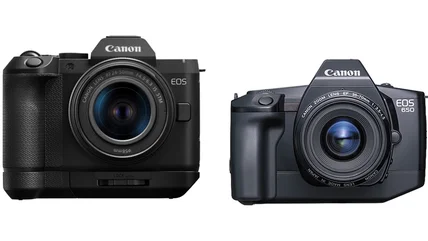
The ever-boastful MTI Micro is back again, just days after showing off a fuel cell-powered GPS prototype in Atlanta. This go 'round, the company is announcing a newfound partnership with an elusive Japanese developer of digicams in order to "evaluate the feasibility, development and production" of Mobion products. The love affair will enable the two to work together in evaluating and adapting the aforesaid technology for use in "various precision imaging applications, including digital cameras." Best of all, work is apparently already ongoing, and MTI Micro is expected to deliver prototypes later this month. Going from prototype form to the store shelf, however, will be the hard part.
Finally we can all sleep at night, safe in the knowledge that Sony has created a prototype fuel cell system that fits in the palm of your hand. The combination lithium-polymer battery, backup battery, and control circuit are destined for future mobile devices. According to a company engineer, "We have been aiming to mount (a fuel-cell system) in mobile devices and finally reached a level of commercial design." The tiny power-pack uses methanol as a fuel and controls supply with a hybrid pump, which allows it to regulate the amount of power used based on a system's needs. The company claims that just 10ml of methanol can power a mobile device through 14 hours of 1seg movie watching. Sure, it sounds good on paper, but does this mean soon we'll have to visit tiny, methanol refilling stations manned by a team of mice in jumpsuits? Probably not.
MTI Micro is edging dangerously close to vaporware status, but until 2009 comes and goes, we suspect we still owe it the benefit of the doubt. The ever-boastful company is at it once again, this time showing off a purported fuel cell powered-GPS prototype at the International Small Fuel Cells Conference in Atlanta. The Mobion-powered device promises to provide "three times as much energy as GPS devices powered by four disposable AA batteries," meaning that users could see up to 60-hours of continuous use on a large, full-color screen navigator. You'll also find an integrated USB port for using it as an energy source, so you could theoretically utilize your NAV to charge your handset / PMP / ray gun. At this point, however, we wouldn't get too excited here -- it's not like there's any guarantee that we'll ever see this thing in commercial form.
We've seen quite a few prototypefuel-cellpoweredmobile devices, but Samsung's upping the ante by predicting that we'll all be running our phones on water by 2010. The company says it's developed a method to generate hydrogen by exposing water to metal, but the details are a little shaky -- we're guessing it's similar to the system used in the HydroPak generator, but it's hard to tell. Still, we've got no reason to doubt Samsung's engineers, who say the system currently provides about 10 hours of use, or about five days of average cell usage, and will eventually allow users to simply top off and go. That's every traveler's dream -- let's get this to market, Sammy.
If you'll recall, we first got wind of MTI Micro's fuel cell endeavors way back in 2004, but nearly four years later the firm is still at it and hoping to have something rolled out by 2009. Reportedly, the company has conjured up a few working prototypes which utilize methanol and are built to power small gizmos such as cellphones, handhelds and even DSLRs. Recharging the cells would be as simple as "squirting in some new fuel or putting in a new cartridge," and MTI has even created a way to recycle the water within the unit. Still, it's not handing out any specifics about what products it plans on churning out first, but given that we've been waiting on these things for quite some time already, it's not like we can't twiddle our thumbs for another dozen months or so.
While oil prices continue to soar to new heights, the gurus at InnovaTek are peering into the future. After years of work, said company is finally testing its hand-sized microreactor that can reportedly "convert virtually any liquid fuel into hydrogen, producing a portable hydrogen stream for use in adjoining fuel-cells." In a perfect world, the technology would come built-in to vehicles, where we'd bypass the dangerous act of transporting hydrogen and instead convert biodiesel (or similar) right within the confines of the car. As it stands, the outfit has already signed a half-million dollar joint development agreement with Chevron to "pursue fuel processing technology for hydrogen refueling stations," and while this stuff isn't apt to be an option on any showroom models next year, InnovaTek is still aiming to commercially license the microreactors by 2009.
We'll be honest, we're not getting ourselves all riled up about this just yet -- after all, it's not like QuantumSphere is the first (nor the last) company to teeter on announcing a legitimate "solution" to ditching gasoline. Nevertheless, said startup has reportedly figured out a way to "make hydrogen at home from distilled water and ultimately bring the cost of hydrogen fuel cells in line with that of fossil fuels." More specifically, the outfit claims to have "perfected the manufacture of highly reactive catalytic nanoparticle coatings that could up the efficiency of electrolysis, the technique that generates hydrogen from water." Unbelievable though that may sound, it's still looking to unveil a battery using its own technology later this year, so we'll just wait and see what becomes of that initiative before bidding gas stations adieu for good.
Some Penn State researchers are taking a cue from nature and have built the first solar cell that can effectively split water to harvest the hydrogen. While the technology and efficiency of electricity-gathering solar cells has been humming on nicely, cells that can pull hydrogen out of water directly (instead of using solar-harvested electricity to do it) have found that the catalysts conducive to separating hydrogen and oxygen are usually pretty good at putting the two gases right back together again. The folks at Penn State have now developed a process that more closely mimics the photosynthesis process in plants, and while we won't pretend to understand all the nitty gritty of dye usage and other such nonsense, we do know that such a system could eventually attain 15% or so efficiency, providing a nice and clean way to gather power for that fuel cell car of the future.
Right around a month ago, we heard that Angstrom Power had managed to stuff some of its sophisticated hydrogen fuel cells into a MOTOSLVR L7. That prototype, friends, is what you see about. Unfortunately, we're no closer to realizing when this stuff will actually escape the proverbial beta stage, and for whatever it's worth, we're also no closer to feeling absolutely safe with one of these next to our melon (though existing alternatives don't have the greatest track record either).
Okay, we suppose cellphone companies trumpeting some sort of fuel cell technology isn't thatweird, but nevertheless, Moto sure seems proud of its most recent advancements. Showcased at this year's Mobile World Congress are a number of "alternative power solutions including fuel cell and reflow batteries," which can be deployed in most every wireless / mobile environment out there. More specifically, the outfit is demonstrating a fuel cell-powered WiMAX base station, and it's also suggesting that said technology could "further guarantee [the] availability of uninterrupted power" in TETRA radio networks that are used in public safety environments. Fascinating, no?
NEC is set to begin pushing fuel cell-powered handsets if the pic we see here can be believed. The handset features a touchscreen display and what appears to be valve to potentially recharge the handset once the fuel has all been used. Color choices are a bit too pastel for our liking, but it appears the liquid provides the color, so perhaps we'll get some cooler tones when it's released sometime this year -- if it's released. No word on any specs, pricing, networks, or anything, so until we get that bit of detail sorted, enjoy the pretty pic.
Trust us, this ain't the first time we've heard "Samsung" and "fuel cell" mentioned in the same breath, but signing up with another firm to be its "sole and exclusive distributor" of fuel cell power plants sounds pretty serious. Sure enough, Sammy has inked an agreement with US-based HydroGen, and will soon be selling its phosphoric acid fuel cell (PAFC) power plants in Asia, the Middle East and in other unspecified regions. Reportedly, Samsung is planning to use HydroGen's technologies to "supply heat and electricity from fuel cell power plants to Korean chemical plants or energy providers and expand its business into the hydrogen fuel cell market." Yeah, we'd say locking things in with a hydrogen fuel cell manufacturer 'til 2015 is a pretty good way to accomplish that.
There's certainly no shortage of companies out there trying to provide unconventional means of keeping your cellphone powered, and it looks like you can now add yet another ever-recurring bit of tech to the list, with Angstrom Power now touting its hydrogen fuel cells for cellphones. While they're obviously still quite a ways from landing in your handset, Angstrom does seem to be a good deal further than the concept stage, with them having already managed to cram some of the cells into a MOTOSLVR L7. That transplant, Angstrom says, gives the phone twice the juice of a standard battery and lets it recharge in just ten minutes. Just don't look for those anytime before 2010, which is when Angstrom "hopes" the first commercial phones equipped with the fuel cells will be available.
It's been a while since we had an update from the exciting frontier of microbial fuel cell technology, but researchers at Arizona State University's Biodesign Institute report a recent breakthrough in understanding exactly why bacteria seem to enjoy donating their electrons for the potential betterment of gadgetkind. The ASU team developed an equation that describes the relationship between the rate of bacterial metabolism and the electrical potential of the fuel cell, enabling a much more accurate model of how an MFC actually works. The researchers are working with this information to optimize fuel cell performance and power output, which to date has been disappointingly inefficient. Before long, we could totally be taking it for granted that our robotic underlings are powered by beer and poo.
India -- already an established presence in the alternative fuels space -- has announced that it will be joining the US, Japan, Germany, and the Netherlands in rolling out a hydrogen-powered car next year. The country's space agency (ISRO) has teamed up with Tata Motors -- makers of the recently-revealed plastic car -- to develop a fuel cell vehicle whose only emissions will be water vapor, critical for a developing country whose pollution woes are only getting worse. According to ISRO chairman Madhavan Nair, while the hydro-car is scheduled for 2008 completion, mass production has yet to be determined.