Skip to Content

AOL Tech

4G posts

Qualcomm chips promises 1GHz speeds in 'mainstream smartphones,' simultaneous HSPA+ / LTE support

Qualcomm's Snapdragon has brought about a new wave of possibilities for smartphones, but evidently those chips are just too exclusive to slip into so-called "mainstream smartphones." In order to remedy such a tragedy, the outfit has today introduced the MSM7x30 family of solutions, which uses an 800 MHz to 1GHz custom superscalar CPU based on the ARM v7 instruction set. The chips support 720p video encoding / decoding at 30fps, integrated 2D and 3D graphics (with support for OpenGL ES 2.0 and OpenVG 1.1), 5.1-channel surround sound, a 12 megapixel camera sensor and built-in GPS. In related news, the outfit also announced that it is sampling the industry's first chipsets for dual-carrier HSPA+ and multi-mode 3G / LTE, which ought to make those champing at the bit for a speedier WWAN highway exceedingly giddy. Hit the links below for all the technobabble.

Read - MSM7x30 solutions
Read - Dual-carrier HSPA+ and Multi-Mode 3G/LTE chipsets

ZyXEL's MWR222 Mobile Wireless Router will stop at nothing to get you connected

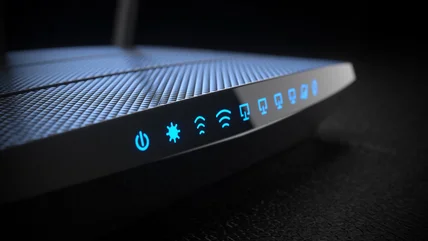
ZyXEL's MWR222 Mobile Wireless Router will stop at nothing to get you connectedFinding connections on the road can be tough, but like a digital Sherpa ZyXEL's MWR222 will drag you straight to that bounteous broadband then sit by quietly while you take all the credit. It can act as a wired router, connecting to your DSL or cable line and beaming out 802.11g/b/n wireless, but also offers integrated 3G/4G support, meaning just about wherever and whenever you turn this on you should find a connection. It'll even keep track of your monthly wireless plan quota and help you avoid expensive charges. An integrated battery means completely wireless operation and a rugged design means it won't complain if you throw it in the bottom of your laptop bag when it ships sometime in Q1 of next year. That said, at $299 you probably won't want to be too rough with it.

Samsung pays Qualcomm $1.3 billion to secure wireless licenses

Samsung and Qualcomm have wrapped up a cross-licensing deal with ten figures of US currency in it, which will permit the Korean giant to continue producing 3G- and 4G-enabled wireless devices for the next 15 years. In exchange, Samsung is letting Qualcomm make use of its own 57 patents on mobile technology and splashing out a further $1.3 billion as a down payment. Further royalty payments are involved, but not detailed, but just as a reference point, that's more than the new Dallas Cowboys stadium and its ultra-huge scoreboard cost to build. The move is a renewal of the two companies' current arrangement and Samsung has boldly claimed the terms of the new contract are more favorable to it, but we get the feeling the champagne will be flowing in San Diego this week.

[Via MobileTechWorld]

LTE Connected Car redefines the 'mobile' in mobile broadband (video)

If you think cellphones have become overbearingly complex, look away now. A partnership of tech companies and content providers, known as the ng Connect Program, has revealed a prototype "LTE Connected Car," which, as you might surmise, combines 4G mobile broadband connectivity with a bunch of cloud-sourced facilities, such as video on demand, audio libraries, and multiplayer gaming. It can also serve as a Wi-Fi hotspot, connect directly to home automation or monitoring systems, and probably cook you scrambled eggs if you ask nicely. A Toyota Prius serves as the guinea pig for this new concept, and we've got video of the whole shebang after the break.

Read - ng Connect Program Puts Connectivity in the Fast Lane with the LTE Connected Car Concept Vehicle
Read - ng Connect Program Reveals the Long Term Evolution (LTE) Connected Car

Coalition of carriers, manufacturers settles on voice standard for LTE

As much fanfare and support as it's been getting over the past couple years, LTE's dirty little secret is that there's been no unified stance on how to ferry voice services over the technology; the concentration has been on data alone so far. Sure, the occasional carrier has raised concerns -- and a variety of solutions have been proposed, ranging from VoIP to repurposing legacy networks for voice alone -- but until now, voice has been an afterthought that everyone's been procrastinating on solving. Fortunately, a veritable who's-who of industry players from both the manufacturer and carrier sides of the fence have congealed this week to announce the One Voice initiative, which basically just hand-picks existing 3GPP-defined standards for voice and SMS services over LTE. Strangely missing is T-Mobile, one of the loudest voices in demanding a voice standard for LTE up until this point -- but considering that AT&T, Orange, Telefonica, TeliaSonera, Verizon, and Vodafone are all on board along with Samsung, Nokia, Sony Ericsson, and others, we think they'll have no option but to fall in line in the long term. For consumers, this means we can all breathe a sigh of relief that LTE handsets won't be arbitrarily compartmentalized by supported voice standard, so it's a big win any way you slice it.

Sprint lights up WiMAX in NC, Chicago and Dallas, launches subsidized Mini 10

Don't you just love it when a plan comes together? Or better yet, when a leaked roadmap doesn't get delayed in the slightest? After months upon months of waiting, broadband-lovin' citizens in the North Carolina Triangle and Triad will be celebrating alongside DFW residents and Chicago natives as Sprint's 4G WiMAX service rolls into town. As of right now (that's today, junior), consumers in Raleigh, Durham, Chapel Hill, Cary, Greensboro, Winston-Salem, High Point and Charlotte, NC; Dallas-Ft. Worth, Texas and Chicago, Illinois can roll into a Sprint store and snag a U300 3G / 4G WWAN modem on a $69.99 monthly data plan. We're told that San Antonio and Austin will get lit up later this month, while Honolulu and Maui, Hawaii; Salem, Oregon and Seattle, Washington will join the fray before 2010. Oh, and did we mention that Palm's favorite carrier finally snagged itself a WWAN-equipped netbook? 'Cause the Dell Mini 10 is available starting today for $199.99 at select Sprint stores in the metropolitan Baltimore area.

Update: Looks like Sprint changed "Baltimore" to "Bay Area." Odd.

Read - Sprint WiMAX in the Triangle
Read - Sprint WiMAX in the Triad
Read - Sprint WiMAX in Charlotte, NC
Read - Sprint WiMAX in Dallas-Ft. Worth, TX
Read - Sprint WiMAX in Chicago, IL
Read - Sprint's first netbook is Dell Mini 10

Clearwire and Sprint slinging WiMAX to NC, HI and TX in November / December

We knew Clearwire would be snaking its 4G services to select markets in North Carolina, Hawaii and Texas before the year's end, but it's always reassuring to hear a corporation come right out and affirm that those leaked dates are still solid. What's interesting about the latest announcement is that both Clearwire and Sprint will be offering 4G in these same cities under their own brands, even though the signals and towers used will be the same. Starting next month, WiMAX will officially land in Greensboro and Raleigh, North Carolina (Charlotte is already lit up, despite these companies' claims) and Austin; Dallas/Fort Worth; San Antonio, Texas. In December, the companies will get things fired up in Honolulu and Maui, two areas where we're certain techs from Sprint / Clearwire are more than eager to go "test things out." So, now that this has all panned out, how's about another leak sheet for 2010 rollouts?

Samsung and TeliaSonera bringing LTE to vikings in 2010

Scandinavian folks tend to be a pretty cheerful bunch during the summer, and now Swedes and Norwegians will have reason to smile through the cold dark winters as well, with Samsung announcing an agreement to provide TeliaSonera with "mobile broadband devices for commercial service next year." This agreement relates to Sammy's Kalmia 4G USB modem and adds to the Swedish operator's LTE push, which already counts Ericsson and Huawei among the contracted hardware providers. So that's 100Mbps mobile broadband, coming to a snow-covered nation near you within the next dozen months or so. All we would ask of our viking friends now is that they remember their world-conquering ways of the past and start spreading that goodness globally. Come on, it's our right! Full press release after the break.

Android rumor rodeo, starring Sprint's first 4G phone, a delayed Eclair, INQ Mobile's 2010 handset, and more

The gang at Android and Me seemed to have made quite a number of acquaintances on their sojourn through CTIA and MotoDev Summit. Specifically, there were three people along the way they reportedly talked to that led to the most tantalizing of rumors. First down the rabbit hole is a Sprint developer who claimed the first 4G (i.e. WiMAX) phone will be an Android device, which honestly wouldn't be all that shocking given the company's love for and recent history with the OS. Next up is a Samsung exec that intimated we shouldn't expect Android 2.0 "Eclair" until Q2 2010 -- interesting in its own right, but looks like those whispers of Sholes launching with anything beyond Donut isn't gonna come to fruition now. Our third definitive individual is an INQ head employee who let slip its handsets would be finding its way onto a US carrier's network in 2010 and would have a "pimped out" customized Android skin chock full of social networking the likes of Spotify, Skype, Facebook, etc. The rest of its report is much ado about nothing -- no LG android phone this year, no TomTom app this year, and no standalone Google Maps navigation software. Yeah, that's quite a number of Android rumors to digest, and unfortunately nothing definitive. Looking forward to the future?

[Via i4u]

FCC says there's a 'looming spectrum crisis'

"What happens when every wireless user has an iPhone, a Palm Pre, or a BlackBerry Tour?" Speaking at CTIA Wireless IT & Entertainment in San Diego today, FCC head Julius Genachowski has said that he wants to "close the spectrum gap" -- the difference between the spectrum it's making available for wireless data versus enormous usage projections (400 petabytes a month by 2013, he says) that'll be brought about by smarter, easier-to-use devices and ubiquitous high-speed data through a handful of initiatives including the promotion of the smart use of existing spectrum through the use of femotcells, WiFi, and smart antennas, and -- more importantly -- reallocation of existing spectrum. Genachowski says there are "no easy pickings" for reallocation, but the Commission is aggressively pursuing additional airspace that can help keep 4G rollouts on track. He's gone on to say that they'll be adopting the widely-discussed "shot clock" policy for placement of new towers, giving locales a limited window to protest placement of cell sites that'll help spread 4G services over wider footprints. The guy seems genuinely concerned about keeping 4G rollouts rolling, so let's see just how far the guys in Washington are willing to go to do that.

Verizon: LTE rollout to be 'as close to all-at-once as possible'

Historically, wireless rollouts have been miserably long, protracted affairs that take countless years to complete, but Verizon's talking in some really aggressive terms as it moves to LTE. The company wants to be at or near 100 percent overlay with its legacy CDMA footprint by 2013, but a ton of major markets will be covered and commercially well before then -- up to 30 in 2010. Speaking in an interview this week, Verizon Wireless CTO Tony Melone has reiterated that the company is still on track with its LTE deployment -- music to our ears -- and that they're not looking to "tease" customers at length with trial deployments that would require moving cross-country to enjoy. They're looking to establish a "significant footprint" out of the gate, which is allegedly made possibly in part by the LTE equipment's ability to share some infrastructure (backhaul equipment, for instance) with the CDMA network it'll be joining in cell sites around the country. Now, how about those USB LTE modems, Verizon?

Clearwire branding true 4G WiMAX rollouts 'CLEAR,' upgrading pre-WiMAX areas nationwide


Clearwire's far too young of a company to be dealing with a mid-life crisis, but just a year or so after it really began rolling out its Clear WiMAX services in select portions of America, it appears that the outfit is changing names. Confusingly enough, the company (currently Clearwire) will be renaming itself as the service (currently Clear), leaving us to wonder what exactly CLEAR (the rebranded company) will call its WiMAX offerings. There's no indication on the company's website as to when it plans to make the rebranding official, but a customer in Charlotte, North Carolina has informed us that the change is already underway in the Queen City. According to him, his equipment was recently swapped out, with the new modem boasting a Motorola logo and a "CLEAR" logo instead of the "Clearwire" emblem as before. Interestingly, he also claims that his download speed received a (gratis) bump from 1.6Mbps to 5Mbps, which resulted in a "huge improvement in speed." So, any other users out there getting their modems swapped out? Call us crazy, but we're guessing it's just a matter of time.

[Thanks, Rick]

Update: Clearwire pinged us with a few clarifications here. Ready? Good. Clearwire, as a company, is not changing its name. So far as the SEC knows, the corporate entity will remain "Clearwire." The new "CLEAR" branding is a push to market its true 4G WiMAX services (as opposed to "pre-WiMAX service"), which are rolling out to over 40 existing Clearwire markets around the country. Seems that explains the speed boost Mr. Rick experienced, huh?

T-Mobile negotiating to expand 4G service, Catherine Zeta-Jones going door-to-door

Word is that Deutsche Telekom (the parent company of T-Mobile) is now actively engaged in talks with Clearwire and MetroPCS to expand its 4G network. This isn't terribly shocking to hear, considering that most other providers (including AT&T, Verizon and Sprint) are already either heavy into negotiations or in the process of upgrading their infrastructure. Though the company hasn't yet said anything about planned expansions, word is its looking for the most "cost-effective" way to build nationwide networks capable of higher speeds.

Microsoft co-founder Paul Allen sells LTE spectrum to AT&T

Here's one straight from the depths of left field. If you'll recall, Microsoft's co-founder Paul Allen was considering buying a bit of spectrum from the 700MHz auction after founding Vulcan Spectrum LLC. Evidently, the guy's bid ended in a win, but he's obviously not so keen on getting in on the flagging MVNO business. According to a document filed with the FCC, Allen has agreed to sell the licenses he owns -- which cover sections of Oregon and Washington -- to AT&T, though the carrier isn't disclosing financial terms. According to AT&T spokesman Michael Coe, the company is making the purchase to "meet customer demand and to support its transition to LTE." Unfortunately, Mr. Allen wasn't available to say what he was planning to do with the proceeds, though we did hear that one Kayne West was available to reiterate his belief that LTE was the best of all time.

[Via phonescoop]

Clearwire says it's not married to WiMAX for 4G, would be easy to switch

Save possibly for Sprint, no one's pushing WiMAX harder in the US than Clearwire -- but the commitment doesn't run as deep as you might think. Investing billions in a 4G network that goes brashly against the popular LTE grain is a huge gamble since Clearwire and its partners won't be able to throw as much weight around with manufacturers or achieve the same economies of scale that LTE carriers will, but these guys were smart: CEO Bill Morrow claims that the company has unprecedented flexibility built into its infrastructure, and he's willing to switch gears if LTE or something else ends up burying WiMAX down the road. Boasting that "we're the only carrier that can do this," Morrow says that a move to LTE would be a simple software upgrade for much of its equipment, meaning Clearwire could almost literally change technologies overnight and with minimum expense -- we're sure it'd still put a strain on the bank, but it theoretically wouldn't be as ambitious as changing from CDMA 1X to GSM, for example. Of course, the company's still got all its eggs in one basket for the moment with a clear commitment to WiMAX -- but from a shareholder perspective, it's at least good to know that it's easy to move the eggs.
Zune HD ExposedHTC Hero: Android Evolved
Follow us on TwitterEngadget Video


AOL News

Joystiq

Download Squad

TUAW

Daily Finance

Asylum

Autoblog

Switched.com

FanHouse

Autoblog Green